Just another position you don’t have an actual opinion on, you can only regurgitate the anti-liberal/ anti-democratic stance, because your bigger, smarter, stronger teammates tell you to?Look in your mirror and give me your answer fats....
Here's another good one.....
- Thread starter bornaneer
- Start date
You are using an out of date browser. It may not display this or other websites correctly.
You should upgrade or use an alternative browser.
You should upgrade or use an alternative browser.

From that link....
In short, the historical Atlantic hurricane frequency record does not provide compelling evidence for a substantial greenhouse warming-induced long-term increase.
If I want advice on taxes or fatty foods Ill care what you say.:joy::joy::joy:
Huh? I thought your joke was funny. Like for real. No need to be so butthurt all the time.If I want advice on taxes or fatty foods Ill care what you say.
He is always in that state. Mental issues.Huh? I thought your joke was funny. Like for real. No need to be so butthurt all the time.
I wasnt butthurt. I am old man yelling at sky today.Huh? I thought your joke was funny. Like for real. No need to be so butthurt all the time.
Poor Bru. Surely there has to be some fake outrage you can find today to salvage your self esteem?He is always in that state. Mental issues.
Please stop linking propaganda sites.
I’m not really getting the humor on that post?:joy::joy::joy:
Does being pissed at the weather forecast on Saturday count? Only thing bothering me today as it is interfering with first golf tournament of the year.Poir Bru. Surely there has to be some fake outrage you can find today to salvage your self esteem?
Ocean temperature directly impacts the intensity of a hurricane.From that link....
In short, the historical Atlantic hurricane frequency record does not provide compelling evidence for a substantial greenhouse warming-induced long-term increase.
There was a joke tweet today about a warrant on Puxatawny Phil for his ****** groundhog day prediction. Stupid groundhog.Does being pissed at the weather forecast on Saturday count? Only thing bothering me today as it is interfering with first golf tournament of the year.
Apparently not. It should in theory. Id guess they are missing a variable.Ocean temperature directly impacts the intensity of a hurricane.
Report only information supporting their scenario of warming...Please stop linking propaganda sites.
Don't nobody tell me what to think......except my wife...Just another position you don’t have an actual opinion on, you can only regurgitate the anti-liberal/ anti-democratic stance, because your bigger, smarter, stronger teammates tell you to?
Evidently not your English teacher eitherDon't nobody tell me what to think......except my wife...
Apparently not. It should in theory. Id guess they are missing a variable.
I wonder if you guys even know the information the figure is depicting?Report only information supporting their scenario of warming...
My 3 yr old has a better grasp on when her material gets oldThats racist
Ive been told that the oceans are warming and that in the not too distant future the caused melting of the ice caps will swallow up coastlines and islands. I am also told that warming oceans cause more hurricanes by number and intensity yet the factual storm data does not back up that assumption. In a case like that science says look deeper.I wonder if you guys even know the information the figure is depicting?
Your three year old is gonna grow up and have sex with boys in 15-20 years too.My 3 yr old has a better grasp on when her material gets old
The circulation of the Northern Hemisphere extratropical troposphere has changed over recent decades, with marked decreases in extratropical cyclone activity and eddy kinetic energy (EKE) in summer and increases in the fraction of precipitation that is convective in all seasons. Decreasing EKE in summer is partly explained by a weakening meridional temperature gradient, but changes in vertical temperature gradients and increasing moisture also affect the mean available potential energy (MAPE), which is the energetic reservoir from which extratropical cyclones draw. Furthermore, the relation of changes in mean thermal structure and moisture to changes in convection associated with extratropical cyclones is poorly understood. Here we calculate trends in MAPE for the Northern extratropics in summer over the years 1979–2017, and we decompose MAPE into both convective and nonconvective components. Nonconvective MAPE decreased over this period, consistent with decreases in EKE and extratropical cyclone activity, but convective MAPE increased, implying an increase in the energy available to convection. Calculations with idealized atmospheres indicate that nonconvective and convective MAPE both increase with increasing mean surface temperature and decrease with decreasing meridional surface temperature gradient, but convective MAPE is relatively more sensitive to the increase in mean surface temperature. These results connect changes in the atmospheric mean state with changes in both large-scale and convective circulations, and they suggest that extratropical cyclones can weaken even as their associated convection becomes more energetic.
Excuses excuses...The circulation of the Northern Hemisphere extratropical troposphere has changed over recent decades, with marked decreases in extratropical cyclone activity and eddy kinetic energy (EKE) in summer and increases in the fraction of precipitation that is convective in all seasons. Decreasing EKE in summer is partly explained by a weakening meridional temperature gradient, but changes in vertical temperature gradients and increasing moisture also affect the mean available potential energy (MAPE), which is the energetic reservoir from which extratropical cyclones draw. Furthermore, the relation of changes in mean thermal structure and moisture to changes in convection associated with extratropical cyclones is poorly understood. Here we calculate trends in MAPE for the Northern extratropics in summer over the years 1979–2017, and we decompose MAPE into both convective and nonconvective components. Nonconvective MAPE decreased over this period, consistent with decreases in EKE and extratropical cyclone activity, but convective MAPE increased, implying an increase in the energy available to convection. Calculations with idealized atmospheres indicate that nonconvective and convective MAPE both increase with increasing mean surface temperature and decrease with decreasing meridional surface temperature gradient, but convective MAPE is relatively more sensitive to the increase in mean surface temperature. These results connect changes in the atmospheric mean state with changes in both large-scale and convective circulations, and they suggest that extratropical cyclones can weaken even as their associated convection becomes more energetic.
https://www.theguardian.com/weather.../atlantic-hurricanes-are-storms-getting-worseIve been told that the oceans are warming and that in the not too distant future the caused melting of the ice caps will swallow up coastlines and islands. I am also told that warming oceans cause more hurricanes by number and intensity yet the factual storm data does not back up that assumption. In a case like that science says look deeper.
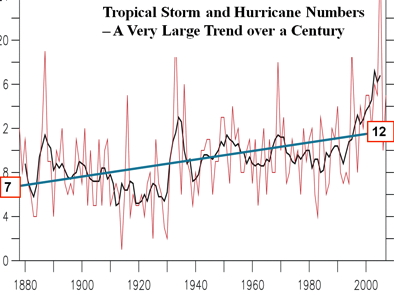
Link me to where the NOAA says the oppositeThey disagree with Noaa?
https://www.nature.com/articles/s41467-019-08471-z.pdfOld data
That’s an interesting study led by mostly NOAA scientists
The circulation of the Northern Hemisphere extratropical troposphere has changed over recent decades, with marked decreases in extratropical cyclone activity and eddy kinetic energy (EKE) in summer and increases in the fraction of precipitation that is convective in all seasons. Decreasing EKE in summer is partly explained by a weakening meridional temperature gradient, but changes in vertical temperature gradients and increasing moisture also affect the mean available potential energy (MAPE), which is the energetic reservoir from which extratropical cyclones draw. Furthermore, the relation of changes in mean thermal structure and moisture to changes in convection associated with extratropical cyclones is poorly understood. Here we calculate trends in MAPE for the Northern extratropics in summer over the years 1979–2017, and we decompose MAPE into both convective and nonconvective components. Nonconvective MAPE decreased over this period, consistent with decreases in EKE and extratropical cyclone activity, but convective MAPE increased, implying an increase in the energy available to convection. Calculations with idealized atmospheres indicate that nonconvective and convective MAPE both increase with increasing mean surface temperature and decrease with decreasing meridional surface temperature gradient, but convective MAPE is relatively more sensitive to the increase in mean surface temperature. These results connect changes in the atmospheric mean state with changes in both large-scale and convective circulations, and they suggest that extratropical cyclones can weaken even as their associated convection becomes more energetic.
Did you read (and comprehend) this? Just checking...
Do you know what an extratropical cyclone is?Did you read (and comprehend) this? Just checking...
Do you know what an extratropical cyclone is?
Yes. I wondered what that had anything to do with what you've posted so far.

Can you give us the records going back 25% of time on earth? That's only 1 billion years ago. That time right there is a mere hiccup in time.Hurricanes, tropical storms, and cyclones have increased in frequency.
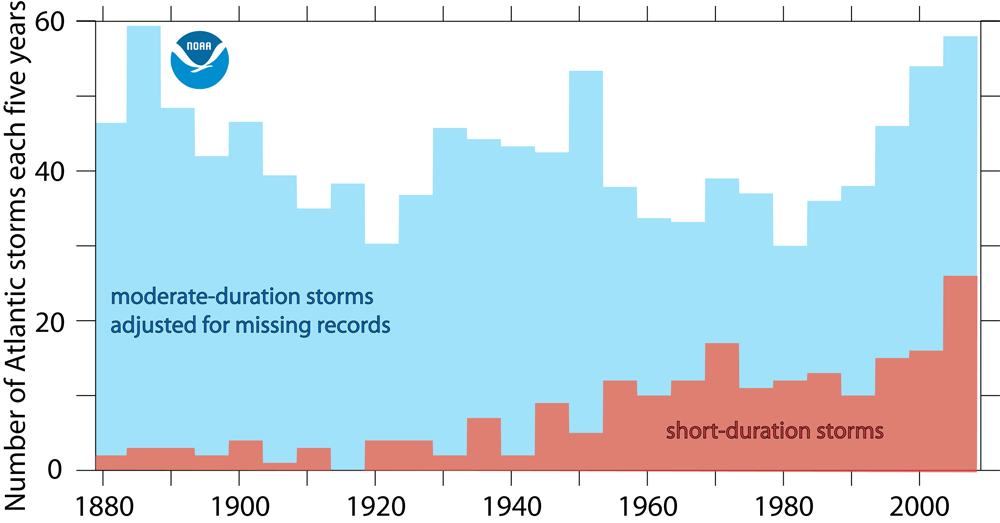
Everything I’ve posted is relevant to my discussion with Dave and Shirley about climate change increasing the frequency and intensity off hurricanes and cyclones. No?Yes. I wondered what that had anything to do with what you've posted so far.
Do you even know the significance of the table your posted article has on the overall subject of climate change?Yes. I wondered what that had anything to do with what you've posted so far.
Shhh, ........... don’t go ruining the free entertainment.Do you even know the significance of the table your posted article has on the overall subject of climate change?
Latest
-
01
 WV Sports Football
A tale of two halves for West Virginia, teaching lesson for Ross Hodge
WV Sports Football
A tale of two halves for West Virginia, teaching lesson for Ross Hodge
-
02
 WV Sports Football
Numbers and Notes: Cincinnati
WV Sports Football
Numbers and Notes: Cincinnati
-
03
 WV Sports Basketball
WATCH: Ross Hodge, WVU players react to Maryland exhibition loss
WV Sports Basketball
WATCH: Ross Hodge, WVU players react to Maryland exhibition loss
-
04
 WV Sports Basketball
5 Observations from West Virginia's exhibition game against Maryland
WV Sports Basketball
5 Observations from West Virginia's exhibition game against Maryland
-
05
 WV Sports Basketball
West Virginia falls to Maryland 90-81 in exhibition
WV Sports Basketball
West Virginia falls to Maryland 90-81 in exhibition