OT: Historian Gordon S Wood has died, expert on American Revolution

BobPSU92

Heisman
Aug 22, 2001
43,984
35,623
113
I’m not familiar but he seems to have been a very fine and influential scholar. Attention must be paid. I’m hoping @Tom McAndrew can expand on his influence.


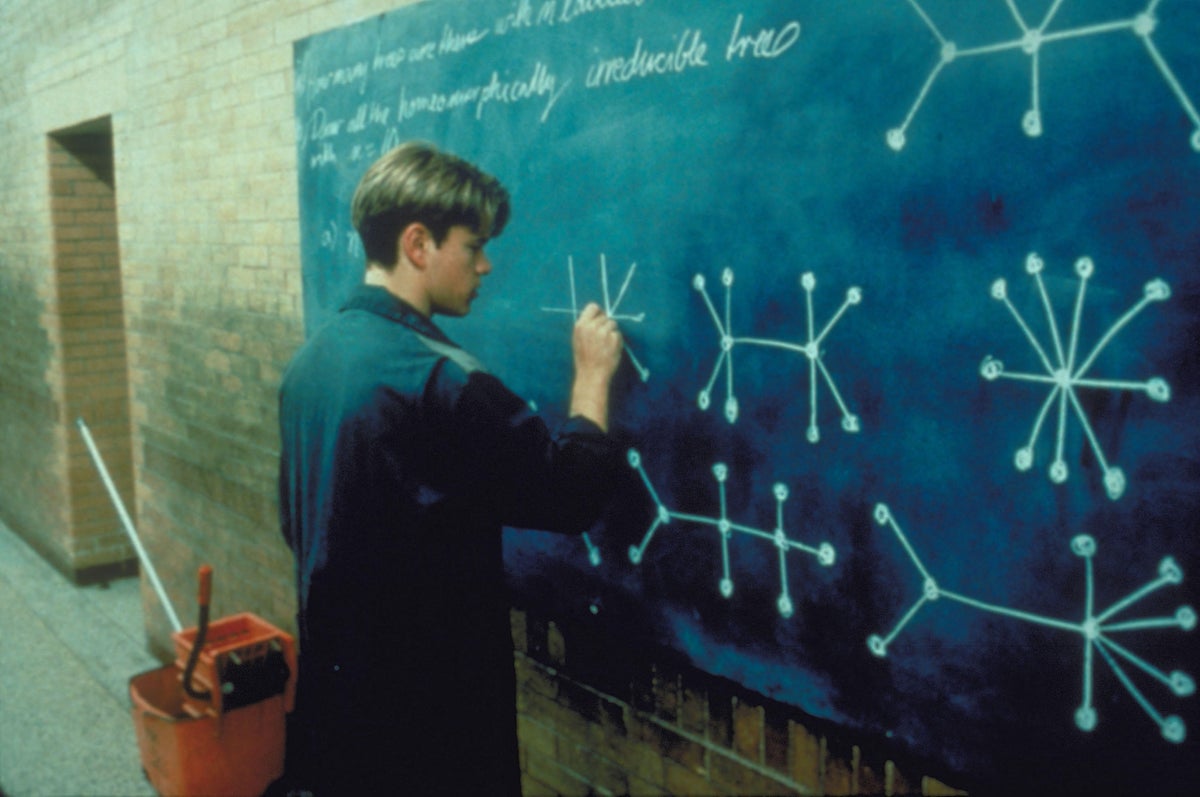
“Wood’s name also was familiar to moviegoers through the Academy Award-winning “Good Will Hunting,” released in 1997. The lead character, a pugnacious, self-taught genius played by Matt Damon, taunts a Harvard undergraduate: “You’re gonna be in here regurgitating Gordon Wood, talking about, you know, the pre-revolutionary utopia and the capital-forming effects of military mobilization.” (Ideas, Wood would point out, that he did not endorse).”
 
  • Like
Reactions: CVLion

LionJim

Heisman
Oct 12, 2021
15,238
21,123
113
“Wood’s name also was familiar to moviegoers through the Academy Award-winning “Good Will Hunting,” released in 1997. The lead character, a pugnacious, self-taught genius played by Matt Damon, taunts a Harvard undergraduate: “You’re gonna be in here regurgitating Gordon Wood, talking about, you know, the pre-revolutionary utopia and the capital-forming effects of military mobilization.” (Ideas, Wood would point out, that he did not endorse).”
You’ll forgive me if I focused on the mathematics part of Good Will Hunting.
 

Tom McAndrew

BWI Staff
Staff member
Oct 27, 2021
80,059
66,029
113
I’m not familiar but he seems to have been a very fine and influential scholar. Attention must be paid. I’m hoping @Tom McAndrew can expand on his influence.


One of the giants in the field -- probably the biggest name in American Revolution historians that was alive until today. I wrote recently that he and Joseph Ellis were both probably the two biggest historians alive on the American Revolution, and each had lead a school of thought during their academic careers. In that note, I mentioned that Ellis was still producing books, though some health issues had impacted that of late, while Wood wasn't producing many books, but was still authoring essays, and reviews, but had pretty much stopped generating books. (Both of the aforementioned have been retired for some time, and neither of their respective universities replaced them with a professor/scholar that focused on the American Revolution -- something that they and others in the field interpreted in several ways.) While not as prolific of a writer of books, some would also put Mary Beth Norton (also retired) in the same level of Gordon Wood and Joseph Ellis.

Interestingly, I was just speaking with a very high level historian on Friday. They mentioned that in the prior week (I think that was the timeframe) they had participated in a forum with several other leading historians. They commented that if they were lucky enough to live to 92, they hoped that they would be as smart, and as engaged, as Gordon Wood had been at the forum.

I hope that provides some context.

FWIW, I have a friend that attended Brown, and took a course that Wood taught (possibly a couple of courses), though this friend went on to a career as a lawyer, though on the side has written @ seven books on the American Revolution.
 

CVLion

All-Conference
Oct 13, 2021
990
1,992
93
“Wood’s name also was familiar to moviegoers through the Academy Award-winning “Good Will Hunting,” released in 1997. The lead character, a pugnacious, self-taught genius played by Matt Damon, taunts a Harvard undergraduate: “You’re gonna be in here regurgitating Gordon Wood, talking about, you know, the pre-revolutionary utopia and the capital-forming effects of military mobilization.” (Ideas, Wood would point out, that he did not endorse).”
I feel like the character of Will Hunting would make fun of someone who used the word “pugnacious” to describe him.

And then maybe punch the guy.
 
Last edited:
  • Like
Reactions: BobPSU92

Thorndike2021

All-Conference
Mar 1, 2012
843
1,884
93
“We all want justice, but not at the expense of truth.” G.S. Wood

Sadly, the days of 'historians' who believe the above died in a parking lot yesterday. We are now left with nothing but advocates pushing very often bizarre agendas through selective interpretations of actions and words of people who have been dead for centuries.

Rest easy, sir.
 

Tom McAndrew

BWI Staff
Staff member
Oct 27, 2021
80,059
66,029
113
“We all want justice, but not at the expense of truth.” G.S. Wood

Sadly, the days of 'historians' who believe the above died in a parking lot yesterday. We are now left with nothing but advocates pushing very often bizarre agendas through selective interpretations of actions and words of people who have been dead for centuries.

Rest easy, sir.

The quote you listed seems like something that which any historian, and any non-historian, would be in agreement.

But you could also argue, and pretty convincingly, that the quote is specious, as that's rarely what happens in history.

For some background, Wood had a bit of a reputation for the past decade (or more) of being very rigid in his interpretations, and evaluations, of history, arguments raised by younger historians, as well as in his reaction when additional sources of information came along that caused many to reconsider things that were thought to be settled history of the American Revolution. His supporters generally backed him, though even they were starting to question his arguments and analysis of newly discovered information. He was passionate, and pretty erudite in his arguments against newer interpretations, or analysis of new information, though not always as convincing as you might think.

He was rather strident in his dismissal of younger historian Woody Holton's arguments in Holton's 2021 book, Liberty Is Sweet: The Hidden History of the American Revolution. I read the book, and saw several presentations by Holton. I also read Wood's arguments against some of Holton's claims. It elevated to the point that they had an online debate in early 2022 (possibly late 2021; I can't recall exactly), which I watched. I felt that if I was scoring the debate, I would have ruled it a draw. Holton made a compelling argument that the American Revolution was started in part, at least by some in the southern colonies, to protect their slave holdings. IMHO, there is some credence to that argument with regard to certain individuals in the South. But I felt that Holton didn't fully support his argument that the protection of slave holdings was a key reason the American Revolution was started. On the other side of the debate, IMHO, Wood was on solid ground in dismissing Holton's broader claim that this protection was a key cause of the American Revolution. But IMHO, Wood also fell short in his dismissal that Holton's point had any value, in that Wood felt that this protection was not a factor at all, by any person, in any colony, for starting the American Revolution.

If you expand this to a broader scale, changing interpretations in history happens quite frequently, as "new" information comes available. A current case in point dealing with the American Revolution: John Adams, about 30 years after the fact, made some claims about what John Dickinson did on a particular day, during and after an argument, at the Second Continental Congress. Adams didn't cast Dickinson in the best manner, and his claims have frequently been cited in history books for the past 220 or so years. In the past year, four letters of Dickinson that nobody knew existed came up for auction -- they had never been mentioned in any history books. And after analysis, the letters appear to make a pretty compelling case that Adams either forgot what happened 30 years earlier, or was doing his best to influence the record to his perspective/way of thinking (Dickinson was dead at this point, and thus wasn't around to dispute Adams's claims, or set the record straight). So a group of leading historians, including the head of the Dickinson Papers Project, and others that had cited what Adams stated (without providing any documentation or collaboration from other Founders), are writing about the "new" information, and their take on it in the upcoming issue of the William and Mary Quarterly, which is one of the leading academic journals on the founding and early American history. I haven't read any of the different essays, but in speaking with one of the historians that wrote an essay for the Quarterly for this project, it's pretty clear that the historians don't all reach the same conclusion on the "new" information. And most of those involved in this project are the elite of the elite in the study of the American Revolution/founding.

History is, to a large extent, always an interpretation. Sure, we can say with certainty that the Declaration of Independence was adopted on a specific day, or that a battle took place at a specific location on a specific day. But the hows and whys of these events are constantly being debated. Historians that are at the absolute top of their field, like Wood, make interpretations and claims that are based on all the information they have available at that time. But additional information continues to be unearthed which may support exactly what the earlier leading historians claimed/interpreted, or it may prove that things were not as black and white as the earlier leading historian claimed/interpreted, or it may prove that the earlier leading historians claims/interpretations were inaccurate. I point this out so that folks can perhaps not respond so reactively when something "new" comes out in history, and realize that it's just part of the process.
 
Last edited:

LionJim

Heisman
Oct 12, 2021
15,238
21,123
113
The quote you listed seems like something that which any historian, and any non-historian, would be in agreement.

But you could also argue, and pretty convincingly, that the quote is specious, as that's rarely what happens in history.

For some background, Wood had a bit of a reputation for the past decade (or more) of being very rigid in his interpretations, and evaluations, of history, arguments raised by younger historians, as well as in his reaction when additional sources of information came along that caused many to reconsider things that were thought to be settled history of the American Revolution. His supporters generally backed him, though even they were starting to question his arguments and analysis of newly discovered information. He was passionate, and pretty erudite in his arguments against newer interpretations, or analysis of new information, though not always as convincing as you might think.

He was rather strident in his dismissal of younger historian Woody Holton's arguments in Holton's 2021 book, Liberty Is Sweet: The Hidden History of the American Revolution. I read the book, and saw several presentations by Holton. I also read Wood's arguments against some of Holton's claims. It elevated to the point that they had an online debate in early 2022 (possibly late 2021; I can't recall exactly), which I watched. I felt that if I was scoring the debate, I would have ruled it a draw. Holton made a compelling argument that the American Revolution was started in part, at least by some in the southern colonies, to protect their slave holdings. IMHO, there is some credence to that argument with regard to certain individuals in the South. But I felt that Holton didn't fully support his argument that the protection of slave holdings was a key reason the American Revolution was started. On the other side of the debate, IMHO, Wood was on solid ground in dismissing Holton's broader claim that this protection was a key cause of the American Revolution. But IMHO, Wood also fell short in his dismissal that Holton's point had any value, in that Wood felt that this protection was not a factor at all, by any person, in any colony, for starting the American Revolution.

If you expand this to a broader scale, changing interpretations in history happen quite frequently, as "new" information comes available. A current case in point dealing with the American Revolution: John Adams, about 30 years after the fact, made some claims about what John Dickinson did on a particular day, during and after an argument, at the Second Continental Congress. Adams didn't cast Dickinson in the best manner, and his claims have frequently been cited in history books for the past 220 or so years. In the past year, four letters of Dickinson that nobody knew existed came up for auction -- they had never been mentioned in any history books. And after analysis, the letters appear to make a pretty compelling case that Adams either forgot what happened 30 years earlier, or was doing his best to influence the record to his perspective/way of thinking (Dickinson was dead at this point, and thus wasn't around to dispute Adams's claims, or set the record straight). So a group of leading historians, including the head of the Dickinson Papers Project, and others that had cited what Adams stated (without providing any documentation or collaboration from other Founders), are writing about the "new" information, and their take on it in the upcoming issue of the William and Mary Quarterly, which is one of the leading academic journals on the founding and early American history. I haven't read any of the different essays, but in speaking with one of the historians that wrote an essay for the Quarterly for this project, it's pretty clear that the historians don't all reach the same conclusion on the "new" information. And most of those involved in this project are the elite of the elite in the study of the American Revolution/founding.

History is, to a large extent, always an interoperation. Such, we can say with certainty that the Declaration of Independence was adopted on a specific day, or that a battle took place at a specific location on a specific day. But the hows and whys of these events are constantly being debated. Historians that are at the absolute top of their field, like Wood, make interpretations and claims that are based on all the information they have available at that time. But additional information continues to be unearthed which may support exactly what the earlier leading historians claimed/interpreted, or it may prove that things were not as black and white as the earlier leading historian claimed/interpreted, or it may prove that the earlier leading historians claims/interpretations were inaccurate. I point this out so that folks can perhaps not respond so reactively when something "new" comes out in history, and realize that it's just part of the process.
I had found this Bluesky post from Karin Wulf, a colleague of Wood’s at Brown. I thought it was interesting. It seems to correspond with this post.

 
  • Like
Reactions: Tom McAndrew

LionJim

Heisman
Oct 12, 2021
15,238
21,123
113
I had found this Bluesky post from Karin Wulf, a colleague of Wood’s at Brown. I thought it was interesting. It seems to correspond with this post.

I guess the certainty and finality of mathematics is an attraction in itself.
 

Tom McAndrew

BWI Staff
Staff member
Oct 27, 2021
80,059
66,029
113
I had found this Bluesky post from Karin Wulf, a colleague of Wood’s at Brown. I thought it was interesting. It seems to correspond with this post.


Karin's quite a nice person. I've communicated with her many times. She only moved to Brown a couple of years ago, so she never was there when Wood was teaching. She's the director and librarian at the John Carter Brown Library, at Brown, and also teaches there. Before that, she was director of the Omohundro Institute of Early American History & Culture and also taught at William & Mary. While her focus has changed a bit, a lot of her early research was on Philadelphia, and more specifically the people (mainly female) that lived there before, during, and after the American Revolution. In many ways, she was in the vanguard of a major shift in research on the American Revolution in recent years which focuses more on the common people of the time, in the military, etc., as opposed to the Founding Fathers and the generals and other leading officers in the combat. The Founders and officers still get a lot of coverage, but the research on the everyday people has really been great, as it has made things much more realistic for trying to imagine what life was like for commoners during the Revolution/Founding.
 
Last edited:
  • Like
Reactions: LionJim

LionJim

Heisman
Oct 12, 2021
15,238
21,123
113
Karin's quite a nice person. I've communicated with her many times. She only moved to Brown a couple of years ago, so she never was there when Wood was teaching. She's the director and librarian at the John Carter Brown Library, at Brown, and also teaches there. Before that, she was director of the Omohundro Institute of Early American History & Culture and also taught at William & Mary. While her focus has changed a bit, a lot of her early research was on Philadelphia, and more specifically the people (mainly female) that lived there before, during, and after the American Revolution. In many ways, she was in the vanguard of major shift in research on the American Revolution in recent years which focuses more on the common people of the time, in the military, etc., as opposed to the Founding Fathers and the generals and other leading officers in the combat. The Founders and officers still get a lot of coverage, but the research on the everyday people has really been great, as it has made things much realistic for trying to imagine what life was life for commoners during the Revolution/Founding.
So awesome. Thanks for sharing your enthusiasm.
 

LionJim

Heisman
Oct 12, 2021
15,238
21,123
113
 
Last edited:

Tom McAndrew

BWI Staff
Staff member
Oct 27, 2021
80,059
66,029
113
An interesting article about Wood:

 
  • Love
Reactions: LionJim

Tom McAndrew

BWI Staff
Staff member
Oct 27, 2021
80,059
66,029
113
Historian David Waldstreicher captured a lot of the strength, and also the weakness, of the writings and arguments made by the late Gordon Wood. This is probably the best article I've seen about Wood since his passing.


Tom McAndrew

BWI Staff
Staff member
Oct 27, 2021
80,059
66,029
113
A pretty moving tribute, and some personal stories of her interactions with Gordon Wood, from one of my favorite scholars of the American Revolution, Yale professor Joanne Freeman. She posted this on Monday -- the day that Wood's death was announced. You can see and hear that at times she has a tough time keeping her emotions in check when talking about Wood, even though as she mentioned, she did not agree with all of his arguments about the American Revolution/Founding, as his passing was such a shock to her, and to the wider community of historians.