not really. BTW, scotus just ruled in callais.It should still matter that the voters are the ones who passed it.
Virginia Redistricting PASSED!!
- Thread starter Chumpsky
- Start date
You are using an out of date browser. It may not display this or other websites correctly.
You should upgrade or use an alternative browser.
You should upgrade or use an alternative browser.

Yeah, this is what I had said a few days ago. I disagree with all partisan gerrymandering. But also, its a race to the bottom, and both sides feel they have to right now to survive. The only solution is a law outlawing it nationwise, so there isn't this call and response by both sides.I don't agree with what Desantis is doing although it is a reasonable response to Virginia. However, he ate Disney for lunch and will do the same to Jeffries--DeSantis is very slick and effective.


Yeah, this is what I had said a few days ago. I disagree with all partisan gerrymandering. But also, its a race to the bottom, and both sides feel they have to right now to survive. The only solution is a law outlawing it nationwise, so there isn't this call and response by both sides.
We could have such a good conversation about the various avenues to proportional representation if only the adults participated.

What impact does this have?
Probably none in va, but potentially lots as the republican South responds to Virginia

Complicated procedural history but I think the technical answer is no.Didn't this same Supreme Court approve the creation of this exact same district in Louisiana years ago, or am I missing something?
According to chat GPT, the popular vote nationally in 2024 with respect to the House of Representatives was 49.75% for the Republicans and 47.15% for the democrats. So, apparently by accident, the House of Representatives from that election does reflect the national vote. Personally, I think that a national redistricting standard needs to be developed.I can't fathom SCOTUS cares about compactness at this point.
@DailyBuck7 et al, Republicans have (generously) 0 credibility on the topic of gerrymandering.
- Democrats have repeatedly backed federal anti-gerrymandering legislation like H.R. 1 / the For the People Act, which included redistricting reforms.
- In Rucho v. Common Cause, the conservative majority of SCOTUS said federal courts could not police partisan gerrymandering, while the liberal justices dissented.
- The states that have actually moved against partisan gerrymandering are overwhelmingly blue or purple, including California, Arizona, and Colorado, all of which use independent redistricting commissions.
- Red states that passed anti-gerrymandering rules have often tried to gut or ignore them anyway, with Ohio and Florida being the obvious examples.
- The latest escalation in partisan map-drawing has been tied to Trump pushing Texas to produce more GOP-friendly districts.
- Banning gerrymandering only for one party is like banning hard fouls for one team while letting the other team play without rules (which is what had been happening at the state level)
- If the GOP wants to complain, it should first support the same rules Democrats already keep trying to put in place nationally.
I would add that I am extremely suspicious of anything proposed by Adam Schiff who is one of the co-sponsors of one of the bills. He is a Bernie Madoff level fraud.
According to chat GPT, the popular vote nationally in 2024 with respect to the House of Representatives was 49.75% for the Republicans and 47.15% for the democrats. So, apparently by accident, the House of Representatives from that election does reflect the national vote. Personally, I think that a national redistricting standard needs to be developed.
I would add that I am extremely suspicious of anything proposed by Adam Schiff who is one of the co-sponsors of one of the bills. He is a Bernie Madoff level fraud.
So one of the things I'm actively talking about at work is the run rates on production orders not matching what we're actually doing. Some of the parts are running 150% of standard and some are 50% of standard. And by dumb luck and at a high level, the total impact to the hours in the schedule isn't that bad. But that doesn't mean that individual machines and departments aren't totally hosed. This is much the same way with Gerrymandering (and, to be fair, it's not nearly as bad at the federal level as it is for several state legislative bodies).
While I think there could be some merit to being suspicious about the author of a bill, I don't think it's worth worrying about the co-sponsors unless the bill otherwise looks bad.
According to chat GPT, the popular vote nationally in 2024 with respect to the House of Representatives was 49.75% for the Republicans and 47.15% for the democrats. So, apparently by accident, the House of Representatives from that election does reflect the national vote. Personally, I think that a national redistricting standard needs to be developed.
I would add that I am extremely suspicious of anything proposed by Adam Schiff who is one of the co-sponsors of one of the bills. He is a Bernie Madoff level fraud.
Also I think districts are fundamentally flawed. I think we need to move to multi-member districts with proportional representation or mixed member proportional representation if we really value having "our own" representative.
Florida is going to be interesting. On the one hand, my understanding is that state law may preclude political gerrymandering (not sure of definition). On the other hand, callais basically says partisan considerations can essentially trump racial effects in map drawing. So, while callais may clear paths for some states, I’m not actually sure how much it helps in Fla., unless they’re saying callais actually puts existing majority minority districts at risk as unconstitutional race based districts that must be “corrected”
Florida is going to be interesting. On the one hand, my understanding is that state law may preclude political gerrymandering (not sure of definition). On the other hand, callais basically says partisan considerations can essentially trump racial effects in map drawing. So, while callais may clear paths for some states, I’m not actually sure how much it helps in Fla., unless they’re saying callais actually puts existing majority minority districts at risk as unconstitutional race based districts that must be “corrected”
I think Florida would have a very difficult time arguing that what they're attempting to do isn't a partisan gerrymander with all of the very public comments that have been made. Their Supreme Court would have to either completely ignore the law, say the law is unconstitutional (or was it a Florida Amendment) or say "oops this is illegal but undoing it would be haarrrrrd" to allow the proposal to occur.
To be clear, I'm not saying at all they won't do one of those three.
Edit: it was an amendment so it's going to look really bad for the courts to allow this to happen.

"Compactness" is so subjective that, IMHO, it has little meaning. If you looked at each state's map, you would fined plenty of districts that make a mockery of the notion of compactness, and not all of them are bad. The geographical distribution of voters is just not a neat, regularly-shaped thing. to begin with.Yeah, cucinelli is an intensely political beast so I wouldn’t put much stock in things he says.
my sense is that compactness issues are pretty tough to win, but as noted, I expect this is their attempt to find a federal issue to take up
"Compactness" is so subjective that, IMHO, it has little meaning. If you looked at each state's map, you would fined plenty of districts that make a mockery of the notion of compactness, and not all of them are bad. The geographical distribution of voters is just not a neat, regularly-shaped thing. to begin with.
It's also very difficult to solve for "competitiveness" while maintaining "compactness". I know I've got my biases here but competitiveness is significantly more important to me.
The diverse republican south.Probably none in va, but potentially lots as the republican South responds to Virginia
Pretty much close to the same exact issue before the Virginia supreme Court. The description of the issue was so dishonest that it was laughable. Also, the redistricting occurred during a legislative session that was not scheduled to handle redistricting. Multiple legal issues each of which would strike down the law. I do expect the Virginia supreme Court to find an excuse to ignore the law and wouldn't be surprised if the same thing happens in Florida.. Their Supreme Court would have to either completely ignore the law, say the law is unconstitutional (or was it a Florida Amendment) or say "oops this is illegal but undoing it would be haarrrrrd" to allow the proposal to occur.
Edit: it was an amendment so it's going to look really bad for the courts to allow this to happen.
Compactness is not intrinsically subjective and although in certain circumstances it would be difficult to apply it does have real meaning. What it is designed to prohibit is the Philip Burton California, democratic,method of creating art and crazily drawn up gerrymandered districts. It would have to be part of any general law trying to stop the gerrymandering craziness."Compactness" is so subjective that, IMHO, it has little meaning. If you looked at each state's map, you would fined plenty of districts that make a mockery of the notion of compactness, and not all of them are bad. The geographical distribution of voters is just not a neat, regularly-shaped thing. to begin with.
it has less to do with current diversity than it does with limits they've been subject to in map-drawing (due to historical practices that continue to be invoked by plaintiffs) that, as a practical matter, northern states haven't, which limits may no longer apply in quite the same way.The diverse republican south.
As Ive noted elsewhere, I think there are some legitimate 'political' bases for map drawing. One of them is to maintain the coherence of geographically concentrated interests, so as to ensure that there is a voice that understands and can articulate those interests in the legislature. Sometimes those interests are economic (eg, an agrarian, mining, government, or defense industry region), and sometimes they may be social or even racial (eg, a concentrated ethnic population).
Last edited:
Pretty much close to the same exact issue before the Virginia supreme Court. The description of the issue was so dishonest that it was laughable. Also, the redistricting occurred during a legislative session that was not scheduled to handle redistricting. Multiple legal issues each of which would strike down the law. I do expect the Virginia supreme Court to find an excuse to ignore the law and wouldn't be surprised if the same thing happens in Florida.
It's not really the same thing at all. You're arguing that the VA ballot measure is misleading, fair enough. Florida is trying to unilaterally break their own constitution.
He is not simply making the misleading argument. He is also making hte argument that the ballot was not properly placed before the electorate under the state constitution as a matter of legislature authority and timing. If those arguments have merit (and they do have some), they are, in fact, the very same thing - an action taken in violation of state constitutional restrictions and processes.It's not really the same thing at all. You're arguing that the VA ballot measure is misleading, fair enough. Florida is trying to unilaterally break their own constitution.
He is not simply making the misleading argument. He is also making hte argument that the ballot was not properly placed before the electorate under the state constitution as a matter of legislature authority and timing. If those arguments have merit (and they do have some), they are, in fact, the very same thing - an action taken in violation of state constitutional restrictions and processes.
It's still a procedural violation and not a violation on the merits (I'm not getting my terms correct). I view those pretty differently.
Ok so let me get this straight. Violations of, say, the constitutional prohibition on cruel and unusual punishment are bad since it's 'substantive', but getting rid of jury trials, or maybe teh requirement for search warrants, would be a-ok since it's merely procedural?It's still a procedural violation and not a violation on the merits (I'm not getting my terms correct). I view those pretty differently.
This is the fundamental problem with the way way too many americans are taught, and understand, constitutional protections: the structural and procedural stuff provide as much, if not more, protections to our basic rights than the substantive stuff does or ever will. Indeed, we're seeing just how much the substantive stuff can be "reinterpreted" (as it had been before under the guise of a 'living constitution' to achieve more "fashionable" results).
Just to illustrate that with a bit from teh very end of the argument from the VA case which was interesting and surprising but hasn't gotten much airplay. One of the plaintiffs in the VA case is a democratic voter, who voted early in the 2024 state legislative election for a certain incumbent democratic candidate in her district. After she had cast her vote, but before the "election day", said incumbent candidate introduced and sponsored the gerrymandering bill. The democratic voter said that, had she known he would do that she would not have voted for said candidate. So, while the state constitutional/"procedural" requirement of having an intervening state legislative election between when a constitutional amendment is introduced and when it is voted on may not sound like much, the question of whether the election started when she cast her vote early as authorized by state law, or when it started on 'election day', has become one with some very real substantive implications for democratic governance and accountability.
Last edited:
Ok so let me get this straight. Violations of, say, the constitutional prohibition on cruel and unusual punishment are bad since it's 'substantive', but getting rid of jury trials, or maybe teh requirement for search warrants, would be a-ok since it's merely procedural?
This is the fundamental problem with the way way too many americans are taught, and understand, constitutional protections: the structural and procedural stuff provide as much, if not more, protections to our basic rights than the substantive stuff does or ever will. Indeed, we're seeing just how much the substantive stuff can be "reinterpreted" (as it had been before under the guise of a 'living constitution' to achieve more "fashionable" results).
Just to illustrate that with a bit from teh very end of the argument from the VA case which was interesting and surprising but hasn't gotten much airplay. One of the plaintiffs in the VA case is a democratic voter, who voted early in the 2024 state legislative election for a certain incumbent democratic candidate in her district. After she had cast her vote, but before the "election day", said incumbent candidate introduced and sponsored the gerrymandering bill. The democratic voter said that, had she known he would do that she would not have voted for said candidate. So, while the state constitutional/"procedural" requirement of having an intervening state legislative election between when a constitutional amendment is introduced and when it is voted on may not sound like much, the question of whether the election started when she cast her vote early as authorized by state law, or when it started on 'election day', has become one with some very real substantive implications for democratic governance and accountability.
I didn't say it was "ok", I said it "wasn't the same".
If the ballot measure broke the law then it broke the law. The desired outcome is not illegal in Virginia while it is in Florida. Florida has a specific constitutional amendment to prohibit the very thing that Florida is even attempting to do. Virginia is trying to do something legal in a potentially illegal way. Both potentially illegal, not the same.
There are few things more substantive than describing the ballot issue that has been voted on. The Virginia Democrats lied about what was on the ballot and it is probable that if there had been a halfway honest description of the ballot issue, that the vote would have gone the other way. You only need approximately one half of 1% of the voters to change their mind to change the result of the vote.I didn't say it was "ok", I said it "wasn't the same".
If the ballot measure broke the law then it broke the law. The desired outcome is not illegal in Virginia while it is in Florida. Florida has a specific constitutional amendment to prohibit the very thing that Florida is even attempting to do. Virginia is trying to do something legal in a potentially illegal way. Both potentially illegal, not the same.
There are few things more substantive than describing the ballot issue that has been voted on. The Virginia Democrats lied about what was on the ballot and it is probable that if there had been a halfway honest description of the ballot issue, that the vote would have gone the other way. You only need approximately one half of 1% of the voters to change their mind to change the result of the vote.
Should the Constitution of Virginia be amended to allow the General Assembly to temporarily adopt new congressional districts to restore fairness in the upcoming elections, while ensuring Virginia's standard redistricting process resumes for all future redistricting after the 2030 census?
Where's the lie?
The word "fairness". Here is a more accurate description of what was before the voters. "Should the Constitution be amended to disenfranchise about 46% of Virginia's voters with respect to the House of Representatives in order to achieve political goals in the Nationwide House of Representatives elections." This is accurate.Where's the lie?
Even if they used something halfway accurate it could have changed the result. Maybe something like: "should the Constitution be amended so that Democratic voters could be favored in Virginia over Independents and Republican voters in the same way that others States favor Republican over Democrats and independent voters."
It is really hard to write anything that is not clearly and overtly political because that was the exact intent of the amendment. Any issue of fairness to the voters of Virginia was exactly the opposite of what was intended and was a lie.
The word "fairness". Here is a more accurate description of what was before the voters. "Should the Constitution be amended to disenfranchise about 46% of Virginia's voters with respect to the House of Representatives in order to achieve political goals in the Nationwide House of Representatives elections." This is accurate.
Even if they used something halfway accurate it could have changed the result. Maybe something like: "should the Constitution be amended so that Democratic voters could be favored in Virginia over Independents and Republican voters in the same way that others States favor Republican over Democrats and independent voters."
It is really hard to write anything that is not clearly and overtly political because that was the exact intent of the amendment. Any issue of fairness to the voters of Virginia was exactly the opposite of what was intended and was a lie.
There was an explainer sheet and the proposed maps were explicitly available. I just don't see how this is any more misleading than any other ballot measure or bill name.
If you drop the word "fairness" it is at least partially accurate but incomplete. If everything else was clearly explained, why the need to insert the obvious lie with respect to the word fairness. It is so inaccurate and the election was so close that this lie could have or probably did affect the result.There was an explainer sheet and the proposed maps were explicitly available. I just don't see how this is any more misleading than any other ballot measure or bill name.
If you drop the word "fairness" it is at least partially accurate but incomplete. If everything else was clearly explained, why the need to insert the obvious lie with respect to the word fairness. It is so inaccurate and the election was so close that this lie could have or probably did affect the result.
It's not an "obvious lie", you think of it as one. As we've discussed in plenty of other avenues, "fairness" is subjective.
Many things that are subjective can be the subject of lies. For instance, if you were discussing a medical examination specialty test that only 1% of doctors passed and you said it was easy. That is a lie. Or, if you said the country of the Philippines had an honest government and a solid economy that would be a lie. You could go on and on.It's not an "obvious lie", you think of it as one. As we've discussed in plenty of other avenues, "fairness" is subjective.
Also, if fairness is subjective, why put it in the ballot language at all? (Of course, the answer is to gain a political advantage with people with very little knowledge of what is in the amendment package)
Last edited:
Thanks for the explanation. I know this probably oversimplifies the situation, why not just cluster zip codes and call it a day. Seems like this is way more complicated and able to be manipulated than it should be.it has less to do with current diversity than it does with limits they've been subject to in map-drawing (due to historical practices that continue to be invoked by plaintiffs) that, as a practical matter, northern states haven't, which limits may no longer apply in quite the same way.
As Ive noted elsewhere, I think there are some legitimate 'political' bases for map drawing. One of them is to maintain the coherence of geographically concentrated interests, so as to ensure that there is a voice that understands and can articulate those interests in the legislature. Sometimes those interests are economic (eg, an agrarian, mining, government, or defense industry region), and sometimes they may be social or even racial (eg, a concentrated ethnic population).
Many things that are subjective can be the subject of lies. For instance, if you were discussing a medical examination specialty test that only 1% of doctors passed and you said it was easy. That is a lie. Or, if you said the country of the Philippines had an honest government and a solid economy that would be a lie. You could go on and on.
Also, if fairness is subjective, why put it in the ballot language at all? (Of course, the answer is to gain a political advantage with people with very little knowledge of what is in the amendment package)
I circle back to: how is this different from virtually every political thing ever? Politicians lie when they're campaigning, we don't get to invalidate their election. Politician's lie when they pass laws, the laws don't get invalidated. Ballot measures paint things in a biased manner.
Look, I hate the whole practice of Gerrymandering. I desperately wish the GOP could quit being such POS's about it and support some federal reforms. If the ballot measure is overturned, I will not lose any sleep over it. And even if they straight up lied on the ballot measure (which they didn't), it's still not as bad as what Florida is trying to do or what Ohio has done numerous times already.
They could - ie, by programming the map drawing software to make the most important criteria “compactness”Thanks for the explanation. I know this probably oversimplifies the situation, why not just cluster zip codes and call it a day. Seems like this is way more complicated and able to be manipulated than it should be.
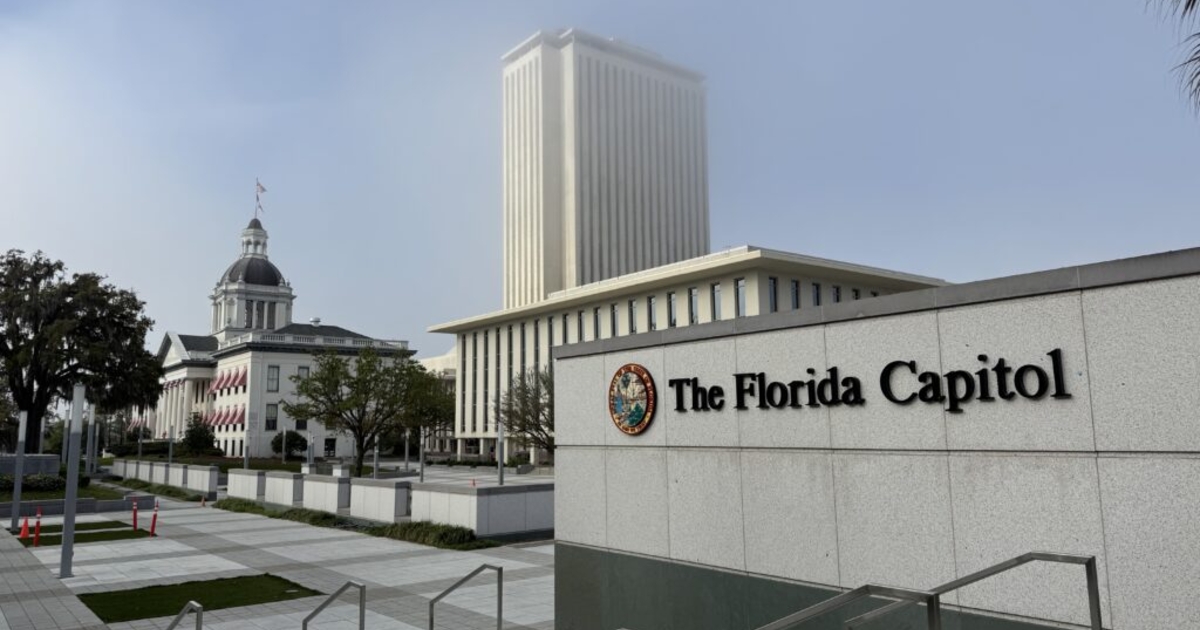
DeSantis argues LA v. Callais ruling nullifies Florida’s Fair Districts Amendments
Pushing the Florida Legislature to approve his redrawn congressional maps, Gov. Ron DeSantis’ office is using the U.S. Supreme Court’s decision to trash a Louisiana congressional map as evidence that Florida’s anti-gerrymandering amendment is invalid.
and there it is... (set aside the dubious source)
I tend to agree with you that as bare-knuckle politics goes this is not beyond the pale. On the other hand, it is way worse than what Ohio has done in that Ohio has five Democratic seats out of 15 all together. If you do the analysis that some people did upthread about if you only have 40% of the voters or something like that, that you can justify zero members of the minority party. This is not that bad in that analysis either.I circle back to: how is this different from virtually every political thing ever? Politicians lie when they're campaigning, we don't get to invalidate their election. Politician's lie when they pass laws, the laws don't get invalidated. Ballot measures paint things in a biased manner.
Look, I hate the whole practice of Gerrymandering. I desperately wish the GOP could quit being such POS's about it and support some federal reforms. If the ballot measure is overturned, I will not lose any sleep over it. And even if they straight up lied on the ballot measure (which they didn't), it's still not as bad as what Florida is trying to do or what Ohio has done numerous times already.
I would also mention that cuccinelli goes through four arguments that he thinks are legitimate. On the surface, they all sound legitimate to me but I realize he is not an objective source. Even if his arguments are sound, the odds are the Virginia supreme Court will find a way to evade what Virginia law is regarding the enactment of constitutional amendments.
Seems like that would be easiest. Oh well.They could - ie, by programming the map drawing software to make the most important criteria “compactness”


good luck ever getting another black vote.HUGE!!!
It doesn't work that way. Just like Hispanics supporting ice.good luck ever getting another black vote.
Oddly that dynamic will only strengthen the r hand. The more aligned black voting is with the d side (and it’s hard to get too much more aligned as it is), the easier it will be to defend maps as driven by politics under this decision.good luck ever getting another black vote.
Latest
-
01
 Tiger Illustrated Football
Clemson outclassed by No. 4 Miami in 41-13 loss
Tiger Illustrated Football
Clemson outclassed by No. 4 Miami in 41-13 loss
-
02
 Tiger Illustrated Football
Clemson runs into too much firepower from No. 4 Miami in 41-13 loss
Tiger Illustrated Football
Clemson runs into too much firepower from No. 4 Miami in 41-13 loss
-
03
 Tiger Illustrated Football
Clemson - Miami Postgame Notes
Tiger Illustrated Football
Clemson - Miami Postgame Notes
-
04
 Tiger Illustrated Football
Dabo Swinney Postgame News Conference & Player Interviews
Tiger Illustrated Football
Dabo Swinney Postgame News Conference & Player Interviews
-
05
 Tiger Illustrated Football
Read our subscribers' comments during and after Clemson's loss to Miami
Tiger Illustrated Football
Read our subscribers' comments during and after Clemson's loss to Miami