
The Ga. Southern - Armstrong merger was one of many university/college consolidations in Georgia-- I have a family member who is employed at one of the affected universities-- but one thing they made sure to do was not to merge *any* of their HBCUs.
I believe it was Barbour that had some sort of consolidation plan. He wanted to merge the HBCUs and make MUW a satellite campus for MSU. It went over like a lead balloon.
Consolidating/merging public universities is extraordinarily rare. I think I read that the college board in Georgia made Armstrong University in Savannah a satellite campus for Georgia Southern, but that's the first and only time I've heard of such a thing. I'd be stunned if you ever saw any consolidation in MS higher ed.

Be sure and vote them out
When considering the entire package, yeah, we have it pretty easy. I've lived in a lot of places. Many hidden costs that most of these 'rankings' do not take into account.No, we don't. We have a pretty high sales tax (7%) along with middling to high income tax (5%, kicking it at a relatively low income), and low property taxes.
When considering the entire package, yeah, we have it pretty easy. I've lived in a lot of places. Many hidden costs that most of these 'rankings' do not take into account.

The problem is, when you talk about "save money" is that you are simply looking at a budget number on the school's spreadsheet.An easy way to save money at the JuCo level is to do away/cut back on athletics. No other state tries to field as many JuCo football programs as we do (football is a very expensive sport), maybe cut back to one program in the North, Central and South (or some similar configuration).

I would just like to point out that Arkansas and Alabama have multiple Universities, but they don't ALSO have as many Community colleges. Each state has 3.
I personally would like to see the community colleges be turned into true Trade schools ( diesel mechanic, welding, machine shop, plumbing, etc.)
Combine MSU and MUW programs and close MUW campus. Administratively combine Delta State and Valley; Jackson State and Alcorn.
Some CC's would probably also need to be combined/ closed.
If a person wanted a traditional 4 year college education, there is plenty of capacity to get one.
There needs to be a major 4-year school in the southern part of the state. There are probably too many public schools in state and some that should be cut, but USM isn’t one of them. USM’s nursing and teaching programs are also particularly strong (at least they were when I was coming out of high school over 15 years ago).
For comparison’s sake, look at Alabama. Yes, they have roughly double the population of Mississippi, but they also have way more than double the number of large non-HBCU 4-year schools. Alabama, Auburn, UAH, UAB, Troy, Jacksonville State, USA, UNA. All fairly large 4-year universities that offer niche degree programs that make them valuable. That’s compared to just the 3 schools in MS with similar size / degree platforms. Then they also have the HBCU component as well with Alabama State, Alabama A&M, etc., and smaller schools like West Alabama as well which are comparable to our Delta States, William Careys, etc.
The spending in MS is surely no more wasteful than Alabama. If anything, MS needs to consolidate to only 1 or 2 of the HBCU’s. Having Alcorn, JSU, and MVSU is a bit wasteful, as they all have similar strengths and weaknesses. But’s that’s a political shitstorm waiting to happen, so therefore we all know it will be virtually impossible to execute.
No, we don't. We have a pretty high sales tax (7%) along with middling to high income tax (5%, kicking it at a relatively low income), and low property taxes.
If you asked the question, what sum of money do I need to reliably throw off $1.5M in inflation adjusted dollars each year in perpetuity, one answer is that historically, you could construct a moderately risked portfolio (say 60% stock, 40% bonds) and use a 4% initial withdrawal rate, and in most scenarios (like 90-95%), that money would last a few decades and longer. If you use a 4% discount rate, then divide $1.5M by 4%, and you get $37.5M. So the answer is you need $37.5M to put together a portfolio that will produce $1.5M a year, inflation adjusted, indefinitely. Another approach would be to say you need that $1.5M every single year without risk, so you need to basically invest in T-Bills, in which case the number gets much higher (the $50M is assuming a 3% discount rate).
We're not talking about consolidating schools, but school districts. Some superintendents have lots of schools within their districts. I think some literally have one school. The question of how many school districts (and how many superintendents) you need is a different question of how many schools you need. I think most counties in Mississippi probably only need one school district. I believe Oktibeha and starkville school districts are now consolidated? And Oktibeha has a population of somewhere around 50k. If you took every county smaller than Oktibeha and gave them one school district, and then for the counties with bigger populations, gave them school districts that put around 50k in each school district, then you'd end up with about 100 school districts depending on how you rounded up or down, which would represent about a third of districts being consolidated out. And no district would have much more than the number of students than Oktibeha has, and that ignores that you still have lots of counties with one school district even though they have a tiny population. I assume consolidating across counties might be a little more difficult politically.
ETA: actually, my numbers are dated. They've already gotten down to 138 districts. And some of those counties may already share school districts. Not sure.
ETA2: If it's not obvious, those numbers are population numbers, not numbers for enrolled children. Enrolled children would maybe be a better number; not sure, as I'm guessing some places look disproporionately low b/c the public schools have failed and so a higher percentage of students go private.
Because wasting that much money on K 12 keeps us from funding anything else. K12 takes up almost 70 % of the budget. That's where cuts have to start.

You can add letting a goat company become incorporated to that listMS has made a series of bad decisions the past 150 years or so.
The problem is, when you talk about "save money" is that you are simply looking at a budget number on the school's spreadsheet.
Before you cut these programs, I would want to know exactly what you're going to do with that money, and how it affects the state of Mississippi. Then, you can make an educated decision. Do those football teams actually lose money? Did you consider the salaries of the coaching staff? Are those football players staying in the state and getting jobs? All that plays into it.
"Save money" isn't a good enough decision. The government's job is to put its money into circulation for good use and for the betterment of whoever it is governing. It's not trying to save and turn a profit. You certainly don't want to waste it, but that's why the options should be presented rather than just "save that money". That's tea party bullcheet.
An independent study a couple years ago concluded that USM generates over $600 million for the southern part of the state annually. Along with marine and coastal research, polymer sciences, researching learning disabilities in children, the DuBard School, research contracts with the US Army, the largest percentage of minority students at a non-HBCU in the state... yeah I’m not sure what USM offers. This thread is 17ing dumb. If you wanted to advocate for merging all the HBCUs into Jackson State, I could probably get on-board with that. Hell, why don’t we just move State to Hattiesburg?
 )
)Alabama has a lot more than 3 community colleges (some in this list may be private based on tuition): https://www.usnews.com/education/community-colleges/alabama?page=2

An easy way to save money at the JuCo level is to do away/cut back on athletics. No other state tries to field as many JuCo football programs as we do (football is a very expensive sport), maybe cut back to one program in the North, Central and South (or some similar configuration).
Millsaps is the most prestigious I guess, but it's still not exactly a brand name. People from there think highly of it. I'm not sure it has any purchase anymore outside of alumni. I really don't understand how they or a lot of private schools will survive. Just no value proposition to offer.I should have clarified: consolidation/merging of our public universities
Millsaps is interesting to me. I think we’d all agree they’re the most prestigious out of the private universities in the state, but they’re struggling enrollment wise. Seem to remember reading that they were adding sports to boost enrollment.
Carey might be doing the best out of all the private schools. They have a Coast campus now along with their campus in Hattiesburg.
So..$100mill, I believe, will build about 30 or so miles of two lane rural highway. Assuming most of that $100mil gets past the MDOT power brokers.
An independent study a couple years ago concluded that USM generates over $600 million for the southern part of the state annually. Along with marine and coastal research, polymer sciences, researching learning disabilities in children, the DuBard School, research contracts with the US Army, the largest percentage of minority students at a non-HBCU in the state... yeah I’m not sure what USM offers. This thread is 17ing dumb. If you wanted to advocate for merging all the HBCUs into Jackson State, I could probably get on-board with that. Hell, why don’t we just move State to Hattiesburg?
There are 151 school districts in Mississippi. Let's just say we cut out the smallest ten percent and consolidated them into a bigger school district. Just the superintendent savings alone would be conservatively $1.5M per year (really probably higher by the time you count FICA, health insurance, PERS, etc). $1.5M per year indefinitely is a lot of money. That's somewhere along the lines of $37M in a lump sum, arguably closer to $50M. That's still real money to Mississippi and it's basically no cost other than political pain.
ETA: And taking money in taxes to give it to other Mississippi residents just b/c you want to "keep it in Mississippi" is stupid. That's a burden on the people of the state that makes people less likely to stay here, and population is arguably what we need more than anything.
Right. Cutting to three jucos in the state with programs would be the death knell for all programs-- which is pretty similar to what happened in Arizona last year. There are schools that apparently lose money (Itawamba is mentioned in the SI.com article in the thread I linked earlier this year) but they could be considered investments to attract more people to colleges.
Are you smoking crack? Only a minuscule amount of non-athlete students are attracted to JuCo because of sports. Additionally, our JC system is not some shining success, we don't get near enough return on what we invest in it. I'm all for expanding needed vo tech programs and possibly academic, but sports at the JuCo level gets us nearly nothing for the investment, it is a very poor return.
We are the poorest state in the nation, why, because we keep doing the same things that continue not to work (like putting precious resources into JuCo football). Even a state as big and wealthy as Texas doesn't try to run a JuCo football league.
You obviously don't know Jack about Mississippi's Community College System.
Among the non-athlete students attracted to junior colleges because of sports are music majors/people interested in being in bands, physical therapy majors, people who want to be managers, students who are involved in the arts (photography)-- just to name a few.
Mississippi's community college system was recognized as the top community college system in 2015 by WalletHub (link). In a state where Bad Decisions are the norm, the community colleges are one of the few Smart Decisions the state has made.
The great majority of athletics scholarships granted to students attending Mississippi community colleges go to Mississippians (at least 80 percent). So the investment is made in Mississippians by Mississippians via Community Colleges.
And you are also partly wrong when it comes to Texas community colleges. There are several community colleges (though less than in years past) do compete in football: The Southwest Junior College Football Conference.
You didn’t talk about increases in FTE student population, you wrote about attracting non-athletes through sports. Make up your mind what the point you want to make is before you argue something.
If it wasn’t for athletics, FTE enrollment would be MUCH worse. So, yes. JUCO Athletics attract non-athletic students.
And community colleges *do* of course train students in career programs— they are after all the designated workforce development agency for the state. Continental Tire has the new plant in Clinton and the workforce folks at Hinds Community College are a factor.
Smart students no matter the academic program that they are enrolled in might be best advised in many cases to go to community colleges as freshmens (yep, Stans taught me English) as opposed to going to 4-year colleges straight out of high school. Tuition is cheaper, students can often get scholarships at community colleges, and if they apply themselves and do the right things then they can get scholarships when they transfer to four-year schools— and some students get band scholarships at places like MSU.
Dual enrollment is almost old hat at universities and community colleges. I know folks whose children are in classes as well as people who teach dual enrollment classes.
Edit to add: Since you dislike the community colleges talking well about themselves, here’s a news story from gulflive (that’s the Pascagoula newspaper) site from 2015 about the Mississippi Community Colleges having the top system in the nation: Link.
And there's their college of osteopathic medicine.
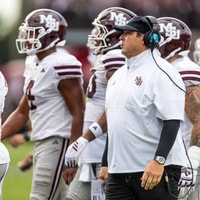 Maroon and White
Mississippi State Bye Week Checklist: What Needs Work?
Maroon and White
Mississippi State Bye Week Checklist: What Needs Work?
 Maroon and White Football
Mississippi State Bye Week Watchlist
Maroon and White Football
Mississippi State Bye Week Watchlist
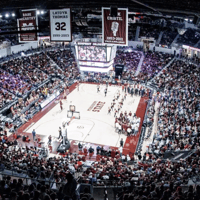 Maroon and White
Mississippi State Basketball tipoff times finalized
Maroon and White
Mississippi State Basketball tipoff times finalized
 Rivals Basketball Recruiting
Mississippi State, Maryland & UCF talking visits with 4-star forward K'Nard Callendar
Rivals Basketball Recruiting
Mississippi State, Maryland & UCF talking visits with 4-star forward K'Nard Callendar
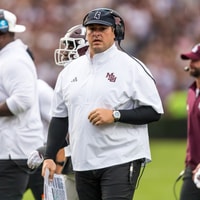 Maroon and White Football
"Fine line": Mississippi State HC Jeff Lebby speaks on managing health and preparation
Maroon and White Football
"Fine line": Mississippi State HC Jeff Lebby speaks on managing health and preparation
