A
The over and back call
- Thread starter Catfanlou_rivals54997
- Start date
You are using an out of date browser. It may not display this or other websites correctly.
You should upgrade or use an alternative browser.
You should upgrade or use an alternative browser.
Thanks to all for clearing this up ( I guess? ). My vote is that it was a loose ball because the defense deflected it twice and the possession time did not start but I’m a biased fan .
If facts were the same but the teams were switched I probably would take the other side .
The play just looked weird which I guess is why it was called and my guess is that the home team gets that call 90 percent of the time.
If facts were the same but the teams were switched I probably would take the other side .
The play just looked weird which I guess is why it was called and my guess is that the home team gets that call 90 percent of the time.

[QUO
TE="bigbluedon, post: 8610862, member: 11100"]No neutrality got it right. Hagans has possession of the ball and made a pass to Sestina. TT knocked it loose and Maxey tapped it to Nick who had backcourt status. Call was correct and yes I am a referee.[/QUOTE]
all that you have said is true, HOWEVER, the shot clock never started. The shot clock operator has 2 and ONLY 2 jobs: to reset when the ball touches the rim OR when there is change of possession, period. Since there was no shot involved here, he (I presume it is a he) would have been looking for actual team CONTROL of the ball. Apparently, he did not ever see that here. Assuming he was not asleep, then he had determined that neither team had established "possession" and it was a "loose ball". A backcourt violation would therefore NOT apply.
TE="bigbluedon, post: 8610862, member: 11100"]No neutrality got it right. Hagans has possession of the ball and made a pass to Sestina. TT knocked it loose and Maxey tapped it to Nick who had backcourt status. Call was correct and yes I am a referee.[/QUOTE]
all that you have said is true, HOWEVER, the shot clock never started. The shot clock operator has 2 and ONLY 2 jobs: to reset when the ball touches the rim OR when there is change of possession, period. Since there was no shot involved here, he (I presume it is a he) would have been looking for actual team CONTROL of the ball. Apparently, he did not ever see that here. Assuming he was not asleep, then he had determined that neither team had established "possession" and it was a "loose ball". A backcourt violation would therefore NOT apply.
Jack it was a Bam-Bam play but Hagans did have possession and the refs have to go by what they see not whether the shot clock is on or off. Oh well we still won and that is the best part.
Ok, I think I can settle this once and for all as some of you have figured it out, some kinda get it but not 100%, and others still don't get it.
RULE 9: Violations and Penalties
Section 12: Backcourt
Article 4: A player shall not be the first to touch the ball in his backcourt (with any part of his body, voluntarily or involuntarily) when the ball came from the front court while that player's team was in team control and that player or his teammate was the last to touch the ball before it went into the backcourt. (Exception: See Article 5)
Article 5: A pass or any other loose ball (including when a player in control of the ball loses control of the ball when a defensive player bats or deflects it out of his control) in the front court that is deflected by a defensive player, which causes the ball to go into the backcourt may be recovered by either team even if the offense was the last to touch the ball before it went into the backcourt.
The highlighted rule (the one everyone has been debating) is there to clarify what happens if a defensive player knocks it into the backcourt but it deflects off an offensive player. If this were a matter of the ball going out of bounds, it is very clear, the ball is out on whoever it touched last. That isn't the same for an over and back call, and Article 5 is there to clarify that. Since Maxey (offensive player) was the one that forced the ball into the backcourt, Article 5 does not apply.
We had team possession in the front court when Ashton grabbed the ball and tried to pass it to Reed. The defender then deflected it away from Reed, creating a loose ball. Maxey then tipped it into the back court where Nick caught it, thus a correct over and back call since it was the offensive player and not the defensive player that forced the ball into the back court. Also, a player is not considered in the front court until "both feet touch the playing court entirely in the front court." That is why Nick jumping in the air made no difference. He is considered in the backcourt until both feet touch in the front court.
RULE 9: Violations and Penalties
Section 12: Backcourt
Article 4: A player shall not be the first to touch the ball in his backcourt (with any part of his body, voluntarily or involuntarily) when the ball came from the front court while that player's team was in team control and that player or his teammate was the last to touch the ball before it went into the backcourt. (Exception: See Article 5)
Article 5: A pass or any other loose ball (including when a player in control of the ball loses control of the ball when a defensive player bats or deflects it out of his control) in the front court that is deflected by a defensive player, which causes the ball to go into the backcourt may be recovered by either team even if the offense was the last to touch the ball before it went into the backcourt.
The highlighted rule (the one everyone has been debating) is there to clarify what happens if a defensive player knocks it into the backcourt but it deflects off an offensive player. If this were a matter of the ball going out of bounds, it is very clear, the ball is out on whoever it touched last. That isn't the same for an over and back call, and Article 5 is there to clarify that. Since Maxey (offensive player) was the one that forced the ball into the backcourt, Article 5 does not apply.
We had team possession in the front court when Ashton grabbed the ball and tried to pass it to Reed. The defender then deflected it away from Reed, creating a loose ball. Maxey then tipped it into the back court where Nick caught it, thus a correct over and back call since it was the offensive player and not the defensive player that forced the ball into the back court. Also, a player is not considered in the front court until "both feet touch the playing court entirely in the front court." That is why Nick jumping in the air made no difference. He is considered in the backcourt until both feet touch in the front court.

Good synopsis! LOLOk, I think I can settle this once and for all as some of you have figured it out, some kinda get it but not 100%, and others still don't get it.
I have to admit, arguing or discussing logic is always fun and challenging. Appreciate the supporting rules you provided.
That was my original thought, but let some others itt talk me out of it lol. It was definitely the correct call. I think the only thing that made it confusing was it was basically a fast break, not your usual “half court set” over and back.Ok, I think I can settle this once and for all as some of you have figured it out, some kinda get it but not 100%, and others still don't get it.
RULE 9: Violations and Penalties
Section 12: Backcourt
Article 4: A player shall not be the first to touch the ball in his backcourt (with any part of his body, voluntarily or involuntarily) when the ball came from the front court while that player's team was in team control and that player or his teammate was the last to touch the ball before it went into the backcourt. (Exception: See Article 5)
Article 5: A pass or any other loose ball (including when a player in control of the ball loses control of the ball when a defensive player bats or deflects it out of his control) in the front court that is deflected by a defensive player, which causes the ball to go into the backcourt may be recovered by either team even if the offense was the last to touch the ball before it went into the backcourt.
The highlighted rule (the one everyone has been debating) is there to clarify what happens if a defensive player knocks it into the backcourt but it deflects off an offensive player. If this were a matter of the ball going out of bounds, it is very clear, the ball is out on whoever it touched last. That isn't the same for an over and back call, and Article 5 is there to clarify that. Since Maxey (offensive player) was the one that forced the ball into the backcourt, Article 5 does not apply.
We had team possession in the front court when Ashton grabbed the ball and tried to pass it to Reed. The defender then deflected it away from Reed, creating a loose ball. Maxey then tipped it into the back court where Nick caught it, thus a correct over and back call since it was the offensive player and not the defensive player that forced the ball into the back court. Also, a player is not considered in the front court until "both feet touch the playing court entirely in the front court." That is why Nick jumping in the air made no difference. He is considered in the backcourt until both feet touch in the front court.
I've done way too much googling about this stupid rule at this point. I found this video linked from some officiating forum that I believe indicates the call was incorrect:
In the clip they use to illustrate the rule change the defensive player deflects the ball in such a way that I don't think you can conclusively say the ball would have gone into the backcourt on it's own. The offensive player intentionally tips the ball trying to regain control, but the video says under the new rule he should be allowed to retrieve the ball in the backcourt because he never gained possession in the front court.
In the clip they use to illustrate the rule change the defensive player deflects the ball in such a way that I don't think you can conclusively say the ball would have gone into the backcourt on it's own. The offensive player intentionally tips the ball trying to regain control, but the video says under the new rule he should be allowed to retrieve the ball in the backcourt because he never gained possession in the front court.

Cool, now do the one at South Carolina.Ok, I think I can settle this once and for all as some of you have figured it out, some kinda get it but not 100%, and others still don't get it.
RULE 9: Violations and Penalties
Section 12: Backcourt
Article 4: A player shall not be the first to touch the ball in his backcourt (with any part of his body, voluntarily or involuntarily) when the ball came from the front court while that player's team was in team control and that player or his teammate was the last to touch the ball before it went into the backcourt. (Exception: See Article 5)
Article 5: A pass or any other loose ball (including when a player in control of the ball loses control of the ball when a defensive player bats or deflects it out of his control) in the front court that is deflected by a defensive player, which causes the ball to go into the backcourt may be recovered by either team even if the offense was the last to touch the ball before it went into the backcourt.
The highlighted rule (the one everyone has been debating) is there to clarify what happens if a defensive player knocks it into the backcourt but it deflects off an offensive player. If this were a matter of the ball going out of bounds, it is very clear, the ball is out on whoever it touched last. That isn't the same for an over and back call, and Article 5 is there to clarify that. Since Maxey (offensive player) was the one that forced the ball into the backcourt, Article 5 does not apply.
We had team possession in the front court when Ashton grabbed the ball and tried to pass it to Reed. The defender then deflected it away from Reed, creating a loose ball. Maxey then tipped it into the back court where Nick caught it, thus a correct over and back call since it was the offensive player and not the defensive player that forced the ball into the back court. Also, a player is not considered in the front court until "both feet touch the playing court entirely in the front court." That is why Nick jumping in the air made no difference. He is considered in the backcourt until both feet touch in the front court.
Does it matter that Nick's feet were off the ground when he relayed the ball? If that's the case then why isn't it out of bounds when somebody leaves their feet and crosses a sideline or baseline to save a ball?Any refs out there that can explain it to us. Replay clearly showed that not one but two TT players batted it into back court . If one of our players had gone into back court to get it that would have been ok . Why was it an infraction just because Nick was already in back court .?
Then why doesn't that apply to ball going out of bounds?First, it was a bad call because of the TT deflection, and lack of possession. That being said, a back court violation, when it's a real thing, only requires the ball to break the plane, Nick's feet in the air wouldn't matter.
Because the backcourt and the out of bounds are different?Then why doesn't that apply to ball going out of bounds?

I've done way too much googling about this stupid rule at this point. I found this video linked from some officiating forum that I believe indicates the call was incorrect:
In the clip they use to illustrate the rule change the defensive player deflects the ball in such a way that I don't think you can conclusively say the ball would have gone into the backcourt on it's own. The offensive player intentionally tips the ball trying to regain control, but the video says under the new rule he should be allowed to retrieve the ball in the backcourt because he never gained possession in the front court.
Bam!
I've done way too much googling about this stupid rule at this point. I found this video linked from some officiating forum that I believe indicates the call was incorrect:
Winner!
Does it matter that Nick's feet were off the ground when he relayed the ball? If that's the case then why isn't it out of bounds when somebody leaves their feet and crosses a sideline or baseline to save a ball?
Nick is considered to be in the backcourt until both feet have touched the ground in the front court. So even though he was in the air when he caught it, he hadn't yet established himself in the front court so it was over and back. Think of it like a player being out of bounds and the ball is coming towards him. Even if he jumps in the air and catches it and then lands inbounds, it is still out because he has not established himself inbounds before touching the ball. The inverse is true when a player is trying to save a ball from going out of bounds. They are already established inbounds and are not considered out of bounds until the ball or a part of their body touches out of bounds.
Then why doesn't that apply to ball going out of bounds?
The comment you are replying to is incorrect. There is nothing in the rules about the ball breaking the plane. See my above post as to why Nick jumping in the air did not matter and he was still considered to be in the backcourt.
I've done way too much googling about this stupid rule at this point. I found this video linked from some officiating forum that I believe indicates the call was incorrect:
In the clip they use to illustrate the rule change the defensive player deflects the ball in such a way that I don't think you can conclusively say the ball would have gone into the backcourt on it's own. The offensive player intentionally tips the ball trying to regain control, but the video says under the new rule he should be allowed to retrieve the ball in the backcourt because he never gained possession in the front court.
This is not the same as what happened in our game. The video shows a deflection and the ball hitting an offensive player and going into the backcourt where he regains possession. Under the new rule that is ok. In our game there was a deflection by the defense but the ball was still in the front court. Maxey (the offensive player) then tips it backwards, causing it to cross half court. That is still over and back since it was the offensive player that caused it to cross half court, not the defensive player.
White guy (can't read his number) for TT swats the ball into the backcourt as Maxey was coming in to tip it. Blown call.Here’s the video.
It looks pretty much the same as what happened in our game to me. In the clip the ball was still in the front court when the offensive player knocked it into the backcourt. The initial deflection from the defender knocked the ball towards the far sideline with very little momentum towards the backcourt. The offensive player hits the ball before it bounces which sends it into the backcourt.This is not the same as what happened in our game. The video shows a deflection and the ball hitting an offensive player and going into the backcourt where he regains possession. Under the new rule that is ok. In our game there was a deflection by the defense but the ball was still in the front court. Maxey (the offensive player) then tips it backwards, causing it to cross half court. That is still over and back since it was the offensive player that caused it to cross half court, not the defensive player.
Sad but true. There's alot of calls in games that are made like this. Especially if refs are looking to keep a game close, or fit their agenda of said game. That was an easy call for the refs to take a possession away from UK.I honestly think it was only called because of the way nick caught and got rid of the ball. You could tell he was unsure if it was over and back and that gave the ref all he needed. The question is simple. If nick had just caught the ball in the back court and dribbled it up, would it have been a violation? I think not.
Latest
-
01
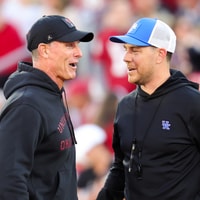 KSR Football
Oklahoma failed to land knockout punch against Kentucky in third quarter
KSR Football
Oklahoma failed to land knockout punch against Kentucky in third quarter
-
02
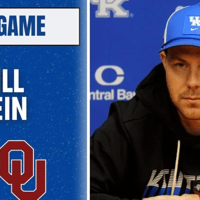 KSR Football
WATCH: Will Stein, Kentucky players recap the Oklahoma win
KSR Football
WATCH: Will Stein, Kentucky players recap the Oklahoma win
-
03
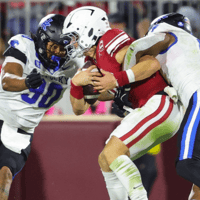 KSR Football
Grit and Connection Paved the Way for Kentucky's Comeback Win at Oklahoma
KSR Football
Grit and Connection Paved the Way for Kentucky's Comeback Win at Oklahoma
-
04
 KSR Football
Kentucky beat Oklahoma without CJ Baxter, but Will Stein expects him back soon
KSR Football
Kentucky beat Oklahoma without CJ Baxter, but Will Stein expects him back soon
-
05
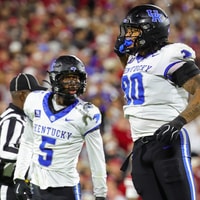 KSR Football
Pass rush helps Kentucky outslug Oklahoma to continue playoff push
KSR Football
Pass rush helps Kentucky outslug Oklahoma to continue playoff push