The Clarrett Chronicles

EvanstonCat

Senior
May 29, 2001
50,771
770
73
Once again, another thread has compelled me to dig up the archives on record. Where is this proof of institutionalized academic fraud? Of cheating?

Well, they asked for it, so here you all go. It is worthwhile for us to review and remember, what dOSU is all about, so I thank those who would ask these questions, so that we all may be reminded of the truth.

The Clarrett Chronicles


Brought to you by ESPN and esteemed press agencies


Editor’s note: Nothing describes the travesty that is duh Ohio State Football, than the chronicles of Maurice “Slo-Mo” Clarrett. Despite the fact that the 2003 Wildcats stopped him butt cold, Clarrett was indeed a force on dOSU tainted Championship team. Once the hero of the Buckeye nation, he is now scorned and abandoned like a used ***** by the Buckeye faithful that used to worship him. All for speaking the truth. And the the truth is, he more than anyone else, stands for everything that is duh Ohio State football. His story says it all.
 

EvanstonCat

Senior
May 29, 2001
50,771
770
73
Clarett claims cash, cars among benefits

By Tom Friend and Ryan Hockensmith

ESPN The Magazine

Ending six months of silence, former Ohio State running back Maurice Clarett has told ESPN The Magazine in this week's edition that he "took the fall" for the school during a 2003 NCAA investigation and that he's talking now because he wants to "clear his name" with National Football League owners and general managers.

Clarett says that while he was at Ohio State in 2002 and 2003 head coach Jim Tressel, as well as certain members of his staff and boosters, provided him with improper benefits. He says he covered up Tressel's improprieties during the NCAA investigation and afterward, Ohio State "blackballed'' him from the football program.

According to Clarett, Tressel arranged loaner cars for him and Tressel's brother, Dick, found him lucrative landscaping jobs that he did not even have to show up for. He says members of Tressel's staff also introduced him to boosters who'd slip him thousands of dollars, and the better he played, the more cash he'd receive. He says boosters eventually began inviting him into their homes or would meet him out in the community.

"When you'd leave, [the booster] sets you straight," Clarett told The Magazine. "They say, 'You got any money in your pocket?' They make sure your money's straight."

Clarett also says he likely would have been ineligible for Ohio State's national title season of 2002 if the football staff had not "aligned'' him with an academic advisor whose goal was simply to keep him eligible. He says the academic advisor enrolled him in Independent Study courses and also put him with hand-picked teachers who would pass him whether he attended their classes or not. He says his advisor also introduced him to a tutor who prepared outlines and told him what to write for assignments.

Another former Ohio State player, linebacker Marco Cooper (2000-01; Spring 2002), corroborated many of Clarett's comments. Cooper, who was suspended from the team following two arrests for drug possession, says he also had bogus landscaping jobs, that a booster helped furnish his apartment, and that he was able to borrow cars from local Columbus dealerships in exchange for signed OSU memorabilia.

In a story separate from the Clarett issue, another former Ohio State player, current Maryland running back Sammy Maldonado, says he was placed in so many courses that did not put him on the road to graduation that only 17 of a possible 40 credits earned would transfer to his new school.

Ohio State officials have declined to comment on many of the allegations. School President Karen Holbrook, Jim Tressel and Dick Tressel refused to respond through spokespersons, while Athletic Director Andy Geiger said he would not answer questions until after the magazine story appeared, if then.

Maurice Clarett says he received improper benefits during his time at Ohio State.

"We went through a yearlong investigation of our academic programs, everything that [Clarett] has to allege,'' Geiger said. "He vowed to me that he would do something to try to get us and this may be what he's trying to do.So he's on his own.

"We dealt with this guy [Clarett] for 18 months. I just hope you've checked into the background and history of who you're dealing with.''

Clarett's former academic advisor and tutor also declined comment. The NCAA, which investigated Clarett for potential academic and financial irregularities in the summer of 2003, said it is against its policy to discuss the Clarett case.

Clarett, 21, who gained 1,237 yards and scored 18 touchdowns in 2002, his only collegiate season, says he was asked during the 2003 NCAA investigation whether he received a loaner car from Tressel, and, to protect the coach, he says, he answered no. He says when he was asked about other indiscretions, he answered, "I don't know" or "I don't remember," which was a violation of NCAA Rule 10.1, requiring forthright answers.

"What would have become of Ohio State if I said everything?'' Clarett told The Magazine. "Half the team would have been suspended, and it would have been worse for everybody. I was like, 'Why don't I just take it?'"

The school suspended him for the entire 2003 season, and when Clarett asked to be reinstated for 2004, he says the athletic department systematically "blackballed him" by taking away the teachers and tutors.

Clarett then tried applying for the 2004 NFL Draft, and was first ruled eligible and then ineligible, because he wasn't the requisite three years removed from high school. He says he was "depressed" by the court's ultimate decision to ban him, but is now working out in anticipation of the 2005 draft in April. He says he is hoping this winter to play in this winter's East-West Shrine game and the Senior Bowl, all-star invitationals that would be his first football games in two years.

Several pro executives say, as of now, the running back could go as low as the fourth or fifth round. Clarett contends he will change any negative perceptions at the NFL combine in February.

"I'm thinking, 'NFL GMs know college players take money,' " Clarett says. "It was nothing like I stole something. Nothing like I'm running from the law or I'm dragging a girl down the stairs. No domestic violence. No nothing. [But] I got to clear myself up now, because it's affecting the minds of the GMs."
 

EvanstonCat

Senior
May 29, 2001
50,771
770
73
Extra Credit

By Ryan Hockensmith

ESPN The Magazine

In the fall of 1999, nearly every program in the country wanted Sammy "The Bull" Maldonado. What coach worth his whistle wouldn't? He was a Parade All-America with 99 touchdowns and a then-state-record 7,581 rushing yards for Harrison (N.Y.) High. He had to sift through 3,000 recruiting letters-all of which still rest in a U.S. Postal Service bin in the family's basement-before narrowing his list to Ohio State and Syracuse.

On a fall Friday morning, Buckeyes coach John Cooper sat down with Sammy's family in their living room. Rafael Maldonado, a street-tough native of Puerto Rico who'd gone from washing cars to owning a chunk of 55 New York City parking garages, didn't pull any punches. "You're getting a very good football player," he said. "But you're also getting a pain in the ***."

Cooper belly-laughed; he knew the type. Sammy, a B-student with 960 SATs, was a good kid, if a bit aloof. That didn't deter Cooper. A few weeks later, there was a press conference at Harrison High. Maldonado was going to become a Buckeye.

That fall, Maldonado lugged his first handoff seven yards off tackle for a touchdown against Penn State. He would rush 22 times for 50 yards as a freshman behind senior Derek Combs and junior Jonathan Wells. Buckeye fans chanted for The Bull whenever he saw the field, and even pestered his parents for autographs after games.

But after another loss to Michigan, Ohio State fired Cooper, and Jim Tressel-architect of four national titles at Division I-AA Youngstown State-took over. Within a year, Maldonado would be roadkill, unwanted by the team he played for and unable to play for anyone else.

Despite a solid spring and summer that got him up to No. 2 on the depth chart before that next season, Maldonado was on the sideline when August camp opened. He was asked only to participate in sprints at the end of practice, while Wells, now the starter, and freshman Lydell Ross, one of Tressel's first recruits, shared the running back duties. "I didn't know what I'd done wrong," Maldonado says. "I think Tressel wanted the guys he recruited, not the players who were already there."

Sammy's mother, Nereyda, came to campus in September and videotaped two weeks of her son standing with his arms crossed during all the drills. Then Rafael flew to Columbus for a face-to-face with the coaches. He says when he asked Tressel why his boy wasn't playing, the coach told him Sammy made too many mistakes in practice. Pressed again, Tressel insisted the kid sat because of blunders.

"You're a liar," Rafael shot back. "I've seen two weeks of tape, and Sammy hasn't even put on his helmet."

The Maldonados say that Tressel looked stunned when running backs coach Tim Spencer (now with the Chicago Bears) confirmed that Nereyda had attended practice, and they add that the head coach quickly shuffled them out of his office. Sammy barely spoke with the staff the rest of the season; he finished with 39 carries for 168 yards. "I was just some body," he says, "basically a walk-on." (Ohio State has declined to discuss anything about Maldonado.)

He was at a loss. A superstar talent from a privileged upbringing, Sammy wasn't used to not getting what he wanted. On a bleak February day in 2002, increasingly worried about a son who seemed defeated, Rafael Maldonado called Sammy's cell phone. Sammy had slipped into his own world, most days rarely leaving the couch in his off-campus apartment. He got up in time to watch Jerry Springer at 11, then played video games the rest of the day. Football was a past life. Sammy answered his phone but told his dad he couldn't talk because he was in class. "No you're not," Rafael said. "You're on the couch beside your roommates."

A minute later, Rafael was barging into the apartment. He shut off the PlayStation and chased the other guys out. Then he presented two options to his son: find a D1-AA program, where he could play right away, or transfer to Maryland, where Rafael could try to mine connections with coach Ralph Friedgen, a Harrison native. "I don't know," Sammy told his dad. "You decide."

Rafael asked Cooper, who'd become a family friend since his dismissal, where he should steer Sammy. "Your son is a Division I football player," Cooper said. "Period."

So the Maldonados asked Harrison's coach, Art Troilo Jr., to talk with Friedgen. "He's the best player I've ever had," Troilo told the Maryland coaches. "And a damn good kid." Friedgen wasn't sold. "I have enough headaches," he said to the Maldonados over the phone. "I don't need your son."
 

EvanstonCat

Senior
May 29, 2001
50,771
770
73
Extra Credit (Part 2)

But the family and Troilo kept chipping away. Finally, Friedgen told Sammy he could come to College Park.

Then Maryland got a look at his transcript.

IN SIX academic quarters at Ohio State, Maldonado had earned a decent number of credits (his 57 were the equivalent of about 40 at a semester school). He compiled a 2.3 GPA and had never lost his eligibility. But his coursework included four credits for playing football, three for Tressel's Coaching Football class, 10 for remedial reading, 10 for remedial math and three for Issues Affecting Student Athletes. Six other credits wouldn't transfer because he earned D's in two classes. Maldonado couldn't understand how he had earned only 17 transferable credits in two years. Even today the number pinballs around his head. "What kind of degree can you get from Ohio State if none of your classes count at other colleges?" he asks.

Not much of one, according to The Drake Group, an NCAA watchdog. Members of the organization refer to schools like Ohio State as "football factories" that offer soft courses designed to keep players on the field. (See sidebar on page 120 for a comparison of Big Ten programs.) "The purpose isn't to educate and graduate," says Drake Group associate director David Ridpath. "They're eligibility mills."

Maldonado figured that Friedgen wouldn't even offer a spot once the coach got wind of his transcript. The player needed to crunch the equivalent of 43 semester credits into one year just to become eligible at Maryland. He underestimated Friedgen, but just barely.

When the Maldonados flew to College Park for their first meeting with the skeptical coach, he delivered an ultimatum the family now calls Friedgen's Ten Commandments, establishing the uphill path Sammy had to travel. "We'll take you on a conditional basis," he said. "You have to pay your own way, you will go to class, you will go to study halls and you will get good grades. Do it my way or get lost."

The coach told Sammy he had to get B's in six credits of summer coursework. If he was late, or missed one class or a study hall, there would be no scholarship. Assistant coach Dave Sollazzo, another Harrison native, repositioned his desk to overlook the steps outside Byrd Stadium. Every morning at 7, Maldonado climbed down the 50 steps from the street above, gave a tired wave, then wobbled over to study hall. Sammy got his B's-and his scholarship.

Friedgen was impressed. He had seen his share of transfers over the years, but none with such a barren transcript. "It wasn't his fault," the coach says. "They had him in a bunch of classes that he shouldn't have been in."

Maldonado says the curriculum was not his idea. "Over there, they just put you in classes," he says. "I let them take care of my schedule.

I wish I wouldn't have."

But even after Maldonado worked his soft body and softer academic record into shape, Friedgen still regarded him as little more than a favor. Relegating him to the scout team, the coach decided to make Sammy despise him, to keep The Bull on edge. He made sure Maldonado became well acquainted with Maryland's Dawn Patrol, in which every slip-up, on or off the field, was rewarded with a 6 a.m. exploration of Byrd's lower bowl. "Twenty-eight aisles, 28 steps each," Maldonado moans.

After one unfocused midseason practice, Friedgen called Sammy into his office. "You're not good enough to play here; go to UMass," he said, dropping his eyes to some paperwork on his desk. A seething Maldonado stomped to the doorway before spinning around. "I'm not a I-AA player," he spit out. Friedgen didn't look up. "Talk doesn't go far with me," he said. "Show me, don't tell me."

Maldonado ran hard the next day, and the day after that, and damn near every day since. "I still get mad about it," he says. "I love the guy, but I look at Coach Friedgen and I'm afraid."

That's how Friedgen wants it. Maldonado surged to third on the depth chart, but when he bombed his first round of exams, Friedgen reverted to his drill-sergeant pose, suspending him for two games in the middle of the 2003 season. In the three games after the benching, Maldonado made the most of his 13 carries, rushing for 91 yards. But on the final play of the first quarter against North Carolina, he took a pitch, cut inside and felt his left knee give. He had torn his ACL.

Sammy's parents, worried that their son's confidence would sink again, checked him into a hotel after the surgery and took turns fetching ice and pain-killers. After a few days, Friedgen showed up with his wife, Gloria. She offered home-baked brownies, Sammy's favorite, and some encouraging words. But her bad-cop husband figured this wasn't the time to stop riding The Bull. "I told him he was a baby and he should suck it up," Friedgen says.

Sammy stewed for the rest of the week. The next Monday, though, he hobbled to a morning study hall in the mid-November chill before heading to class and practice in the afternoon.

He kept up with his school work and hammered rehab every day. This past summer he dropped eight pounds-he's down to 227-and opened preseason camp second on the depth chart behind Josh Allen. In the season opener against Northern Illinois, Maldonado churned out 84 yards and scored Maryland's first touchdown of the year. He got his first 100-yard game a week later against Temple. After nine games, he leads the Terps with 486 rushing yards and five scores. Most impressive, he's on target to graduate in May.

Maldonado doesn't need to read the stat sheet to know how far he's come. Walking to the football offices earlier this fall, he heard a bellow from across the street. "Yo, Bull!" He looked over to see a student wave and raise a fist in the air. Sammy was stopped in his tracks. "That felt good," he says. "Showed me people know what I went through."

Friedgen called him into his office the week before the Terps faced No.7 West Virginia in October. "Because I've been ripping you for three years now, I figured I'd tell you how good you've been doing," the coach said. "I want you to be a captain this week." Maldonado could barely speak; after the way that Friedgen always treated him, praise seemed too good to be true. He mumbled a meek "thank you" and began to rise from his chair.

But Friedgen wasn't through. "You gotta promise me one thing," he continued. "I don't want to hear that some NFL agent came in after the season and fed you a line of BS about getting your degree later on. Get it done." Maldonado stalked out, motivated all over again to show his coach what he could do.

Friedgen didn't look up, but he did smile.
 

EvanstonCat

Senior
May 29, 2001
50,771
770
73
Buckeyes chime in

By Ryan Hockensmith

ESPN The Magazine

Maurice Clarett isn't the only ex-Buckeye to allege improprieties at Ohio State. A number of players tell of similar experiences.

Marco Cooper, a linebacker suspended after two drug-possession arrests, says he enjoyed perks described by Clarett. When Cooper needed wheels, he says he went to a local Dodge dealer, got keys to a car and was allowed to return it whenever. Cooper never paid or signed papers. "There's no records for that stuff," he says. "There can't be." Just as there are no records for signed helmets and balls he says players use as currency around town for cars and clothing. "It starts at the No. 1 locker and goes all the way around the room," he continues. "You don't even know who you're signing for."

Cooper says a teammate once came home with a friend and some furniture for their apartment. The friend, an OSU student, was the son of a prominent booster. "He gave us furniture all the time," Cooper says. "At least $2,000 worth of nice tables and couches." In an interview last December, Curtis Crosby, an ex-Buckeye cornerback from Columbus, said he and other players accepted the same friend's generosity. He claimed that five to 10 teammates would go out to eat, none of them seeing the tabs for meals that cost hundreds of dollars.

Several former players say there are benefits to playing for OSU and coach Jim Tressel.

Like Clarett, Cooper says he worked a no-show landscaping job set up through the football staff and would come and go as he pleased. He says he was paid $10 to $12 an hour and always put down in for 30 hours. "I never worked 30 hours." He adds that he received at least $2,600 in cash and never filed paperwork or went through the compliance office. He knows at least eight teammates who did the same. Crosby also says he worked bogus jobs.

But Cooper's account differs from that of Richard McNutt, a cornerback who worked on another landscaping crew. McNutt says he did anything his crew manager asked. "I can only speak for myself. All I know is I worked." (After an ankle injury ended his career, McNutt became a student-assistant for head coach Jim Tressel; he now coaches the secondary at D3 Washington & Jefferson in Pennsylvania.) Chris Vance, a star wideout in 2001-02, also denies seeing any improper benefits but says he believes Clarett. "I don't think he's lying. If he feels it's right to speak out, then I'm behind him 100%."

Cooper is back at Ohio State, taking 10 credits a quarter and hoping to return to the team or to transfer. But transferring won't be easy. After Crosby became academically ineligible, he left in 2002 and spent two semesters at Columbus State CC. He then met with officials at Grambling, who saw a transcript that included Officiating Basketball and Officiating Tennis and denied nearly half of his credits. "What are they doing up there at Ohio State?" he says an adviser asked.

They're doing some things competitors aren't, according to an ESPN poll of the Big Ten and of the BCS top 15 from 2003. Four of the 23 schools surveyed offered officiating courses, but only Ohio State has sport-specific classes. Nine schools gave credit for playing football, but OSU topped the list with a maximum of 10 career credits. Seven schools offered a football coaching course, but only four (Indiana, Miami of Ohio, Mississippi and Ohio State) let their head coach teach it.

In two years at OSU, LeAndre Boone says he took whatever courses his athletic adviser suggested: "He'd say, 'Take this class; this professor loves football players.'" After two years Boone left for D1-AA Hampton, where he could play right away. But he went from academic junior at Ohio State to barely a sophmore at Hampton. After playing one game he was found to have a career-ending heart condition, and he's since moved with his wife and two daughters to the one place he knew he could get a degree: Ohio State.

Despite acing courses like Officiating Softball and Power Volleyball, Fred Sturrup (in car, left) became academically ineligible for 2001 and lost his scholarship. He thought about leaving and met with Youngstown State coaches, but after hearing transcript horror stories from teammates, he asked for a chance to stay. To get through spring ball while he got his grades in order, he unloaded furniture for $7.50 an hour. He'd ask teammates for quarters to make phone calls, then spend them once a day on Wendy's 99-cent menu. For four months he lived in his 1971 Cadillac. If Sturrup made a mistake, he says, coaches ran him until he was exhausted.

"I thought they were going to kill him," Crosby says.

Sturrup has given up on being a Buckeye, but not on his education. He hopes to graduate from Ohio State this spring. "They stuck their foot in my ***," he says. "But I'm not letting them stop me from getting my degree."
 

EvanstonCat

Senior
May 29, 2001
50,771
770
73
Clarett: My side of the story

From ESPN The Magazine:

He left on a Greyhound bus last May, without a goodbye, without anyone even flipping him the bird. He left unceremoniously, in the middle of the week, with one suitcase, one jacket and one championship he doubted was worth its weight in paper. He left behind the car dealerships, where he says the head coach got him SUVs. He left behind the library, where he says tutors got him bogus A's. He left behind the two-story homes, where he says he got paid for watching paint dry.

He left behind the stucco mansions, where he says boosters slipped him cash for playing Sega with their kids. And he left behind the horseshoe stadium, where he says one man in particular "sold me out".

He never told his mother he was fleeing Columbus, fleeing Ohio, fleeing the racist hate mail she'd already handed over to the FBI. He was too depressed to tell her, but too persona non grata to stay.

He sat alone on that bus for four days. Sat there clearing his mind. Sat there until he saw the Pacific Ocean. He pressed his head against the window and stretched his legs across two seats, and replayed all of his thoughts: the NFL won't let me in. They hate me. They think I don't work hard. They think I'm poison. They don't know the half of it. They don't know the lie.

He got to Hollywood and liked that he could actually walk the streets and not hear: There goes Maurice Clarett. He slept on a buddy's floor, and laid off the carbs, and hoped by this autumn, his second season away from football, his name wouldn't still be synonymous with scandal. But no chance. His associates called several NFL GMs this October and asked them, "What's your perception of Clarett?" And the consensus was the same: immature. Risky. No work ethic. Fourth round.

It angered him, because he thought his college coach, Jim Tressel, the coach he claims he protected in an NCAA investigation, would have set those GMs straight. Would have told them how Clarett used to close down the weight room, how he once returned from knee surgery like it was the flu, how they never would've beaten Miami without him.

"I thought he'd give me the NFL," Maurice Clarett says. "I thought he'd say, 'You took from me and you didn't tell on me, so here's the NFL.' He could have painted me as the first pick in the draft, as the world's greatest everything. He wound up selling me out."

Maurice Clarett is speaking to clear his name with the NFL.

Now, Clarett is a football pariah, denounced by his own school, a school he carried to a national championship almost two years ago. According to one NFL GM, Ohio State athletic director Andy Geiger disparaged Clarett's character to league officials last spring, leading some teams to take Clarett off their draft board. "The AD just didn't like Clarett, for whatever reason," the GM says.

But few know why Clarett kept answering "I don't know" to the NCAA's questions. The NCAA kept asking where he got his cash, cars and trinkets, and Clarett claims he kept saying "I don't know" or "I just magically got them" or "I don't remember." Geiger was furious with him for that, and the NCAA ran him out for that. But Clarett says he lied to save his coach's hide, lied because he thought his coach would convince Geiger to keep him eligible, lied because he didn't want to implicate the men in Columbus with deep pockets.

"He's ineligible because he declined to tell the truth 17 times during an investigation," Geiger says, while refusing to comment on Clarett's specific allegations. "If you want to give him credibility when he's been unable to tell the truth under any circumstance since I've been around him, I'm not going to respond."

But, says Clarett, "what would've become of Ohio State if I said everything? Half the team would've been suspended, and it would've been worse for everybody. I was like, why don't I just take it?"

He thought Tressel would return the favor and protect him, but instead he was suspended indefinitely. Then, he says, he was stripped of teachers, tutors and perks. He calls it an institutional "blackball." That's why he sits in front of a tape recorder now, 14 months later, so he can tell the NFL GMs that there's another side to this story. That's why he's making claims about free rides, free cash, free grades and an Ohio State system that he says lined his pockets and then methodically tore him down.

"Ohio State created me," Maurice Clarett says right off the top. "They created what they suspended."

TO HEAR him talk, his college classes were a sham. Maurice Clarett graduated from high school a semester early and arrived at Ohio State in January 2002. Before long, he says, his grades were literally guaranteed. He describes a system that kept him and other players eligible and was overseen by the football program. He says his "grades were messed up" early on, that he wasn't supposed to be eligible for spring practice or the opening of training camp, but that his coaches simply fixed the problem. "As soon as they'd seen me struggle, they switched academic advisers for me," Clarett says. "He turned me on to a tutor, and then we were cool.

"The tutor is a professor at the school. I'd sit there with a notepad, and I'd be playing or talking on the phone, and he'd just outline everything in the book, and say, 'This is what you write for your paper.' He'd take a notepad and say, 'Write this, write that.'

"And they'd tell you like, the old test from winter '02 is going to be the test for January '03. Or the fall of '01 is going to be the next test. They tell you how the tests rotate."

As Clarett moved into his debut season in the fall of 2002, about to be the first true freshman running back to start a season opener at Ohio State, he realized everything was aligned to prevent his academic failure. If it wasn't tutors doing "research" for him, it was academic advisers registering him in courses friendly to the football program.

"My classes were all independent study," he says. "So I'd show up in like the eighth week of the quarter and do something for the last two weeks, and I'd be fine. A lot of times, during classes, I'd be in the weight room lifting. The coaches would be like, 'You get your class done?' I'd be like, 'I'll get it done the last two weeks.'"

Clarett says his adviser mapped out his course schedule, put him in easy classes and told him which teachers were on his side. For example, he says he almost never attended one African-American and African studies class, and when he did, it wasn't difficult to cheat. "It was probably like a 40-person class, and 30 of them were football players," he says.

A former member of OSU's academic support staff, who requested anonymity, confirms Clarett's initial grades were "in bad shape," and that Clarett was given a tutor who "only had a few weeks to get him ready for exams" and keep him eligible. "We helped Maurice with, 'How can I survive, how can I get a good grade on a test,'" the former staffer says. "We understand the system. But that doesn't mean we did his work. Players like to brag that people are helping them out. It's a sign of status."

Clarett wasn't naive. He had suspected before he arrived in Columbus that he'd have privileges. "Any kid from Ohio will know," he says. "It's kind of a tradition. If you play good at Ohio State, you get taken care of." But living it was another experience. The favors, he says, began his first day on campus, in January 2002. There were no unoccupied dorm rooms that day, he says, and a staff member told him to stay in a hotel. "I ain't got no money," Clarett said. He says the staff member simply put it on a credit card.

That summer, Clarett says, the staff began finding him phantom jobs to put money in his pocket. He says it was the responsibility of running backs coach Dick Tressel, Jim's brother and then associate director of football operations, to find jobs for guys on the team. "If you're a walk-on, you're going to get a real job," Clarett explains. "But if you're a player, you go water some flowers for like four hours, and they pay you like a couple hundred. Sometimes you don't show up and you still get paid.

"That was my introduction to 'here comes all the free money.' I did show up at first. But I was like, this is boring, I ain't doing this. I used to go watch 'em hang drywall or something. I'd just hang out, go to McDonald's, come back, watch, leave, be gone. I made a couple grand."

By the fall, he says, the staff was "aligning" him with boosters who'd give him money for food, or for the shopping mall. He says coaches would tell him, go eat here and say hello to this person, or go to this school and talk, or go to this event and speak. Do this and when you leave, someone is going to set you straight.

"They got a little thing where you read books every Friday for kids. And you'll magically meet somebody there. Mr. Such-and-Such will be there. And then you meet Mr. Such-and-Such, and Mr. Such-and-Such becomes your friend for a while."

And how much cash would Mr. Such-and-Such pass along?

"Depends how you played that week," Clarett says.

After a 175-yard game? "It was in the thousands," says Clarett, who had 175 yards in the 2002 season opener against Texas Tech. "That was cool."
 

EvanstonCat

Senior
May 29, 2001
50,771
770
73
Clarrett: My Side of the Story (Part 2)

How would the cash change hands? "It'd get filtered down," Clarett says. "Me and a player would go into a coach's office. And the coach would be like, 'You met my friend Such-and-Such? He's a good friend of the program. You should check him out sometime.' You go over to his house, you meet him for dinner. You go play with their kids, meet their kids. The boosters know you're in college and need help. They're like, 'You got any money in your pocket?' They make sure you're straight."

Clarett lived 15 minutes from campus, so he also needed a car. He says he took that request right to the head coach. "My transmission blew in my car, a Cadillac. So I'm like, 'Coach Tressel, I can't get back and forth to campus.' This is probably after practice, 6 o'clock, 5 o'clock one night. He gets on the phone and says, this is where I get my car from. He called the man from McDaniel Automotive. He's like, 'I got a player here, Maurice Clarett. He needs a car. Do you have a car out there he can use?'

"So the man gets on the phone with me and says, 'What kind of cars do you like?' I say, 'Got any trucks?' He says, 'Yeah, I got two trucks. I got an Expedition and I got a Tahoe here right now.' He's like, 'I'll be there tomorrow morning.' They drove down to give me the car."

Clarett says he kept the Tahoe for 11 days, then switched to the Expedition. NCAA Rule 16.12.2.3 states that an institutional employee or representative of the institution's athletic interests is not allowed to provide a student athlete with the use of an automobile. According to Clarett, that is exactly what his head coach did. "This is what Jim Tressel arranged," Clarett says.

He says as long as he was running the football well, Tressel was attentive, asking, "You cool? How's your living situation?" He says they talked three or four times a week, always behind closed doors. "We never talked in front of anybody else," Clarett says. "It was always, 'Come to my office.'"

As the season wore on, he says the car swapping escalated, and the dealerships had no qualms about accommodating him. "When you're hot in Columbus, you just go," Clarett says. "Somebody's going to recognize your face. You say, 'I need to use a car.' 'Okay, here you go.'"

He says he'd keep the cars "for weeks, until I got tired of 'em." His favorite was the Lexus SC 430 sports car, but he tried to borrow anything that was new at the time. "Put it like this," he says. "There's a dealership on Morse Road, The Car Store. They've got a used car lot. You just go to the dealership, and go and go and keep on going. That's the car dealership Coach Tressel introduced me to, that and McDaniel Automotive. Both places set me up. I wouldn't have known these places if it wasn't for Ohio State."

The perks made for a plush season. It didn't hurt that the Buckeyes were on their way to the national title game. The week they defeated archrival Michigan was Clarett's favorite week. He says coaches excused players from classes leading up to the game, and that after the 14-9 victory, boosters stopped by flashing their money clips.

"I couldn't have asked for more," Clarett says.

"I had the money I wanted, the car I wanted. I literally, literally had everything. My freshman year, being 19. If I wanted to call a girl, I could've called any girl I wanted, probably, in Ohio. If I wanted any car to drive, I could go to a dealership and get it. If I wanted some clothes, I had the money to put clothes on my back.

"And then, within a matter of months, everything got taken away. Every single thing. I'm talking from A to Z. I'd call people and they're, 'Uhhhh, I'm too busy right now.' The clubs that used to let me in? 'Uhhhh, not today.' The girls? 'Uhhh, I'm too busy right now.' Everybody became unavailable.

"I had nothing."

THE FALL was in stages, and was in part self-inflicted. Maurice Clarett knows he was wrong to have his hand out. And he also knows now he was wrong to assume Ohio State would always have his back, especially after he called them "liars" before the biggest game of his life. When he asked to attend the funeral of a childhood buddy in the week leading up to the Fiesta Bowl, he says he had initial approval to take a red-eye from Phoenix to Youngstown. But, he claims, Ohio State pulled the plug on the trip just hours before the flight. The school contended that Clarett hadn't filed the necessary paperwork to get permission to go. Clarett-who says he knocked on Tressel's door crying that night-told the media that Ohio State wasn't telling the truth.

"It was real big," he says. " 'Clarett calls Ohio State a bunch of liars.' "

Ohio State went on to win the national title, and Clarett scored the winning touchdown. But as far as Clarett is concerned, the minute he called out his school was the minute he was sent to an island. The boosters were the first to abandon him. "They didn't help me out," he says, "because I ran my mouth."

But he was still "switching cars like crazy." On the night of April 16, 2003, he borrowed a luxury vehicle from The Car Store, a loaded black 2001 Monte Carlo, just purchased at auction. He drove it to practice the next morning, and while he was working out he learned it had been burglarized. He says he called Tressel, asking him what to do, and says Tressel advised him to phone campus police. Records show he called them from a phone in the football office.

He met a campus policeman at the car. When he was asked what was missing, Clarett says he told him assorted TVs, radios and CDs, plus his wallet and some clothes. The cop asked how much the TVs and radios were worth, and Clarett says he could only guess because it was a borrowed car, a car he'd had for only 12 hours. He says the cop also asked how many CDs were in the car, and Clarett guessed there were two cases containing up to 300. The cop, agreeing with his guess and assuming each CD cost $15, added it all up.

So the unsigned police report listed the following stolen items: cash ($800), various audio components ($5,000), clothing ($300), two CD cases with a total of 300 CDs (estimated $4,500) and a black leather bi-fold. Total: $10,150.

Clarett thought the news of the break-in might go public, but it didn't. He never filed an insurance claim because the stolen items weren't his. When school ended in the spring, he simply moved on, leaving the team's practice facility to work with a personal trainer in Cleveland. He soon sensed Tressel and his staff were riled, thinking they'd lost control of their star.

"I didn't care," Clarett says. "I was like, the hell with them. I'm not saying it to be cocky, but people in town thought I had become bigger than Ohio State. The thing at the Fiesta Bowl had made everything real big, and they thought I needed to be brought down."

Soon he received an urgent phone call from the athletic department. The NCAA wanted to see him. They told him to bring an attorney.

MAYBE IT was all the buzzing around in that Lexus. Or maybe it was the costly break-in. But by the spring of 2003, the NCAA had serious problems with Maurice Clarett.

On May 5, the NCAA first contacted Ohio State about him, and on June 26, Clarett and the only attorney he knew-personal injury lawyer Scott Schiff-first met with investigators. They asked about the break-in. Tressel, according to reports, was vague about his knowledge of it.

Soon, the leaks started. On July 12 The New York Times reported that Clarett and other players had received preferential academic treatment, that Clarett had walked out of an exam and been allowed to take an oral retest. The school responded by saying it would investigate academic standards for athletes (they ultimately said they found no wrongdoing). Geiger said there had been no special treatment for Clarett or any other athletes at the school.
 

EvanstonCat

Senior
May 29, 2001
50,771
770
73
Clarrett: My Side of the Story (Part 3)

On July 29, news of the Monte Carlo break-in finally went public, and the next day Tressel and Geiger announced that Clarett couldn't rejoin the team until issues about his eligibility were settled. By Aug. 22 the punishment had become a "multigame" suspension. Then on Sept. 10, Geiger announced that Clarett was done for the year for violating NCAA Bylaws 10.1 (not giving forthright answers) and 12 (taking benefits).

After Geiger made his announcement, Clarett refused comment-he claims Ohio State asked him not to talk-but he now claims he violated Bylaw 10.1 to protect Tressel and violated Bylaw 12 because of Tressel.

He says during the investigation that the NCAA rifled through credit card statements and asked, "How are you affording $800 worth of clothes from Macy's?" He says he told them he "magically" got the cash from his mother. When the NCAA asked how he paid for his food and gasoline, he started with the "I don't knows."

The NCAA asked about the Chevy Tahoe, the one he'd kept for 11 days, and he played dumb. "They asked, 'How did you get the car?'" Clarett says. "I said, 'I looked up the dealer's number in the phone book.' So they go investigating and find out the number isn't even in the phone book. They said, 'Did you get this car through Coach Tressel?' I'm like, 'Nah.' They suspended me for that." They also suspended him for the break-in, claiming he'd lied about the cost of the stolen items. "I didn't lie, I guessed," he says.

But by then he had begun to see the hypocrisy of it all. He was also being suspended for his relationship with Bobby Dellimuti, a caterer and family friend from Youngstown who gave Clarett and his mother upward of $2,000 while he was still in high school. At first Clarett lied and told the NCAA that Dellimuti gave him nothing. But eventually he came clean about a $500 check and $1,000 worth of cell-phone bills Dellimuti had paid for him since the 11th grade. Because Clarett hadn't known Dellimuti before his recruitment by Ohio State, these gifts were a violation of NCAA rules. This confounded Clarett. He says Ohio State gave him much more money than that, but, in the end, these cell-phone bills were what was helping to derail his sophomore season.

Sitting in the room with Geiger and NCAA officials, Clarett says he nearly lost his cool: "I said, 'If you're suspending me for stuff I did back in high school, I was never eligible to play anyway. So the trophy should be taken back, right?'

"Geiger just said,'No, no, no, no. That has nothing to do with it. Just answer the questions.'"

And that was the hang-up; Clarett wasn't answering questions. "I was trying to protect Coach Tressel, the boosters and everybody," he claims. "There were all kind of bills I had run up that boosters just gave me cash for. And I couldn't explain to the NCAA where I got it from.

"During the investigation, they started asking, 'Did anybody else get benefits?' And I'm sitting there thinking to myself, 'I'm going through four-hour interviews. If I tell on anyone, you're going to bring him in, and he's going to have four-hour interviews. It was more than 10 people. It was more than 20 people.

"The NCAA was, 'Are you sure you don't want to say anything about anybody else? And Mr. Geiger was like, 'Are you sure?' Inside, I'm like, 'Are you crazy?' The only thing that matters at Ohio State is football. Everybody knows what's going on, but everybody doesn't want to act like they know."

In September, the Columbus City attorney began to prosecute Clarett for the police report. The attorney said Clarett had falsified it. Clarett maintained he'd guessed at it, but rather than go to trial he accepted a plea bargain and paid a $100 fine to put the ordeal behind him.

But he was being vilified in town, and by December, he says, he'd received hate mail and a death threat. He was sure it was all payback for his one big mistake: dissing Ohio State at the Fiesta Bowl. "They were thinking, 'How do we get him back?'" Clarett says. "They called me a liar. 'He lied about his police report. He lied during his investigation.'"

Clarett thought there was one person who could help. But he couldn't get that person on the phone. "I couldn't talk to Coach Tressel," Clarett says. "He was making himself unavailable.

"We had so many meetings before that Coach Tressel just saved me in. I think he knows in his heart he sold me out. He sold me out to keep his integrity. I don't know if it was the pressure from the athletic department saying, 'You got to sell him out.' But he sold me out.

"Coach Tressel, he made everything easy & until he wanted to make it hard."

CLARETT BEGAN to believe that Ohio State was squeezing him. He was allowed on the sideline for the 2003 home games, then he wasn't. He could play on the scout team, then he couldn't. He had his tutors, then he didn't.

He says he went to Tressel in January 2004, asking for a scenario that could land him back on the field. Months before, Tressel and Geiger had said publicly that the door was open for a return if he paid back the Dellimuti money to charity, stayed eligible and showed "personal growth." But in January, he says, Tressel told him he wouldn't consider a reinstatement unless Clarett met two more conditions. He had to work out every day at 6 a.m. for the next two months. And he had to maintain a 3.5 GPA.

Clarett has never been a morning person, nor had he ever had to pay much attention to his GPA. "For me, it was either eligible or not eligible," he says. But he went to his academic adviser to ask what classes to take. He was surprised at the response: "Maurice, you have to sign up for your own schedule now."

He enrolled in another African-American and African studies class with the teacher he had before. But after a week, he says this professor barred him from the course, and Clarett claims she told him "somebody from a higher power" had instigated the move. "They blackballed me," Clarett says.

With no tutors or teachers in his hip pocket, he felt a 3.5 GPA was improbable if not impossible. And when he told Tressel the 6 a.m. workouts were too extreme, he says Tressel's response was, "If you make that decision, you have to make another decision." So Clarett quit school in February 2004 and applied for early entry into the NFL draft.

We all know the rest. A court ruling put him in the draft, another court ruling took him out, and when the Supreme Court wouldn't overturn the final ruling, Clarett was in limbo. No school, no NFL, no nothing.

His mother, Michelle, was despondent. She remembered the day Tressel sat in her home and promised to treat Maurice like his own son. What did she think of Tressel now? She doesn't know where to begin. "Is it betrayal? Is it disrespect? Is it dishonesty? Is it deceit? Is it a knife in my back?"

SO HE got on that Greyhound. By this time, so much more was in his head. A gun shot had been fired into his mother's home. Then, in February, ESPN reported that Dellimuti had made frequent calls to online offshore bookies, and Clarett was forced to answer questions about his friend's betting.

He likes that no one in Columbus knew where he was headed. And as the miles rolled by, he devised a plan. He needed NFL GMs to know that he hadn't been the nuisance at Ohio State that he was made out to be. And the best way to convince them of that was to open his mouth. "It wasn't like I stole something," he says. "Not like I was running from the law or dragging a girl down the stairs. But I have to clear myself up now, because it's affecting the minds of the GMs. I didn't say anything before, because I didn't think it'd be a problem."

So that's why he's sitting in front of a tape recorder. He says he wants to make it clear he didn't do it to get Ohio State in hot water, that he is "still a Buckeye at heart." But that said, he also thinks Ohio State "is going to try to ruin me now," that they will "bring in their high-powered lawyers and alumni" to discredit him, that they may badmouth him again to the NFL, that they may try to get his mother fired from her job as a county clerk.

He says that would hurt, but the story's out now. He's hoping to play in the East West Shrine Game and the Senior Bowl this January, his first games in two years, and he also hopes to show off his reinvented body at the NFL combine in February. At last year's combine, his body fat was a flabby 16%, but this time he plans to pare it down to under 5%. "I'm working," Maurice Clarett says. "I'm up every morning at 6 a.m."

At that hour, he's all alone again.
 

EvanstonCat

Senior
May 29, 2001
50,771
770
73
Booster money train at OSU

By Seth Wickersham

ESPN The Magazine

Former Ohio State running back Robert Smith believes Maurice Clarett is telling the truth about receiving cash from boosters and other powerful fans of the Buckeye football team, but stopped short of indicting the university's coaches or staff for providing benefits deemed improper by the NCAA.

"Absolutely I think that (Clarett getting paid by boosters) happened," he said. "I believe that it's happened. But there's a difference between fans providing it or members of the university. There's a huge distinction. I don't believe members of the university provided for him."

Why does Smith believe that Clarett is being truthful about the money?

Because Smith listened to teammates talking about the same sort of payments when Smith starred as a tailback in Columbus from 1990-92.

"I know players who played there who talked about it," he said. "It's not the kind of thing that was seen, but I know players I played with that talked about it."

Smith's description of the booster culture surrounding Ohio State's football program in the early 1990s fits with Clarett's statements about the current one. In the Nov. 22 issue of ESPN The Magazine, Clarett said before he left events where boosters were present, they would pull him aside. "When you'd leave, (the booster) sets you straight," Clarett said. "They say, 'You got any money in your pocket?' They make sure your money's straight."

Now a businessman living in Florida, Smith said that he knew which boosters gave players money. He would not comment on the booster names or the names of teammates he says accepted money.

But when asked if he heard about Ohio State teammates talking about, in his words, "$100 handshakes," Smith said: "Yeah."

Smith, who twice led the Buckeyes in rushing before playing nine seasons with the NFL's Minnesota Vikings, says a booster never offered him money. He believes that was because he was a pre-med major who once got into a dispute with a coach over high-level classes Smith took.

"I think that if players are looking for that kind of thing they can find it," he said. "You know what I mean? Some more than others. I really think, though, I had the kind of image at Ohio State where I may have been the whistle blower type. So that wasn't shoved in my hand."

Clarett said Tressel helped him get cars during his playing days by calling local dealerships. Smith said that he never witnessed anything like that when he was in school, however he heard similar stories from Buckeyes who played before him.

"I heard about car dealers, but that was like back in the '80s and even in the '70s actually," he said. "I didn't hear anything about that from current guys or guys that I played with."

Clarett also told the magazine that he would have been ineligible for Ohio State's 2002 national championship season if the football staff had not "aligned" him with academic advisors who simply had to maintain his eligibility by putting him in classes with handpicked teachers and by providing him with tutors who told him what to write for assignments.

Smith, 32, did not see or hear of any of those academic allegations during his time at Ohio State.

"The only thing I ever heard about -- I mean I heard easy A's from certain classes just because they were easy classes, and I heard it from regular students as well -- but I never heard about people getting tests or anything," he said. But, he added, "I'm sure there were some teachers that liked football players."

Ohio State athletic director Andy Geiger has denied Clarett's statements that Tressel or his staff provided illegal benefits for Clarett.

Smith said that he could see both sides of the argument.

"Yeah, we know this stuff goes on, but at the same time, like I said, I think that it's highly doubtful that the university was directly involved," he said

Smith said that he spoke with Clarett once, during the 2002 season, when Clarett wanted advice on handling the pressure as a player in Columbus. Clarett broke Smith's freshman rushing record that year. He also indicated he didn't believe Clarett's allegations would help a future career in the NFL.

"If he thinks it's going to help his standing with the NFL, he's got another thing coming," he said.
 

EvanstonCat

Senior
May 29, 2001
50,771
770
73
Football paying off at Ohio State

Opinion ; Boca Raton News

Published Thursday, November 18, 2004 at 1:00 am

by Steve Zimmerman

College football used to be fun to watch either on television or in person. That was when real amateurs played the game.

But now with huge television contracts and shoe companies waving big bucks under university college presidents and athletic director’s noses, a seamy side has emerged, chock full of suspicion, innuendo and outright guilt.

So meet college football’s latest poster boy for alleged illegal activity.

Jim Tressel has come under scrutiny again after his former star running back Maurice Clarett alleged being paid for jobs he never worked and for being given cars to drive by boosters.

And Tressel deserves everything he is getting now. For Tressel is a traitor. He is a traitor to his players and his programs, plural. Tressel’s problems at TOSU are well documented. The one’s he had at Youngstown State are not.

Tressel was employed at Youngstown State prior to taking over as OSU football coach from John Cooper in 2001. Since then, the Buckeyes have finished 7-5, 14-0 and 11-2 and were national champions in 2002.

In 2003, Tressel came under fire for his first Maurice Clarett affair. Clarett was dismissed from the team after leading them to the national title in 2002. He was accused of, and admitted to, lying on a police report and also admitted he accepted gifts of cash and cars from boosters.

All the while Clarett was under fire; he never once gave up the coach. But when the heat fell on Tressel for an explanation, he, without hesitation, gave up Clarett, squealing like a greased pig at a pig race on the Fourth of July.

That sent a very chilling message to any players who might also have thought about coming forward with accusations or, heaven forbid, the truth.

Don’t cross the coach or else you could wind up like Clarett, on the sidelines out of football.

In 1988, the Youngstown State Penguin quarterback was a young man named Ray Isaac. Isaac was the star and Tressel knew it. So did one “overzealous” booster. And therein lies the beginning of Tressel’s problems with the NCAA.

Isaac, by his own admission, began taking money from a booster shortly after becoming a Penguin. He admitted in the past few weeks to several news organizations that the amount could have been as high as $10,000 in his college career. And that is above and beyond the use of cars he had.

The gifts, which came from the former chairman of a well-known discount drug store chain (Phar-Mor), only came to light when that chairman found himself in court accused of corporate fraud.

Tressel, like Sergeant Schultz on the old Hogan’s Heroes comedy, told investigators, “I know nothing.”

And they believed him.

Clarett has alleged the same things at OSU, including jobs where he got paid but did little if any actual work. And again, Tressel has claimed no knowledge of any illegal activity.

And now, four other former Buckeyes, including former Minnesota Viking Robert Smith say they either received gifts or knew of gifts being given players at Ohio State.

But the tie-in between Clarett and Tressel goes even deeper as Clarett is from guess where...Youngstown, Ohio. And Tressel knew Clarett and followed his high school exploits closely while still at YSU. He also recruited Clarett’s older brother to come to YSU.

An investigation was conducted over the allegations at Youngstown State but Tressel skated by without a nick. It was after the final report was released that he was hired by The Ohio State University.

What has happened to Clarett is nobody’s fault but his own. He took the gifts knowing it was wrong. He stopped attending classes during his freshman year because he didn’t think it mattered. And he took the bad advice of an agent, signed with that agent and tried to move to the NFL following his sophomore season.

He was rebuked by the NFL and lost in court. So now he sits in limbo, apparently working out in preparation for the 2005 NFL Draft.

If Clarett is drafted, after all he ha been through and the baggage he now carries, it won’t be until the late rounds. If he stayed in school and had played his sophomore and junior seasons, coming out after his junior year, he might have gone in the top three rounds.

Now that is just a fairy tale for Clarett. The NCAA is now planning to visit the school for what could be just another of its dog and pony shows.

And Tressel, following another loss Saturday, sits on the hot seat. Unfortunately, it is because of wins (lack of) and losses (too many) and not his skating ability.
 
Last edited:

EvanstonCat

Senior
May 29, 2001
50,771
770
73
Three more former Buckeyes support allegations

By Seth Wickersham

ESPN The Magazine

The NCAA is now interested in talking with former Ohio State running back Maurice Clarett about possible improprieties surrounding the Buckeyes football program, ESPN has learned.

It remains unclear whether the NCAA, which visited Columbus on Nov. 15, will convene a new investigation into academic fraud and booster misconduct after Clarett implicated the school during an interview published in ESPN The Magazine earlier this month.

Buckeyes coach Jim Tressel and athletic director Andy Geiger have dismissed Clarett's charges during recent media gatherings, but new sources from within the program have told ESPN they believe Clarett, and the NCAA has reason to listen to the allegations.

Three former Ohio State players -- the son of a former Buckeyes assistant coach, an Academic All-Big Ten selection and a current NFL player -- spoke about tutors doing classwork for members of the football team and of a booster culture that spawned "$100 handshakes" and high-paying, low-effort summer jobs.

Former Buckeyes linebacker Fred Pagac Jr., whose father Fred Sr. was an assistant coach at Ohio State for 19 years, says, "There are always people who will help you and cross the line. I've personally seen it happen. You had tutors who if you asked them for help writing a paper they'd end up writing it. You'd go in and ask help about specifics, and then it would end up getting written."

Jack Tucker, an Academic All-Big Ten selection at fullback, also believes tutors complete homework for football players. "Absolutely," he says. "For someone to think it doesn't [happen], they're crazy."

Carolina Panthers wide receiver Drew Carter describes a culture in which football players would find a "hookup" -- a tutor who does their homework for them or a booster who provides an easy, high-paying job -- and pass the information to their teammates. "Someone would be like, 'Man I got a paper due' and teammates would be like, 'Go to this guy,' " Carter says. "He'd write out a rough draft and say, 'Here, do it for yourself.' "

Though a number of other former players have told ESPN they never saw any wrongdoing in Columbus, Carter says it was common knowledge which tutors would do other people's work. "Yeah, the hookup," he says. "When you find that hookup, gotta help your teammates by letting them know about it."

Carter says "hook-ups" were also responsible for finding players cushy summer jobs. "A fan or an [alumnus], that's the hook-up. You go up to the guy through a friend; you don't even know him. It wasn't like, 'Oh, I need an easy job this summer, Coach.' Not like that at all. Somebody on the team has a job and you ask them, 'Is it hard?' And they say no and you say, 'OK, I'm gonna try and get on it.' "

Carter did odd jobs when he was at Columbus for which he says he was paid up to $20 an hour. "You get a paycheck, $1,000 or something like that. It wasn't under the table; my job had my Social Security number and everything. But you still got paid quite a bit of money for sweeping, cleaning up stuff, doing like very, very light work. What you would call nonstrenuous work."

Clarett said he received money "in the thousands" from boosters after posting big rushing totals in games. On the subject of fans and boosters offering "$100 handshakes," Tucker responds as if it were common knowledge. "Yeah, I believe that happens," he says. "I mean, tell me something I don't already know."

Carter, Pagac and Tucker do not believe Tressel set up Clarett with vehicles. But Carter says it should have been obvious to the administration that Clarett was driving expensive cars. It was certainly a popular subject of conversation among players.

"I don't know how he got those cars, but he had them," Carter says. "It was blatant. I'd see him changing cars like every couple of weeks and it was like, damn. I don't know how the coaches could not have seen it."

Asked for a response, Steve Snapp, Ohio State's associate athletics director of communications, said: "In my opinion it's another example of selective journalism on [ESPN's] part and and an attempt to run an unbalanced story."

Last week Geiger criticized Clarett and the players who have backed his claims as "colossal failures."

Carter is offended by Geiger's statement and hopes he, along with Tucker and Pagac, will lend credibility to his former teammates. "Those are good guys who made some mistakes," he says, "but I don't think they're colossal failures. They're my friends, we went through it all together. If guys like Freddie and Jack and me went through it and didn't get in trouble and did everything right, but still, you know, got some perks because of it, are you gonna call us colossal failures, too?

"That's why Ohio State is being afraid -- because if other people, legit people, like Freddie and Jack and myself, say stuff, then they'll be like, 'Oh no.' "
 

Williesfan

Freshman
Sep 24, 2009
2,744
54
0
Love that game when we were all over “Clarice”. He kept an eye on the cameras and when given the opportunity would gesture profanely our direction.
 
Last edited:

Pukecat

Redshirt
Sep 30, 2018
615
0
0
All of this is old news. Geiger has not been AD in years. Tressel is long gone.

Airing a program's ancient dirty laundry is stupid, even if it's filthy laundry.

We have our share: pay-to-play scandal before WWII (talk about ancient laundry), racism allegations under Venturi, steroid use under Green, gambling scandal, Wheeler's death, unionization hubbub. The coach or program may have been blameless in most of those cases, but it's not positive news.

If you just look at the worst aspects of any Big Ten program over the last 50-75 years, you're always going to see the negatives, even with a relatively spotless record like ours.
 

nick614

Junior
Oct 19, 2014
1,188
349
0
Nothing like articles from before a lot of the players on Saturday were born to prove something that happens at every school, including Northwestern.
 

Hungry Jack

All-Conference
Nov 17, 2008
37,845
3,548
67
Someone needs to carry the torch. Lest the histories and truths be forgotten.
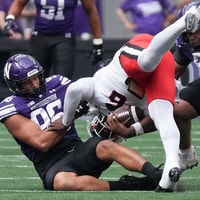
ECat, you will be happy to know that the Buckeye Bus has arrived early at Lucas Oil Stadium. Here is a reporter pic:
 

techtim72

Senior
May 10, 2010
7,202
668
113
My take on other Big Ten programs is I am frequently more impressed than not by the character of the players. I get that the best and brightest are featured, but the stories are compelling. So I elect to be positive about the teams and assume that they, in the big picture, have the interests of their players in mind. I know, I know, nieve, but from my perspective better to be positive than not. So is Ohio State having all their players pursue bioengineering degrees, no, but are they moving their players in a positive direction - I choose to believe that.
 

nick614

Junior
Oct 19, 2014
1,188
349
0
My take on other Big Ten programs is I am frequently more impressed than not by the character of the players. I get that the best and brightest are featured, but the stories are compelling. So I elect to be positive about the teams and assume that they, in the big picture, have the interests of their players in mind. I know, I know, nieve, but from my perspective better to be positive than not. So is Ohio State having all their players pursue bioengineering degrees, no, but are they moving their players in a positive direction - I choose to believe that.

Ohio State has the 2nd highest APR in the league just below Northwestern.
 

phatcat_rivals223240

All-Conference
Nov 5, 2001
18,945
1,096
113
Ohio State has the 2nd highest APR in the league just below Northwestern.
I find that statement puzzling. Let me have a follow-up.

I confess I don't know the full extent of APR, just that we are always at the top, but I thought a lot of it was based on actual graduation, not just 'progress towards graduation'. With the huge success of OSU getting so many early draftees, how does that work? Surely that's not the same as a standard dropout, and a kid that gets a 2M bonus will get about a decades pay for a lot of us. But - anyway - are the kids graduating or not?

Edit - to be clear, the money crimes are troubling, but not nearly as much, to me anyway, as condoning sex crimes like Ped State, MSU and Minn. That's unconscionable.
 

EvanstonCat

Senior
May 29, 2001
50,771
770
73
Ohio State has the 2nd highest APR in the league just below Northwestern.

C’mon Buck. Passing a class isn’t exactly a challenge at Ohio State when you have tutors writing your papers and taking your exams for you, and you’re taking classes like Golf and Aids Awareness. It’s almost impossible to fail out at dOSU with all the academic “support” that you get there. Getting an education that would be recognized at another accredited institution is another story, as players who were kicked to the curb like Sammy Maldonado found out when his credits for Mickey Mouse classes at dOSU did not transfer when he moved to Maryland.
 

nick614

Junior
Oct 19, 2014
1,188
349
0
Edit - to be clear, the money crimes are troubling, but not nearly as much, to me anyway, as condoning sex crimes like Ped State, MSU and Minn. That's unconscionable.

Ah yes the crime of selling your trophies to help your mom pay for rent. Such a shame crimes like that were allowed to happen.
 

nick614

Junior
Oct 19, 2014
1,188
349
0
C’mon Buck. Passing a class isn’t exactly a challenge at Ohio State when you have tutors writing your papers and taking your exams for you, and you’re taking classes like Golf and Aids Awareness. It’s almost impossible to fail out at dOSU with all the academic “support” that you get there. Getting an education that would be recognized at another accredited institution is another story, as players who were kicked to the curb like Sammy Maldonado found out when his credits for Mickey Mouse classes at dOSU did not transfer when he moved to Maryland.

Any really successful football player isn't going to have the time to take a "serious" major. But the school doesn't matter in the end at OSU because they are going to learn how to make millions in the NFL. The majority of the ones that don't are in the business school which is pretty good at OSU.
 

iskaboo

Sophomore
Aug 23, 2011
1,803
122
63
Any really successful football player isn't going to have the time to take a "serious" major. But the school doesn't matter in the end at OSU because they are going to learn how to make millions in the NFL. The majority of the ones that don't are in the business school which is pretty good at OSU.
I guess you didn’t see the articles about the
Northwestern player who is also enrolled in medical school. But, I guess being a NFL player is a lot more rewarding than being a doctor.

https://www.chicagotribune.com/spor...0201107-wqd3m7doyzbxrdas3ebxkf6ovq-story.html

Now please go back to where you belong.
 

phatcat_rivals223240

All-Conference
Nov 5, 2001
18,945
1,096
113
Any really successful football player isn't going to have the time to take a "serious" major. But the school doesn't matter in the end at OSU because they are going to learn how to make millions in the NFL. The majority of the ones that don't are in the business school which is pretty good at OSU.
John Frank became a doctor. Craig Krenzel was like molecular biology

Perhaps my knowledge of OSU is deeper than yours

Re selling your trophies to pay mom's rent, I don't recall seeing that in either the Clarett or Maldonado stories. Not during tattoo-gate, although I think that was stupid.

How long have you been following your team?
 

DaCat

All-Conference
May 29, 2001
25,669
2,062
113
John Frank became a doctor. Craig Krenzel was like molecular biology

Perhaps my knowledge of OSU is deeper than yours

Re selling your trophies to pay mom's rent, I don't recall seeing that in either the Clarett or Maldonado stories. Not during tattoo-gate, although I think that was stupid.

How long have you been following your team?
Didn't Robert Smith catch flack from dOSU coaches for wanting take real courses and play school?
 

EvanstonCat

Senior
May 29, 2001
50,771
770
73
Nick’s response is typical if dOSU fans’ attitudes. They don’t think getting an education is important for serious football players. And they don’t see anything wrong with that. Exactly.
 

Gocatsgo2003

All-Conference
Mar 30, 2006
47,036
3,388
78
Any really successful football player isn't going to have the time to take a "serious" major. But the school doesn't matter in the end at OSU because they are going to learn how to make millions in the NFL. The majority of the ones that don't are in the business school which is pretty good at OSU.

Flat out false. Excuses.
 

klemman

Junior
Jan 31, 2002
35,550
225
0
I question whether Nick614 graduated or even attended college much less OSU. You’ll get different viewpoints based on that experience.

I understand the viewpoint by NU fans with OSU student athletes and football players in particular. I’ll respond to some general accusations as well as some specifics.

There are some instances in which OSU players violated rules. While it’s popular by fan bases such as at NU to broad brush stroke that to all the players, it is an unsubstantiated characterization based on bias. For the most part that’s just fan gamesmanship but here’s some clarification.

Some responses to the typical accusations:

1. Coaches don’t encourage players to ignore their academic success. That’s self defeating because it can impact player eligibility.

2. It’s the primary goal of the academic support by the athletic department to keep players eligible within the rules. It’s the individual student athlete to choose a degree that benefits them the most within their academic capabilities as well as how well the do in their courses. Not the coach.

3. While NFL physical ability is not in the cards for 99.9% of the population, those provided a scholarship at OSU are in the 0.1%, or maybe in an even smaller proportion of genetic ability. Not all of them will make it to the NFL but as long as they don’t get injured, the commitment they’re willing to make to become an NFL player is up to them. Regardless, it is a viable professional option for many. Certainly the ones you hate because they’re starting.

4. Yes a mechanical engineering degree or one in Business Administration is more marketable than a Communications, Sports and Leisure, or similar degrees. Again, it is within the individual student athletes responsibility to seek the best degree given their abilities. Those with higher academic abilities do choose marketable degrees. If they don’t that’s their fault, not the coaches or athletic program.
I would argue those with a lesser degree still get some of value. They weren’t going to become a doctor, lawyer, or engineer regardless of the University they attend. But they do get a piece of paper that yes won’t help in getting much more than an entry level hourly position that a GED could get them. But if they work hard, show responsibility, the piece of paper will allow them to be promoted to a professional or managerial positions in which the GED graduate may not have access.

5. The coaches allow or encourage violations to occur- Again it would be self defeating. I have a friend who spent time coaching (assistant) D1 basketball. He would tell me that he’ll yes John Calipari cheated, but not at Kentucky. Because he no longer needed to and the benefit no longer outweighed the risk.
Some coaches do hesitate turning in some violations that they here about after the fact. While we like to say it’s because they just want to win, but more often they address it their own way and give the kid a second chance because of the degree of negative impact the athlete will receive. Sometimes it doesn’t work out the way they hoped. That does violate 100% compliance, but those are the coaches we often cheer for in the movies and the people we like to have as our bosses. In the end, do that too much and it is a risk that usually blows up in a coach’s face.

6. Andy Katzenmoyer- the consistent argument that’s 27 years old. Ok, I’ll still play. Kat was an All-Big 10, All-American true freshman. Many freshman struggle the first year in college without the football. He was never ineligible but at risk.So he took two easy electives over the Summer to give him cushion. He’s entitled to choose whatever elective he wants as part of his curriculum. It’s not a strategy that he could do throughout his college career to stay eligible, and didn’t.

6. Sam Moldonato- As a State School with open enrollment, OSU did have at the time remedial courses for those who through testing didn’t meet the academic requirements college level courses. It’s not just for athletes and I know 3 non-athlete people who started at OSU in remedial math. One became a Civil Engineer, one an Accountant, and one in Biology with a 3.8 GPA. The remedial courses did count as credits, did count with the GPA, but didn’t count as credits that could be applied towards graduation. So it’s not surprising that they didn’t transfer. For about 20 years now if you need a remedial course, you can’t enroll at the main campus, but a Regional one. So no players can use that program any longer.

7. Maurice Clarett- It turns out he was Bipolar and had other mental health issues contributing to much of what happened. It started to unravel his freshman year and never played for OSU again. Don’t base your assessment of the situation from articles in the 2000’s, especially early in the decade. See what he says now after therapy, medication, and maturity. A very different story.

8. Robert Smith- He was a great runner and was and still is an egotistical ***. He put out this propaganda that he was a great student with a genius IQ. He graduated from high school with a 3.2 GPA. Nice, respectable, but not the type of academic achievement in which a medical degree is etched in stone. The coaches didn’t tell him he couldn’t take classes. Smith wanted to skip practice so he could study more. I agree with the coaches who said you are here on a football scholarship. As mentioned above, it’s the individual’s responsibility to meet the academic needs of the chosen major, choose a different major, or if you can’t meet the responsibilities of your scholarship- pick a different sport which he did his sophomore year: track, or quit football and devote more time to academics. Just leave your scholarship at the door.

I could go on about Marco Cooper, Reggie Germany, tatgate, Cardale Jones... all the greatest hits. The blame for each case fluctuates based on the case.

From top to bottom the players at NU are more responsible in the same way players at OSU are more athletic. That doesn’t mean there aren’t great athletes at NU or great students at OSU.

It also doesn’t mean that coaches encourage one at the expense of another.
 
Last edited:

klemman

Junior
Jan 31, 2002
35,550
225
0
Just to add as well, since 1994 OSU has put together a program to provide players who are no longer with the program to return and get a degrees this week the following ex-football players received their degrees: Ryan Shazier, Alex Boone, Jeffery Okudah, Isaiah Prince- all current or former NFL players, and CJ Saunders just got his Masters. 14 OSU Football players currently on the roster got their diploma this Semester including: Tuf Boreland (starting LB), Haskell Garrett (Starting DT), Justin Hilliard 2 deep LB), Luke Farrell (starting TE), Blake Habeil (starting PK), and Gunner Hoak (2 deep QB).
 

nick614

Junior
Oct 19, 2014
1,188
349
0
John Frank became a doctor. Craig Krenzel was like molecular biology

Perhaps my knowledge of OSU is deeper than yours

Re selling your trophies to pay mom's rent, I don't recall seeing that in either the Clarett or Maldonado stories. Not during tattoo-gate, although I think that was stupid.

How long have you been following your team?

Have any example that aren't over 20 years old?
 
Jan 2, 2018
30
0
0
For something relevant to the last 15 years or so, you can go to Michigan Podcast [Steve Deace not exactly an OSU booster] and he stated that when talking with Brandon Brown of the Wolverine Digest that OSU's name came up almost never or last on the names of teams who cheat. See 9:30 on the following youtube segment.