
So the University Trademarked Some Old Logos..
- Thread starter ArcherSPS
- Start date
You are using an out of date browser. It may not display this or other websites correctly.
You should upgrade or use an alternative browser.
You should upgrade or use an alternative browser.

And I’m a big fan of this move:
https://twitter.com/msuhistory/status/1013529533381840896?s=21
I should be getting royalties on those peeping croom t-shirts they have. Any lawyers in the house?

And I’m a big fan of this move:
https://twitter.com/msuhistory/status/1013529533381840896?s=21
The tweet's been deleted at some point in the last hour. Was going back to favorite it so I could find it later and get some of those shirts and it's gone.


Oh I love the vintage logos!! It just sucks because I have been inquiring about them regarding a business venture for some time now. I have had discussions with the university about the usage and I picked the brain of a few local vendors, which turned out to be a huge mistake, I have learned a valuable lesson.Why aren’t you a fan, friend?
Licensing is a *****.
Indeed. Liability insurance, flat fees, and percentages of sales. I don't see how small business can make properly licensed items for retail and turn a profit.


I didn’t get to see the tweet. Could someone post pictures of the logos?
See the peeper’s pic above. Wow, that sounds wierd when you say it.
Love the left. Never liked the walking bully in the middle
I like the left best too. Actually having it hand painted maroon on a white cowbell now.
Walking bully was never a favorite of mine when he was still in his prime but after a decade in purgatory I miss the guy. The university needs to do a better job of using or allowing our vintage logos to be used as other schools do.....and also get some legit baseball jerseys out there.

Both LSU and Auburn do a great job with selling merchandise with old logos on it. I hope this means we are making moves to do the same. Walking Bully is awesome, BTW.

Well some folks were selling apparel with the old unlicensed MSU logos. No malice, just State folks selling stuff that other State folks wanted to buy...with logos that MSU chose to not license back in 2008 when the new M-State, Bully over M, Wordmark, and Institutional Mark logos were licensed.
But the State folks selling stuff with the old unlicensed (and sorta popular) logos were making money...and the MSU Licensing folks can sniff out money like a Bloodhound. And the MSU Licensing folks wanted a cut / percentage of that money that was being made, so they retroactively licensed the old logos.
Bottom line, MSU fans still get the old logo apparel that they want...it'll just cost a little bit more now and the University gets to "wet their beak a little".
I like the Walking Bully but with a solid colored face......don't care for the Walking Bully with a tan and white face. Will by all 3 for me and my son.
Like these 2, for instance:Both LSU and Auburn do a great job with selling merchandise with old logos on it. I hope this means we are making moves to do the same. Walking Bully is awesome, BTW.
View attachment 10623
View attachment 10624
I’ve seen few folks here say they had this idea before
but evidently they checked with the university and were told no ? Or they didn’t want to pay the money to do so?So why didn’t the folks who make these shirts do that? Honestly confused as to what happend here.
Well some folks were selling apparel with the old unlicensed MSU logos. No malice, just State folks selling stuff that other State folks wanted to buy...with logos that MSU chose to not license back in 2008 when the new M-State, Bully over M, Wordmark, and Institutional Mark logos were licensed.
But the State folks selling stuff with the old unlicensed (and sorta popular) logos were making money...and the MSU Licensing folks can sniff out money like a Bloodhound. And the MSU Licensing folks wanted a cut / percentage of that money that was being made, so they retroactively licensed the old logos.
Bottom line, MSU fans still get the old logo apparel that they want...it'll just cost a little bit more now and the University gets to "wet their beak a little".
but evidently they checked with the university and were told no ? Or they didn’t want to pay the money to do so?So why didn’t the folks who make these shirts do that? Honestly confused as to what happend here.
I’d love to get one of those “Sailor Tiger” stickers for my wife’s car, I think it’s been rattling around in my head from my childhood. She would probably love it and I could objectify the swamp cats as kiddies in short pants.**
Seriously, though, where can I get a sticker?
Seriously, though, where can I get a sticker?
Love the left. Never liked the walking bully in the middle
Thought I was the only one that didn’t like the walking Bully.


"Walking Bully" and "Baseball Bully" are no longer registered trademarks, but the University still has common law trademark rights in those logos. The University allowed the registrations to expire when their renewals were due recently, but canceling a registration does not necessarily mean they have abandoned those marks completely.
Remember last year when Missouri announced they were building a "Left Field Lounge"? They quickly changed the name after speaking with MSU, but while that excitement was going on I stumbled across a page on the MSU website that listed the University's registered and common law trademarks. "Left Field Lounge" was included on that list, and I don't remember but I think "The Hump" and "The Dude" were also listed. I can no longer find the list, and I suspect that once MSU signed on with IMG Collegiate Licensing they were advised to remove the page. While it wasn't intended to be an exhaustive list, you can see how someone would claim that a mark not on that list was no longer considered an MSU trademark.
I'm not trying to be condescending towards any posters, but there is a lot of common misunderstanding about trademarks in this thread. Mostly a misunderstanding of terminology. I could write a small primer if I thought people were that interested.
Some basics: "Trademark" is a noun, not a verb. One uses a trademark to identify the source of origin of goods or services. A logo, symbol, word, or phrase can become a trademark by being used in the marketplace. Common law trademarks may be registered with the US Patent and Trademark Office. Registration of trademarks provides a lot of advantages in protecting and enforcing a mark, but common law marks are still enforceable.
"Licensing" is a contract with a third party to allow them to sell goods or services using your trademark. When you allow your trademark to be put on someone else's goods or services, you are essentially letting that third party trade on your business goodwill, and putting your "stamp of approval" on those goods or services. A trademark owner has to police the use of its marks by licensees, or their rights could get damaged.
At some point a trademark can be abandoned by its owner and re-enter the public domain. There is no set time period for this, and each case just has to be examined on its facts. Simply letting the registration expire would not be enough to show abandonment.
I’d love to get one of those “Sailor Tiger” stickers for my wife’s car, I think it’s been rattling around in my head from my childhood. She would probably love it and I could objectify the swamp cats as kiddies in short pants.**
Seriously, though, where can I get a sticker?
My wife said to look at this site called red bubble.
Latest
-
01
 Maroon and White Basketball
Mississippi State 86-83 UCF: Bulldogs earn road win in fight from start to finish with Golden Knights
-
02
 Maroon and White Basketball
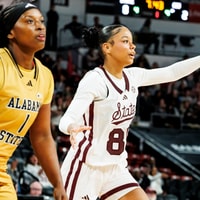
Mississippi State 88-46 Alabama State: Bulldogs beat the Hornets in annual Kids' Day game
-
03
 Maroon and White Basketball
Mississippi State at UCF: How, Where, and When to Watch Men's Basketball on the road
-
04
 Maroon and White Football
Sanfrisco Magee's "detail" and consistency carrying Mississippi State offense through tough times
-
05
 Maroon and White
Points of Focus from Jeff Lebby in Week 12 media availability