Rich Rod
- Thread starter vkj91
- Start date
You are using an out of date browser. It may not display this or other websites correctly.
You should upgrade or use an alternative browser.
You should upgrade or use an alternative browser.


Apparently that's what SHI said.
You would take anybody other than GS.his O’s are so fun to watch
Please... we aren't smart enough to want him here.... we want Greg Schiano who never won the Big East or defeated Rich Rodriguez.his O’s are so fun to watch
False but ok.You would take anybody other than GS.
Because it's going to be impossible to fire the scrub.You would take anybody other than GS.
Listen Son you’re in Schianoville now. Start taking notes.Please... we aren't smart enough to want him here.... we want Greg Schiano who never won the Big East or defeated Rich Rodriguez.
Please... we aren't smart enough to want him here.... we want Greg Schiano who never won the Big East or defeated Rich Rodriguez.
Rich coached at a school and in a state where football meant something not like here. Makes a big difference.
And do you really want to start doing this after a big win???

Interesting article about Rich Rod. Yeah RU will hire this guy on top of everything else that's happened here in the past few years.
https://www.springfieldnewssun.com/...uez-demeaning-selfish/ejeuXEuIxdIVqSd6s5lKOI/
https://www.springfieldnewssun.com/...uez-demeaning-selfish/ejeuXEuIxdIVqSd6s5lKOI/
So sad how football means everything to the state of New Jersey but means nothing to the state of Rutgers smh... if you can't represent the state the right way then you give the helm to someone who will... Montclair State or even freaking Rowan. I'm so freaking angry at this shitt right now.Rich coached at a school and in a state where football meant something not like here. Makes a big difference.
And do you really want to start doing this after a big win???
More excuses and mediocrity... rebuilding, it's the process, trust the process... the four star future NFL player is in the mix.... we just rather keep him on the bench for a quarterback built like a Band Geek ( Chas Dod).Listen Son you’re in Schianoville now. Start taking notes.
Greg finds you amusing.More excuses and mediocrity... rebuilding, it's the process, trust the process... the four star future NFL player is in the mix.... we just rather keep him on the bench for a quarterback built like a Band Geek ( Chas Dod).


Who loves Schiano pics more than graystork?Greg finds you amusing.
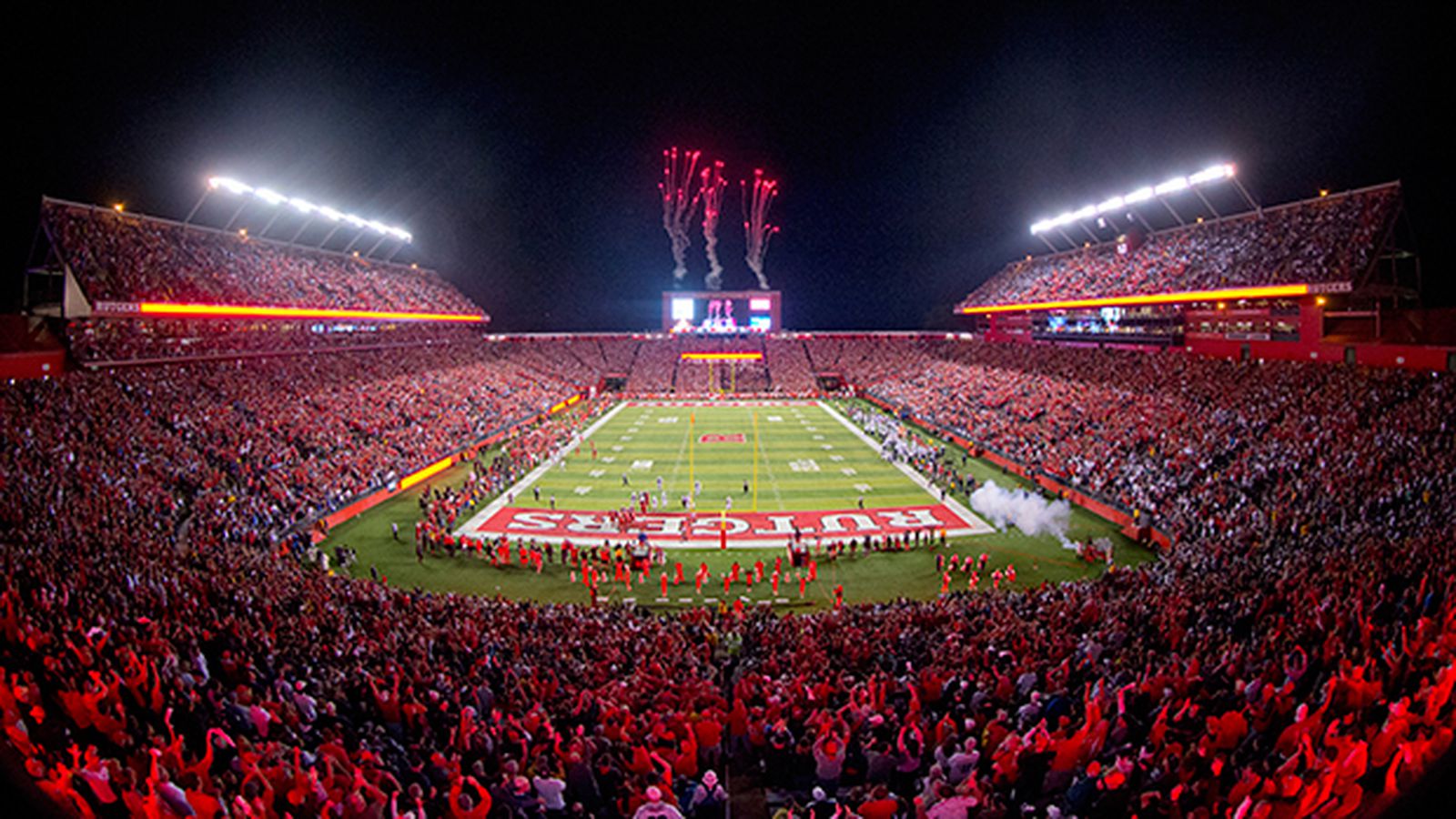

how so?Rich Rod would be a disaster here. Just not a good fit for the environment
but who will recruit from day 1 and get us back to respectability, rich rod is past historyPlease... we aren't smart enough to want him here.... we want Greg Schiano who never won the Big East or defeated Rich Rodriguez.
Nj . Com would have fun researching this guy's history.how so?
and what's Schiano, tomorrow soup du jour? Rich Rodriguez was recruiting kids to the state of West Virginia.... have you ever been to West Virginia? He's a better X and O coach than Schiano.... beat him head to head everytime... actually he beat him senseless most of time.but who will recruit from day 1 and get us back to respectability, rich rod is past history
have you followed through with those false accusations?Nj . Com would have fun researching this guy's history.
Who ever they choose better be a spread offense....hopefully those reports by Sargeant GS intends to run a spread are true as well.
Here's an article I came across about Miami and Diaz....they don't run a true spread like I mentioned in that FIU thread last week and hiring a guy who is a pro style guy to do it isn't generally a good idea either...also KISS....don't add too much compexity. Could have a chance at Graham Harrell and they go for Enos...Leach tree baby lol...your odds of productive offense are better. Almost feels like I wrote the article myself lol considering the many points in it that echo many of my posts here.
From the article:
When Manny Diaz replaced Mark Richt as UM’s coach, he promised an attacking offense that, like his defense, would make opponents “uncomfortable.”
That Diaz hasn’t succeeded in achieving that is one of the enormous disappointments of his first season, and one that might have been avoided if he had moved toward the spread offense that has frequently flummoxed opposing defenses in modern college football.
Diaz has clung to the hope that UM could win with a system that won during the glory years, with a pro style offense and power running game, and some modern-day run/pass options and spread elements intertwined.
Look at the top 10 teams in points per game in college football this season. Seven run a traditional spread or some version of the spread the majority of the time or, in some cases, almost entirely: Ohio State (which has added some under-center elements since Ryan Day replaced Urban Meyer), LSU, Oklahoma, UCF, SMU, Memphis and Washington State. An eighth, Alabama, has incorporated more spread elements in recent years.
UCF, SMU, Memphis and Washington State are vastly outproducing UM’s offense with recruiting classes that were ranked much lower.
In 2017, Rivals rated Miami’s class 11th, Washington State 51, Memphis 53, UCF 64 and SMU 84th. Of course, with SMU, a huge factor is the Mustangs landing Texas transfer QB Shane Buechele during this past offseason.
UM, meanwhile, continues to plod along with slow-developing run/pass options -- plays that have become so predictable at times that FIU said several were easy to anticipate -- plus deliberate drop-backs by Jarren Williams from under center (giving defensive players more time to rush) and fake handoffs that usually fool no one.
Enos’ offense is diverse - mixing shotgun with under-center formations and lots of motion and different personnel groupings - but the Canes are just 77th of 130 FBS schools in yards and 69th in points (even while counting the 63 points against FCS opponent Bethune Cookman).
Early in Diaz’s tenure, before he hired Enos, an associate of mine in the coaching business said officials at North Texas were telling people that they were fearful they would lose offensive coordinator Graham Harrell and his “Air Raid” offense to UM.
Instead, Diaz hired Enos and Southern Cal’s Clay Helton landed Harrell, who overcame the season-ending knee injury to starter JT Daniels in the opener and with freshman Kedon Slovis at quarterback, has produced offensive numbers vastly superior to UM’s.
Against FBS teams, the Trojans are averaging 462.2 yards and 33.2 points per game. UM - vs FBS teams - is averaging 369 yards and 25 points per game, numbers that easily rank in the bottom half of college football.
Fact is, UM has gone too long hoping that its recruiting would be strong enough to generate big offensive numbers with a pro style offense. It’s not happening and it’s naive to think it will change anytime soon.
So here’s what Diaz must do now: Tell Enos he wants to experiment, at least next season, with a high-octane spread with large doses of no-huddle, a system that gets Miami’s explosive playmakers in space and doesn’t require the deficient offensive line to hold blocks for as long. (And I emphasize the no-huddle aspect, to tire defenders out.)
I don’t want to hear that a spread offense sacrifices the running game. Middle Tennessee, which runs a spread offense, threw for only 25 yards but ran for 471 in a 50-17 bludgeoning of FIU last month.
Many teams with spread offenses - including UCF (215 rushing yards per game), SMU (184 rushing yards per game), Memphis (196.2) and USC (126.3) - all rush the ball better than UM, whose 123 9 rushing yards per game is 15th-worst among 130 FBS schools. UCF, in particular, does a great job of spreading out to run the ball.
As ESPN’s Ahmad Brooks said last year: “In a spread offense, more people touch the football. When you are out selling your program, you can say we’ve got plenty of balls to spread around. We will give you your touches and we can match what you were doing in high school. This is the offense that fits the U the best.”
What’s clear is this: Diaz must stop trying to convince himself that the old way of doing things - with the addition of run/pass option plays and more motion - works in the modern era of college football without elite talent.
Fact is, UM is incapable of snagging enough elite offensive linemen - or a good enough quarterback - to make a pro-style system consistently effective.
It’s time to embrace the system that has made offenses with far less-coveted recruits light up scoreboards and leave UM in the dust. It’s time to run the spread, and do it with the no-huddle, frenetic approach that would genuinely make defenses feel “uncomfortable,” as Diaz set out to do.
https://www.miamiherald.com/sports/spt-columns-blogs/barry-jackson/article237667579.html
Here's an article I came across about Miami and Diaz....they don't run a true spread like I mentioned in that FIU thread last week and hiring a guy who is a pro style guy to do it isn't generally a good idea either...also KISS....don't add too much compexity. Could have a chance at Graham Harrell and they go for Enos...Leach tree baby lol...your odds of productive offense are better. Almost feels like I wrote the article myself lol considering the many points in it that echo many of my posts here.
From the article:
When Manny Diaz replaced Mark Richt as UM’s coach, he promised an attacking offense that, like his defense, would make opponents “uncomfortable.”
That Diaz hasn’t succeeded in achieving that is one of the enormous disappointments of his first season, and one that might have been avoided if he had moved toward the spread offense that has frequently flummoxed opposing defenses in modern college football.
Diaz has clung to the hope that UM could win with a system that won during the glory years, with a pro style offense and power running game, and some modern-day run/pass options and spread elements intertwined.
Look at the top 10 teams in points per game in college football this season. Seven run a traditional spread or some version of the spread the majority of the time or, in some cases, almost entirely: Ohio State (which has added some under-center elements since Ryan Day replaced Urban Meyer), LSU, Oklahoma, UCF, SMU, Memphis and Washington State. An eighth, Alabama, has incorporated more spread elements in recent years.
UCF, SMU, Memphis and Washington State are vastly outproducing UM’s offense with recruiting classes that were ranked much lower.
In 2017, Rivals rated Miami’s class 11th, Washington State 51, Memphis 53, UCF 64 and SMU 84th. Of course, with SMU, a huge factor is the Mustangs landing Texas transfer QB Shane Buechele during this past offseason.
UM, meanwhile, continues to plod along with slow-developing run/pass options -- plays that have become so predictable at times that FIU said several were easy to anticipate -- plus deliberate drop-backs by Jarren Williams from under center (giving defensive players more time to rush) and fake handoffs that usually fool no one.
Enos’ offense is diverse - mixing shotgun with under-center formations and lots of motion and different personnel groupings - but the Canes are just 77th of 130 FBS schools in yards and 69th in points (even while counting the 63 points against FCS opponent Bethune Cookman).
Early in Diaz’s tenure, before he hired Enos, an associate of mine in the coaching business said officials at North Texas were telling people that they were fearful they would lose offensive coordinator Graham Harrell and his “Air Raid” offense to UM.
Instead, Diaz hired Enos and Southern Cal’s Clay Helton landed Harrell, who overcame the season-ending knee injury to starter JT Daniels in the opener and with freshman Kedon Slovis at quarterback, has produced offensive numbers vastly superior to UM’s.
Against FBS teams, the Trojans are averaging 462.2 yards and 33.2 points per game. UM - vs FBS teams - is averaging 369 yards and 25 points per game, numbers that easily rank in the bottom half of college football.
Fact is, UM has gone too long hoping that its recruiting would be strong enough to generate big offensive numbers with a pro style offense. It’s not happening and it’s naive to think it will change anytime soon.
So here’s what Diaz must do now: Tell Enos he wants to experiment, at least next season, with a high-octane spread with large doses of no-huddle, a system that gets Miami’s explosive playmakers in space and doesn’t require the deficient offensive line to hold blocks for as long. (And I emphasize the no-huddle aspect, to tire defenders out.)
I don’t want to hear that a spread offense sacrifices the running game. Middle Tennessee, which runs a spread offense, threw for only 25 yards but ran for 471 in a 50-17 bludgeoning of FIU last month.
Many teams with spread offenses - including UCF (215 rushing yards per game), SMU (184 rushing yards per game), Memphis (196.2) and USC (126.3) - all rush the ball better than UM, whose 123 9 rushing yards per game is 15th-worst among 130 FBS schools. UCF, in particular, does a great job of spreading out to run the ball.
As ESPN’s Ahmad Brooks said last year: “In a spread offense, more people touch the football. When you are out selling your program, you can say we’ve got plenty of balls to spread around. We will give you your touches and we can match what you were doing in high school. This is the offense that fits the U the best.”
What’s clear is this: Diaz must stop trying to convince himself that the old way of doing things - with the addition of run/pass option plays and more motion - works in the modern era of college football without elite talent.
Fact is, UM is incapable of snagging enough elite offensive linemen - or a good enough quarterback - to make a pro-style system consistently effective.
It’s time to embrace the system that has made offenses with far less-coveted recruits light up scoreboards and leave UM in the dust. It’s time to run the spread, and do it with the no-huddle, frenetic approach that would genuinely make defenses feel “uncomfortable,” as Diaz set out to do.
https://www.miamiherald.com/sports/spt-columns-blogs/barry-jackson/article237667579.html
Stops what. I made a comment about a guys whose team was playing on national TV. You lunatics brought up saint Greg. It’s you guys who make everything about him.He never stops
What false accusations have I posted?have you followed through with those false accusations?
his O’s are so fun to watch
His defenses weren't fun to watch. You cant line 5 ft 3 inch guys that weigh 187 lbs up on defense in the B1G. Teams ran our guys over, and controlled the clock. Many times when our offense got back out there, we were 3 n out. Our timing off, and the other teams D rested.
If you hire RR, it is your problem. He destroyed so many School streaks....non losing seasons, bowl games etc. The worst being the FB program hit with serious sanctions.
The RR era was an unmitigated disaster during his time at Michigan. Hoke wasnt much better. Boy that was a bad stretch.
I'm sick of defensive coordinators like Schiano and Ash promising to spread offense and never actually delivering. It's clear as day that they can't install it.... why not hire an actual spread RPO coach? Someone who will make us must see TV like Rich Rodriguez. Who have this program high flying and high scoring in no time.
I kind of agree with you but I also think good offensive coaches are more ubiquitous than good defensive ones despite our troubles at OC over the years. IMO a defensive coach who has come up with good offensive influence can work. I always mention Bob Stoops at OU......worked under Spurrier was influenced by that and wanted to run a wide open offense...hired Leach only for a year and that was that...the wheels were in motion and the ball kept rolling down the hill for OU offensively for the most part.I'm sick of defensive coordinators like Schiano and Ash promising to spread offense and never actually delivering. It's clear as day that they can't install it.... why not hire an actual spread RPO coach? Someone who will make us must see TV like Rich Rodriguez. Who have this program high flying and high scoring in no time.
Rich Rod should never have left WVU. He had a great thing going there but was never a good fit at Michigan and apparently not good again here at the U of A in Tucson. I was talking to one of his former players the other day who loved Rich Rod but said that his offense never worked well here.
By the way, when I mentioned how well RR always did against Rutgers, that player said "Rutgers? That's the school I really wanted to go to. Great academics." Naturally, I agreed with him.
By the way, when I mentioned how well RR always did against Rutgers, that player said "Rutgers? That's the school I really wanted to go to. Great academics." Naturally, I agreed with him.
Latest
-
01
 The Knight Report
Rutgers Baseball Transfer Portal Profile: RHP Enger Paulino
The Knight Report
Rutgers Baseball Transfer Portal Profile: RHP Enger Paulino
-
02
 The Knight Report
Join The Knight Report TODAY and get it for 60% off!
The Knight Report
Join The Knight Report TODAY and get it for 60% off!
-
03
 High School Football
Two New Jersey high school football teams banned from NJSIAA postseason for fighting
High School Football
Two New Jersey high school football teams banned from NJSIAA postseason for fighting
-
04
 The Knight Report
 - Ask The Experts Chat: October 14th Edition
The Knight Report
The Knight Report - Ask The Experts Chat: October 14th Edition
-
05
 The Knight Report
Rutgers vs. Maryland Preview: Early Thoughts on the Terps - TKR Pod
The Knight Report
Rutgers vs. Maryland Preview: Early Thoughts on the Terps - TKR Pod