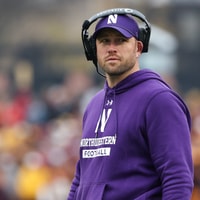
Since the university acknowledges that they can't prove that he knew, they presumably must fall back on the standard that he should have known. How is the "should have known" standard applied in law?
“Should have known” has different meanings in different contexts, but broadly relates to negligence where a party has a duty of care to another party and failed that duty, causing harm to the other party.
In the context of whether Fitz should have known about whatever may have been going on, the question of whether the failure to ascertain facts and act on them in a manner that would meet his duty of care constitutes cause to terminate his contract depends on - wait for it! - how termination for cause is defined in his employment contract.
Unless and until the contract becomes public, perhaps through discovery or oral argument if the wrongful termination claim makes it to those stages, the public won’t know and any of our guesses are just that.
Someone like
@Fitz51 may be able to speak to reasonable definitions in these types of employment agreements if he has experience with employees similarly situated to Fitz. But given Fitz’s leverage over NU in prior employment negotiations, I would expect that “cause” was narrowly construed. In any event, my own expectations are, as I will continue to repeat as many times as possible, meaningless!