OT: Question for Dawgbite about manufacturing

1msucub

Senior
Oct 3, 2004
2,206
773
113
I could take a 500% tariff and still come out ahead vs manufacturing in the US.


Moderators, I have zero interest in politicizing threads, so bear with me.

I am just astonished at just how many things are imported in this country. You'd think we don't manufacture ANYTHING.

On my desk right now:
Ink stamp-Austria
Calculator-China
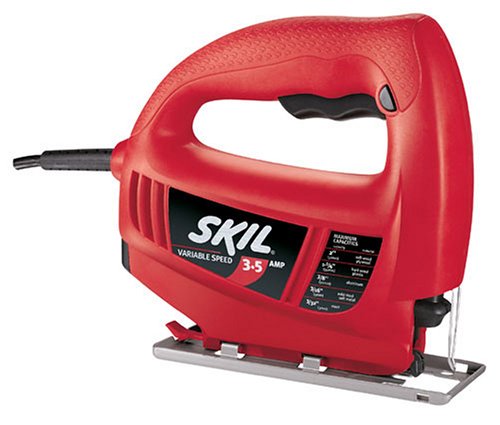
Jigsaw-Mexico
Door pushplate-China
Nasty cow manure-stained cap-China

The only thing domestically produced?
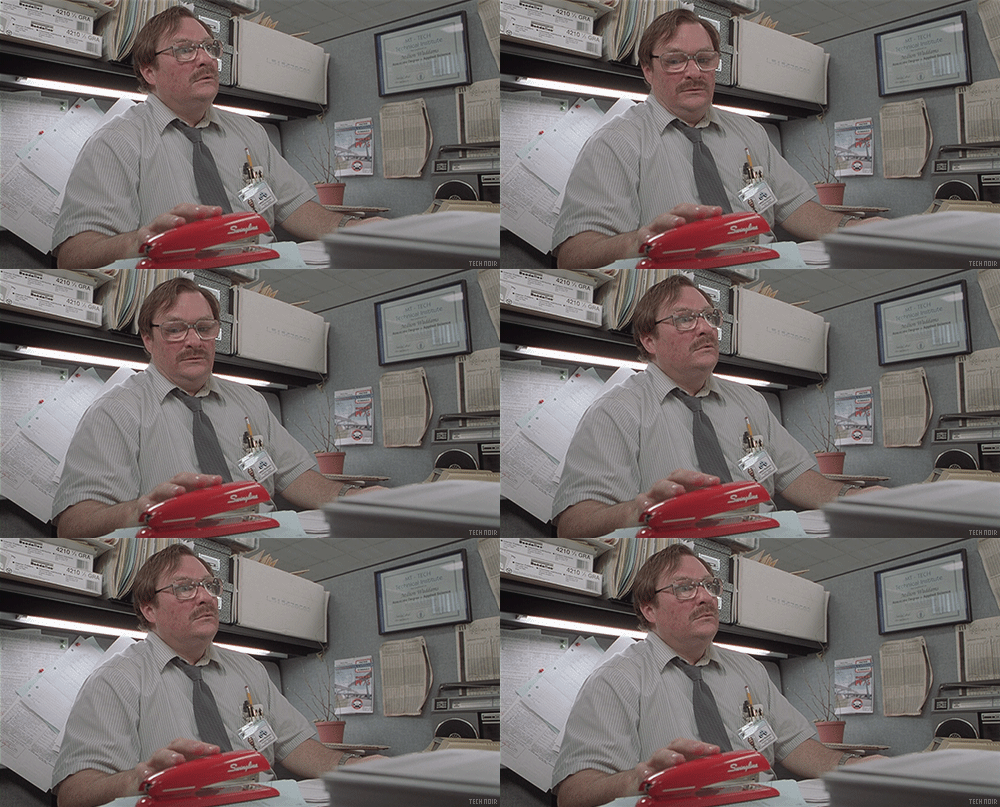
30 year-old Swingline stapler-Long Island City, NY: weighs two pounds, and is practically indestructible.

Dawgbite, from YOUR perspective.....is is really just a reflection of labor cost? Is that ultimately what drives the bus? Are there other factors that are bigger, like tax differences? I'm interested in how manufacturing costs are that different from the small business that I run.
 

Xenomorph

Heisman
Feb 15, 2007
16,278
10,998
113
Yeeaaaaah, Milton. We're gonna need to go ahead and move you downstairs...


paindonthurt_

All-Conference
Jun 27, 2009
9,528
2,046
113
I’ve got a hard time believing the 500% part.

I worked in automotive manufacturing for 5 years.
Labor was 10.5%
COGS/materials was 49%
 

57stratdawg

Heisman
Dec 1, 2004
148,779
24,660
113
Labor costs are a big part of it. But it's not just direct labor; you start adding in benefits, insurance, etc., it adds up.


It's hard to protect the American worker and American consumer at the same time.
 

Dawgbite

Heisman
Nov 1, 2011
10,053
11,544
113
I’ve got a hard time believing the 500% part.

I worked in automotive manufacturing for 5 years.
Labor was 10.5%
COGS/materials was 49%
This figure may not be accurate industry wide but in my case it is. I already had connections in China through my day job so it was relatively easy to get it manufactured over there. I am as patriotic as any other American and I wanted my product to say made in the USA. The item is a combination of spin molded metal and metal castings. I finally tracked down the last company in the US to Spin Mold and found that they had sold all their equipment to a chinese company a few years prior but I wanted it quoted anyway. I was paying about $6 each delivered to my door in containers and selling less than a 60,000 units per year. The only American company that would quote me, they would have to buy equipment to manufacture it, came back at over $80 per unit and wanted a signed contract that I would buy no less than 250,000 units per year. That wasn't feasible. I can get a metal casting mold made for production in China for $5000 or free if I will commit to 20,000 pieces or so. That same mold would cost me $50000 here regardless of my commitment.

1msucub, labor is the biggest factor but not all of it. A lot of the manufacturing is government owned. They have no workmans comp, health insurance, property tax, inventory tax, retirement, pensions, OSHA, EPA, MS DEQ, and the list goes on and on.Cost of materials is less, everything is less. I felt guilty as heck about it at first and expressed as much to my importer/broker but as he pointed out, I am feeding 100x the mouths in China that I would be in the US and I'm no more guilty than the shopper who buys the $9.99 Chinese made American flag instead of ordering the $75.00 american made one.
 

Dubs.sixpack

Redshirt
Feb 8, 2012
360
0
0
I could take a 500% tariff and still come out ahead vs manufacturing in the US.


Moderators, I have zero interest in politicizing threads, so bear with me.

I am just astonished at just how many things are imported in this country. You'd think we don't manufacture ANYTHING.

On my desk right now:
Ink stamp-Austria
Calculator-China
Jigsaw-Mexico
Door pushplate-China
Nasty cow manure-stained cap-China

The only thing domestically produced?
30 year-old Swingline stapler-Long Island City, NY: weighs two pounds, and is practically indestructible.

Dawgbite, from YOUR perspective.....is is really just a reflection of labor cost? Is that ultimately what drives the bus? Are there other factors that are bigger, like tax differences? I'm interested in how manufacturing costs are that different from the small business that I run.

I work for a 3PL in Memphis that primarily does warehousing. Our industry is built on people manufacturing overseas and importing it in bulk. If it was cheaper to produce here then warehousing wouldn't be needed as much because you could produce more on a JIT system. That said, our customers aren't considering bringing manufacturing back because of the tariffs. Like others have said, the US labor market demands higher benefits besides pay with the same skill set that a foreign worker will do for far less. The fringe benefits add 20-30% to each employee's cost.
 

JML105

Redshirt
Sep 4, 2012
489
8
18
Everything that you mentioned being made offshore is simplistic high volume items. American manufacturing and industry over the years has evolved to be tailored toward more complex manufacturing and technology. This isn't necessarily a bad thing other than the fact that education is lagging in the overall populous to keep up with the amount of these types of jobs. Simple items will continue to be manufactured oversees due to the amount of labor required to manufacture relative to the cost of goods sold. Labor in the US cost too much (for several reasons) to manufacture these goods. For that reason, mom and pop shops struggle due to labor and overhead. Plus they don't have the lobbyist working for them that major manufacturers in the US have (whole other issue/debate), and major US based manufactures will continue to be more technology driven so they can employee fewer educated people as opposed to many uneducated people. So, economically speaking, its okay for stuff like that to be manufactured offshore, but for our economy to continue to be strong, education must be the focus.
 

forestdepth

Redshirt
Feb 20, 2018
787
0
0
Needs to be more industry specific to really answer your questions. But, material costs ALWAYS outweighs labor.
 

WutheringDawg

All-Conference
Dec 4, 2010
2,234
1,201
113
I think the most interesting component of this post is the jigsaw. What's the image? why is it on your desk? do you spend the afternoons at an assisted living facility watching Matlock?
 

kired

All-Conference
Aug 22, 2008
7,181
2,617
113
You mentioned in the other thread about companies moving out of China --- I've been shocked at how fast some of the larger companies I deal with did this. I guess a lot of them either already had factories elsewhere in Asia, or had at least been planning for it.
 

1msucub

Senior
Oct 3, 2004
2,206
773
113
That's a very well-worded, thorough, honest, answer. I greatly appreciate you taking the time to do that. Those numbers are just insane, man. Excellent point about feeding all those extra people, too. I honestly had never looked at it from that perspective, I'm ashamed to say.
 
Aug 22, 2012
1,186
474
83
Like someone else stated, other countries lack of worker benefits drives up the cost of labor. I would imagine most of those countries have zero labor laws so you run into child labor, no overtime pay, little or no minimum wage, and lack of safety procedures. Someone looses a finger working a machine just looses their job but in the US, the company might get sued while also having to pay workers comp.
 

paindonthurt_

All-Conference
Jun 27, 2009
9,528
2,046
113
So many moving parts.

For instance, Toyota and Nissan in MS.
Their labor went up but not as much as it would have in say a Union Area.
They saved a ton in shipping costs on finished cars.
They also saved a ton in shipping for for parts that were built in the US especially those suppliers that opened up close to them.
Those suppliers saved a good bit on labor vs a union area. They also saved on freight and made more money.

Industry specific is misleading.
Car manufacturing?
Making toys?
Pencils?
Etc
 

johnson86-1

All-American
Aug 22, 2012
15,263
5,801
113
I could take a 500% tariff and still come out ahead vs manufacturing in the US.


Moderators, I have zero interest in politicizing threads, so bear with me.

I am just astonished at just how many things are imported in this country. You'd think we don't manufacture ANYTHING.

On my desk right now:
Ink stamp-Austria
Calculator-China
Jigsaw-Mexico
Door pushplate-China
Nasty cow manure-stained cap-China

The only thing domestically produced?
30 year-old Swingline stapler-Long Island City, NY: weighs two pounds, and is practically indestructible.

Dawgbite, from YOUR perspective.....is is really just a reflection of labor cost? Is that ultimately what drives the bus? Are there other factors that are bigger, like tax differences? I'm interested in how manufacturing costs are that different from the small business that I run.

We manufacture a ton. I think the value of what we manufacture has been steadily climbing since the financial crisis and that we are at an all time high. The "problem" is that we dont' employ a lot of people to manufacture. That's part of why we're so rich. Technology has made us extremely productive. And a lot of what people touch on a day to day basis is not manufactured in the U.S. The high value things we touch will often have a global supply chain to the point it almost doesn't make sense to say "Made in XXXX". It's made all over the world. Cars in particular are like this.

That said, I had a conversation one time with a company owner who had moved his manufacturing to China. He clearly felt very guilty about it and was extremely defensive. He talked about how he was about to go out of business manufacturing in the U.S. and then had somebody set him up in China. Talked about the difference in the factories and the quality of workers (basically the Chinese production was considerably lower tech, but the workers, while less skilled and productive, were much more diligent and that combined with low wages, made it cheaper. also, a lot of "waste" product that he generated in the U.S. was captured in China and used for other production b/c it was cost prohibitive to use labor in the U.S. to recover the waste material (basically scraps) and put it into another project, but that low labor rates made it possible over there.

This was well over a decade ago now, and I suspect that "his" China factory is now automated as much or more than the ones he used in the U.S. prior to going to China. I believe China has been shedding manufacturing jbos also, not because they are producing less, but like the U.S., they are doing more and more automation.
 

tbaydog

All-American
Feb 25, 2008
3,040
5,754
113
I have imported Poultry to the US from Canada for the last 10 years. Tariffs/NAFTA has ended the Canadian Playhouse on this Product. We were selling like product in the US at 30% less than US Companies. The gimmick, Canadian Government gave their companies 35% on the $ SUBSIDIES.

The price point we were selling was substantially less and created a buying frenzy. Yes, I had a great run and I am not angry as to what has transpired. This racket did not create the first job.........
 

Lawdawg.sixpack

All-Conference
Jul 22, 2012
5,356
1,229
113
^ workers comp exists so that employers cannot be sued for injuries on the job - comp is the exclusive remedy. So the company won't get hit with both.

Your point is still valid though.
 
Maroon and White

Latest

  1. 01 Maroon and White Basketball Sam Purcell praises Mississippi State's offensive breakout: "The way they played at UT Martin was what I've been seeing in practice"
  2. 02 Maroon and White Football Mississippi State Week 11 Preview: Auburn Players to Know
  3. 03 Rivals Football Recruiting JUCO Intel: Top recruits taking mid-week, final officials before decision time
  4. 04 Maroon and White Mississippi State S Kendel Dolby speaks on defensive adjustments ahead of Auburn game
  5. 05 Maroon and White Basketball "His part in our team, no coach can do": Josh Hubbard impact felt on the court and in the locker room as much as in the record books