My employer is planning on "renovating" our office and 80s vintage cubicle space. I was one of the first who didn't get an office so I'm already in a high walled cubicle. The new open spaces will likely consist of v low walled cubes or possibly shared cubes. This has disaster written all over it...as an engineer I already don't get enough privacy to concentrate. They will sell this as improved collaboration when it's really just a way to save floorspace for manufacturing. Any feedback from those working in these conditions? I'd consider leaving if this turns out like I'm envisioning.
OT: collaborative work spaces
- Thread starter CERU00
- Start date
You are using an out of date browser. It may not display this or other websites correctly.
You should upgrade or use an alternative browser.
You should upgrade or use an alternative browser.


I'm going to have to go ahead and ask you to move your office to the basement. . . . .

Feel your pain. Can you wear noise canceling headphones at work?
Feel your pain. Can you wear noise canceling headphones at work?
I'm in sales and never thought this worked well for my teams either. It is ok for a team of fairly new "cold callers" who have on headsets and have a script to follow and headsets that block out everyone else but in that case, it really is only to save money on space and they are not expected to collaborate. But for seasoned AE's who have to make calls, talk to clients and cold call themselves...it kills concentration as well as just being relaxed.
Now, some open spaces can be very good for collaboration but not as an every day work space. Cubes are fine too but must allow for at least some privacy.
Now, some open spaces can be very good for collaboration but not as an every day work space. Cubes are fine too but must allow for at least some privacy.


Depending on what actually takes place in your office it can be a good thing or a bad thing.

My company started to migrate to open workspaces a few years ago. You don't have an assigned desk. When you arrive at the office, you find an empty workspace and set up your laptop to work there. There are some traditional desks with computer monitors and laptop docking stations, and there are cafe-style workspaces.
When we moved to this type of workspace, everyone was concerned it would be too noisy. It is not. In fact it is much quieter than the old-style cubicle and office workspaces. That is probably because offices and cubicles give the illusion of privacy, so people are more likely to talk loudly, so there was always noise in the background (especially for those in cubicles). With the open workspace, there is no illusion of privacy, so people tend to be much quieter when working. (This also means there is actually less collaboration, since people avoid talking or collaborating while at their desk.)
The advantage of the open workspace is it takes a lot less real estate. So you can fit a whole lot more employees into the same space. This is especially true if you have a large portion of employees who are out of the office (whether in meetings, in the field, or working remotely), because you don't have to dedicate office space to someone who is not there.
So a couple of caveats for the company to make this workable:
In our office there are people who hate the open workspace and some who like it. Most just accept it for what it is.
When we moved to this type of workspace, everyone was concerned it would be too noisy. It is not. In fact it is much quieter than the old-style cubicle and office workspaces. That is probably because offices and cubicles give the illusion of privacy, so people are more likely to talk loudly, so there was always noise in the background (especially for those in cubicles). With the open workspace, there is no illusion of privacy, so people tend to be much quieter when working. (This also means there is actually less collaboration, since people avoid talking or collaborating while at their desk.)
The advantage of the open workspace is it takes a lot less real estate. So you can fit a whole lot more employees into the same space. This is especially true if you have a large portion of employees who are out of the office (whether in meetings, in the field, or working remotely), because you don't have to dedicate office space to someone who is not there.
So a couple of caveats for the company to make this workable:
- There need to be lots and lots of rooms available for phone calls, work that requires concentration, small meetings, and larger meetings. Because you can no longer close an office door, there needs to be space available for the type of work that requires a closed office door. Even former cubicle-dwellers formerly found empty offices to use for closed-door work, so they need that same opportunity in open workspace.
- The company needs to be primarily paper-free and mobile technology enabled. If people are tied to specific workspaces because they have a ton of manuals or paper files, or because they have to use a specific printer or telephone, then there is no point in going to an open workspace. Everyone is going to still be tied to their same desk, so it really doesn't matter if there are low walls or high walls between them.
- The company culture needs accept that people will work remotely (and be connected electronically). Meetings need call-in numbers. Bosses need to trust that employees will get the work done, even if they are not physically present in the office.
In our office there are people who hate the open workspace and some who like it. Most just accept it for what it is.
Sucks for IT and for people who are on conference calls a lot. This is really bad for them, which is way they normally have their own space or section away from everyone else.
For others, it will either make no difference at all or make things better in some cases (are you always talking over walls or going up to people all day, this will make life easier).
For others, it will either make no difference at all or make things better in some cases (are you always talking over walls or going up to people all day, this will make life easier).
This depends entirely on the industry you work in and what you do.
I've worked in an industry that is entirely open floor plan save for a few dinosaur ad agencies (that will be gone soon enough) for a decade. As a freelancer, any time I walk into an old school shop that still has half cubicles up, I want to run right back out the door. It actually makes me uncomfortable. Once you get used to the open floor plan, you may never want to go back.
I've worked in an industry that is entirely open floor plan save for a few dinosaur ad agencies (that will be gone soon enough) for a decade. As a freelancer, any time I walk into an old school shop that still has half cubicles up, I want to run right back out the door. It actually makes me uncomfortable. Once you get used to the open floor plan, you may never want to go back.

This really, really depends upon your industry.
Some articles I've run across concerning this:
It's Official: Open-Plan Offices Are Now the Dumbest Management Fad of All Time
Open Office Plans Are a Lot Less Cost-Effective Than You May Think
Programmers really hate open floor plans
Yep.Sucks for IT and for people who are on conference calls a lot. This is really bad for them, which is way they normally have their own space or section away from everyone else.
And this is the kind of industry where open floor plans suck. I've had the displeasure twice working in this environment: as a software engineer it was miserable. I usually stayed late or came in extremely early in order to get my work done.My employer is planning on "renovating" our office and 80s vintage cubicle space. I was one of the first who didn't get an office so I'm already in a high walled cubicle. The new open spaces will likely consist of v low walled cubes or possibly shared cubes. This has disaster written all over it...as an engineer I already don't get enough privacy to concentrate. They will sell this as improved collaboration when it's really just a way to save floorspace for manufacturing. Any feedback from those working in these conditions? I'd consider leaving if this turns out like I'm envisioning.
Some articles I've run across concerning this:
It's Official: Open-Plan Offices Are Now the Dumbest Management Fad of All Time
Open Office Plans Are a Lot Less Cost-Effective Than You May Think
Programmers really hate open floor plans
This really, really depends upon your industry.
Yep.
And this is the kind of industry where open floor plans suck. I've had the displeasure twice working in this environment: as a software engineer it was miserable. I usually stayed late or came in extremely early in order to get my work done.
Some articles I've run across concerning this:
It's Official: Open-Plan Offices Are Now the Dumbest Management Fad of All Time
Open Office Plans Are a Lot Less Cost-Effective Than You May Think
Programmers really hate open floor plans
I like this quote......"As Upton Sinclair might have said: "It is difficult to get people to understand something, when their salary depends on their not understanding it.""
Agree with your caveats. Add one more. You will find there will people who will attempt to camp out in team rooms all day, ie. making it their office space, and minimizing the availability of these rooms for the rest of staff. If you see that happening, speak up to have corrected.My company started to migrate to open workspaces a few years ago. You don't have an assigned desk. When you arrive at the office, you find an empty workspace and set up your laptop to work there. There are some traditional desks with computer monitors and laptop docking stations, and there are cafe-style workspaces.
When we moved to this type of workspace, everyone was concerned it would be too noisy. It is not. In fact it is much quieter than the old-style cubicle and office workspaces. That is probably because offices and cubicles give the illusion of privacy, so people are more likely to talk loudly, so there was always noise in the background (especially for those in cubicles). With the open workspace, there is no illusion of privacy, so people tend to be much quieter when working. (This also means there is actually less collaboration, since people avoid talking or collaborating while at their desk.)
The advantage of the open workspace is it takes a lot less real estate. So you can fit a whole lot more employees into the same space. This is especially true if you have a large portion of employees who are out of the office (whether in meetings, in the field, or working remotely), because you don't have to dedicate office space to someone who is not there.
So a couple of caveats for the company to make this workable:
- There need to be lots and lots of rooms available for phone calls, work that requires concentration, small meetings, and larger meetings. Because you can no longer close an office door, there needs to be space available for the type of work that requires a closed office door. Even former cubicle-dwellers formerly found empty offices to use for closed-door work, so they need that same opportunity in open workspace.
- The company needs to be primarily paper-free and mobile technology enabled. If people are tied to specific workspaces because they have a ton of manuals or paper files, or because they have to use a specific printer or telephone, then there is no point in going to an open workspace. Everyone is going to still be tied to their same desk, so it really doesn't matter if there are low walls or high walls between them.
- The company culture needs accept that people will work remotely (and be connected electronically). Meetings need call-in numbers. Bosses need to trust that employees will get the work done, even if they are not physically present in the office.
In our office there are people who hate the open workspace and some who like it. Most just accept it for what it is.
One positive I got was a standing desk.
Everyone's "cube" has a desk that can be lowered or raised with a button.
I like being able to stand all day and o ly sit when necessary.
Does make it a little weird when you are standing and the person next to you is sitting.
Everyone's "cube" has a desk that can be lowered or raised with a button.
I like being able to stand all day and o ly sit when necessary.
Does make it a little weird when you are standing and the person next to you is sitting.
Last edited:
This. As a sales leader, it’s awesome for junior sales guys. It gives the chance to take a break from the monotonous life of an SDR. However, for an AE it sucks. There’s too much noise for client calls, it’s hard to focus, and every other point you mentioned.I'm in sales and never thought this worked well for my teams either. It is ok for a team of fairly new "cold callers" who have on headsets and have a script to follow and headsets that block out everyone else but in that case, it really is only to save money on space and they are not expected to collaborate. But for seasoned AE's who have to make calls, talk to clients and cold call themselves...it kills concentration as well as just being relaxed.
Now, some open spaces can be very good for collaboration but not as an every day work space. Cubes are fine too but must allow for at least some privacy.
I think for certain job functions it works well (think marketing where collaboration is needed) but for others it does not.
How productive would an open floor set-up be if two RU fans happened to be stationed next to each other during football or basketball preseason or season?One positive I got was a standing desk.
Everyone's "cube" had a desk that can be lowered or raised with a button.
I like being able to stand all day and o ly sit when necessary.
Does make it a little weird when you are standing and the person next to you is sitting.

(This also means there is actually less collaboration, since people avoid talking or collaborating while at their desk.)
I wonder how prevalent this is and if it's a function of industry and/or job type. I could certainly see the unintended consequence you described because I could see myself compelled to act as such (avoiding talking/collaborating) until I was able to convene with others in a closed-door work space or meeting room. Either that or I know I'd get shushed a lot by my neighbors, lol. I can't seem to speak that quietly and have people hear me clearly.
I wonder how prevalent this is and if it's a function of industry and/or job type. I could certainly see the unintended consequence you described because I could see myself compelled to act as such (avoiding talking/collaborating) until I was able to convene with others in a closed-door work space or meeting room. Either that or I know I'd get shushed a lot by my neighbors, lol. I can't seem to speak that quietly and have people hear me clearly.
That's a good question. A quick Google search shows that a Harvard study looked at this last year and found that open offices reduce face-to-face interactions by as much as 72% and also result in an increase in email and instant message interaction. https://www.inc.com/jessica-stillma...e-is-making-your-team-less-collaborative.html
I would love to have my own space even if it is just cubicles. I currently share my office with my sales mngr. and another mngr. We have nothing in common except wanting to excel. Sales mngr. looks like Dwight Shrute and the other mngr. is 65 and talks like we’re all deaf.
I'm a contractor so I bounce around a lot of offices (although truth be told, I've mostly worked remotely for the past decade). I'm kind of a private person, and prefer walls, but always found that everybody figured out how to get their jobs done even though I think most didn't like it. As others said, there's really nothing progressive or noble about it, as was initially claimed. It's just a way to get more bang out of the real estate buck.
Funny, in some places people built walls out of paper boxes or file cabinets...
Funny, in some places people built walls out of paper boxes or file cabinets...
Very productive during football season because both canceled their seasons tickets and are protesting by not watching the games.How productive would an open floor set-up be if two RU fans happened to be stationed next to each other during football or basketball preseason or season?
It all depends on the execution. I work in an open office and don’t think it fosters collaboration at all. Most people wind up putting on headsets & go in their own world.
This is usually done for cost saving and the promise of collaboration, but so much depends on the individual work role, culture & IT setup. The biggest sign of how well thought out the plan is will be the consideration given to conference & breakout rooms.
We have two bigger rooms and two small rooms that really max out at 3 people. Problem is we operate using teams of three so the smaller rooms can’t be used in many cases; it might have been better to have a third larger room that could fit five and two literal phone booth sized spaces for individual calls.
As we’ve grown, it’s basically led to a lot of people to working from home or 100% remote but that was probably by design as well since our office is in NYC in one of the hottest neighborhoods.
I’ve never been less productive in my career. Also trying to adapt to 23 year olds being considered too “senior” for certain assignments. But I’m not sure these “trends” are going away, so I’m trying to figure out how to make it work. It’s going on 5 years now, lol
This is usually done for cost saving and the promise of collaboration, but so much depends on the individual work role, culture & IT setup. The biggest sign of how well thought out the plan is will be the consideration given to conference & breakout rooms.
We have two bigger rooms and two small rooms that really max out at 3 people. Problem is we operate using teams of three so the smaller rooms can’t be used in many cases; it might have been better to have a third larger room that could fit five and two literal phone booth sized spaces for individual calls.
As we’ve grown, it’s basically led to a lot of people to working from home or 100% remote but that was probably by design as well since our office is in NYC in one of the hottest neighborhoods.
I’ve never been less productive in my career. Also trying to adapt to 23 year olds being considered too “senior” for certain assignments. But I’m not sure these “trends” are going away, so I’m trying to figure out how to make it work. It’s going on 5 years now, lol
I loved it. I was able to openly socialize for large parts of the days and people thought I was collaborating.
I loved it. I was able to openly socialize for large parts of the days and people thought I was collaborating.
Socialize. Collaborate. Have it about neighborly offices
The collaborative workspaces are a disaster IMO. Way too noisy and disruptive. Almost all of the employees that I know in our company can attest to their counter-productiveness, but aren’t allowed to say anything. No privacy, and it’s increased personal communication as much as business communication. Additionally, the Millennial culture has introduced the “art” of communicating through IMs, thereby introducing a lot of mis-communication. If the collaborative workplaces was used along with personal workspaces, everyone would benefit. Personally, I’d rather WFH than work in these fish bowls. The people I work with feel the same and now many people never show up.
Personal 1-to-1 communication, emails, IMs, and phone calls all have a place but they are being misused.
Personal 1-to-1 communication, emails, IMs, and phone calls all have a place but they are being misused.
It’s the worst. Felt cramped in like a sardine. Had breakout rooms for conference calls. Being done to maximize the number of people you can fit in.
Given a choice, I would avoid this like the plague.
Given a choice, I would avoid this like the plague.
Everyone wants privacy.......for personal calls and internet surfing.
Same here. Mechanical engineer and my company is in the process of doing the same. A few years ago I left a company that had just finished renovating to an open floor plan. Desks with no walls at all. You could hear conversations from the other side of the room.My employer is planning on "renovating" our office and 80s vintage cubicle space. I was one of the first who didn't get an office so I'm already in a high walled cubicle. The new open spaces will likely consist of v low walled cubes or possibly shared cubes. This has disaster written all over it...as an engineer I already don't get enough privacy to concentrate. They will sell this as improved collaboration when it's really just a way to save floorspace for manufacturing. Any feedback from those working in these conditions? I'd consider leaving if this turns out like I'm envisioning.
Everyone wants privacy.......for personal calls and internet surfing.
no question that there is some of that. now people just work from home so they do it even more.
no question that there is some of that. now people just work from home so they do it even more.
In their underwear while eating Cheetos
I don't eat Cheetos in my underwear, but I had to put a piece of masking tape over the camera on my laptop so it didn't accidentally turn on if I am working from home in my pj'sIn their underwear while eating Cheetos
My company did it years ago and it was a disaster. They decided that directors or above were the only ones who got offices. The problem with that is that managers have weekly 1:1's and still do reviews. I had to book conference rooms in order to preserve confidential discussions. I was asked why I was booking so many rooms for only 2 people, ha!
The noise was also an issue so I resorted to listening to music full time as others did too. Once you do that, you are even less connected than you were before.
The noise was also an issue so I resorted to listening to music full time as others did too. Once you do that, you are even less connected than you were before.
Maybe some.... But when you're staring at data and performing statistical analysis, creating validation experiments, writing reports,o thinking through process improvements or inventions that save the company $100,000s or millions, it helps not to hear 20 competing conversations. Open layouts are nothing more than cost cutting at the expense of worker productivity and morale.Everyone wants privacy.......for personal calls and internet surfing.
My company did it years ago and it was a disaster. They decided that directors or above were the only ones who got offices. The problem with that is that managers have weekly 1:1's and still do reviews. I had to book conference rooms in order to preserve confidential discussions. I was asked why I was booking so many rooms for only 2 people, ha!
The noise was also an issue so I resorted to listening to music full time as others did too. Once you do that, you are even less connected than you were before.
It really depends on how your company manages it. At my company, there are a ton of phone rooms, huddle rooms, and conference rooms. Some can be reserved, and some are use-it-as-you-need-it. So it is rarely a problem to find a room for private conversations with small groups. Also, most people in my area work remotely >50% of the time, and we're a large company with offices all over the place, so we have a culture where it is understood that a lot of communication isn't going to be face-to-face.
Also, our open workspace is really open and airy. We don't cram in as many rows of desks as fit into the space. So people are not sitting on top of one another, and there are places to go if you want privacy, or a change of scenery. The cost savings comes in the fact that there are only enough desks for about 75% of the people assigned to my work area. That is rarely a problem, since so many people are remote on any given day. And if necessary, we just overflow into the next open space area in the building.
Open space for us is not a disaster. It doesn't deliver on the promise of greater collaboration, but it isn't horrible either.


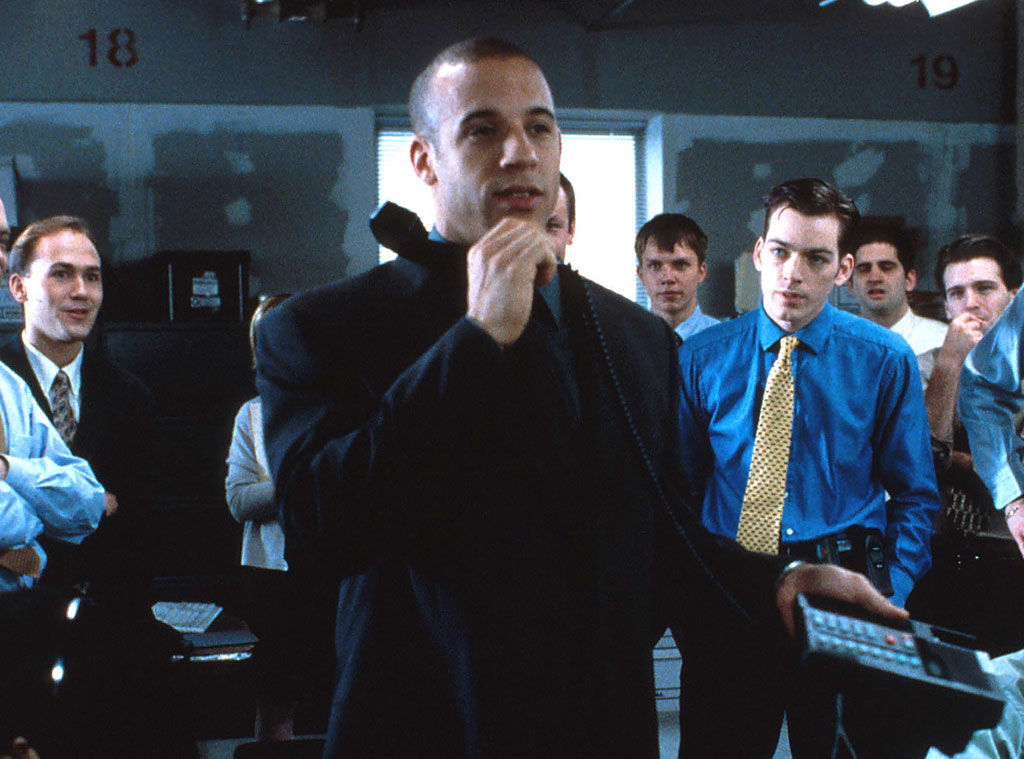

I wish I could work from home... But I support manufacturing operations so it very rarely makes sense. Only a very lucky few have the option of working from home. All cubes are always full. A few loud people mixed in is all it takes to stress me out when I'm under the gun. Add in another 20 people in a smaller space and it just gets worse.It really depends on how your company manages it. At my company, there are a ton of phone rooms, huddle rooms, and conference rooms. Some can be reserved, and some are use-it-as-you-need-it. So it is rarely a problem to find a room for private conversations with small groups. Also, most people in my area work remotely >50% of the time, and we're a large company with offices all over the place, so we have a culture where it is understood that a lot of communication isn't going to be face-to-face.
Also, our open workspace is really open and airy. We don't cram in as many rows of desks as fit into the space. So people are not sitting on top of one another, and there are places to go if you want privacy, or a change of scenery. The cost savings comes in the fact that there are only enough desks for about 75% of the people assigned to my work area. That is rarely a problem, since so many people are remote on any given day. And if necessary, we just overflow into the next open space area in the building.
Open space for us is not a disaster. It doesn't deliver on the promise of greater collaboration, but it isn't horrible either.
I was in PIMCO’s Manhattan office about 5 years ago, completely open office except for the main higher ups. My understanding is in their headquarters (Newport Beach CA) even Bill Gross was in the open office environment.
Companies need the right work culture and motivated staff to make it work.
Companies need the right work culture and motivated staff to make it work.
Latest
-
01
 The Knight Report
Rutgers Basketball HC Brandin Knight's Villanova Postgame Press Conference
The Knight Report
Rutgers Basketball HC Brandin Knight's Villanova Postgame Press Conference
-
02
 The Knight Report
Join The Knight Report TODAY and get it for 60% off!
The Knight Report
Join The Knight Report TODAY and get it for 60% off!
-
03
 The Knight Report
Rutgers Basketball falls to Villanova in its first scrimmage
The Knight Report
Rutgers Basketball falls to Villanova in its first scrimmage
-
04
 The Knight Report
Rutgers vs Maryland odds: Point spread released on Scarlet Knights, Terrapins
The Knight Report
Rutgers vs Maryland odds: Point spread released on Scarlet Knights, Terrapins
-
05
 The Knight Report Basketball
How to watch Rutgers / Villanova; Pregame Info, More: Gameday Central
The Knight Report Basketball
How to watch Rutgers / Villanova; Pregame Info, More: Gameday Central