Speaking of gold and Northwestern history, your posted comment caused me to reflect that our university was founded concurrent with the California Gold Rush that gave birth to the first $20 U.S. Gold pieces (Double Eagles) which were first minted for general circulation in 1850. In 1851 Northwestern received its official charter. That same decade a ship (SS Central America) which was transporting to the East Coast millions of dollars (by today's values) of those Double Eagles which had been minted at the San Francisco Mint went down in a storm off of the Carolinas. Some three decades ago the ship was disovered and two major deep sea gold recovery efforts followed. The most recent recovery effort was this past year and those coins are just now hitting the numismatic market.
So if one wants to be directly "connected" to the era of our university's founding, one can do so by acquiring a Double Eagle gold coin which has remained untouched from that time to the present.
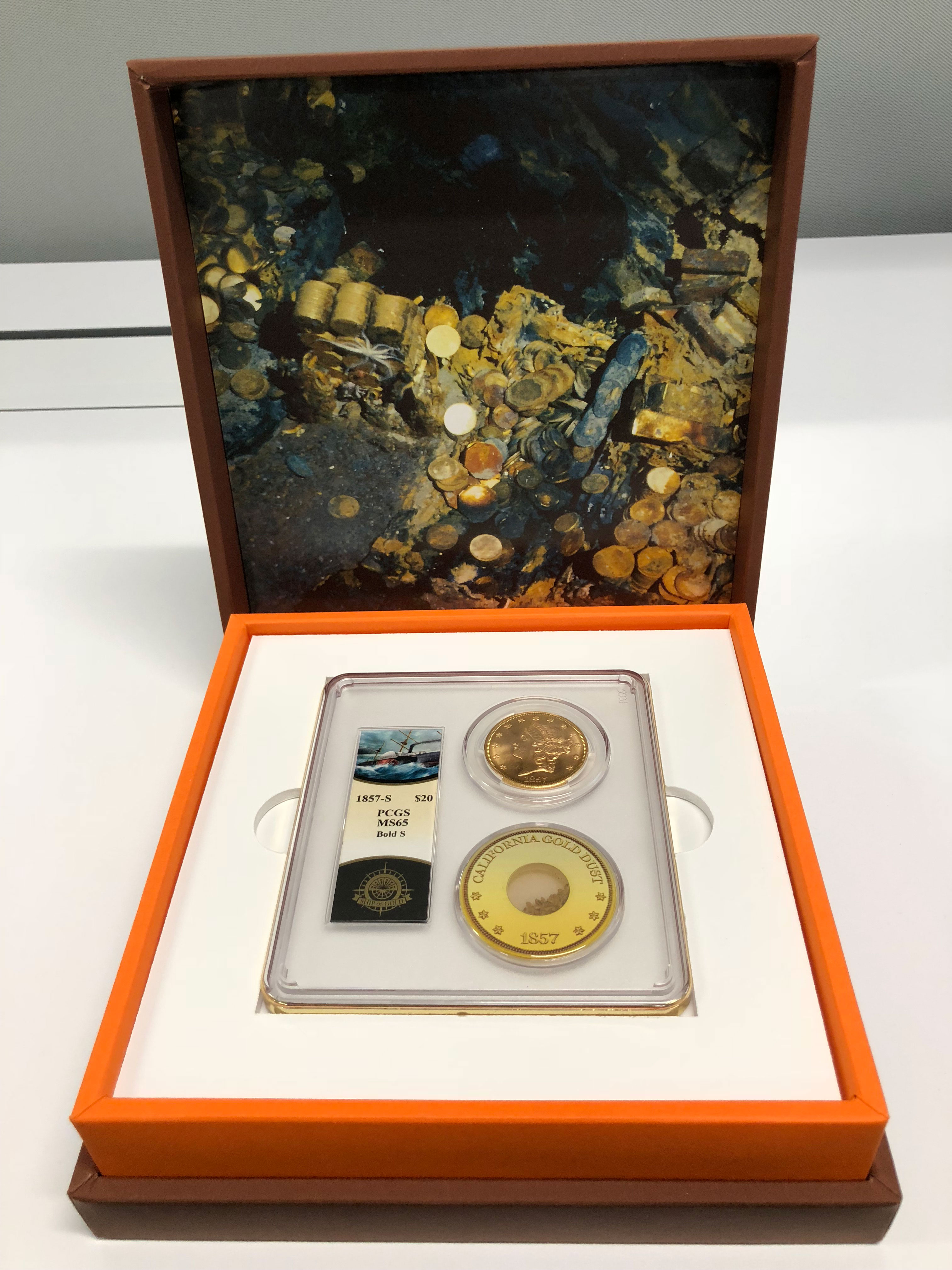
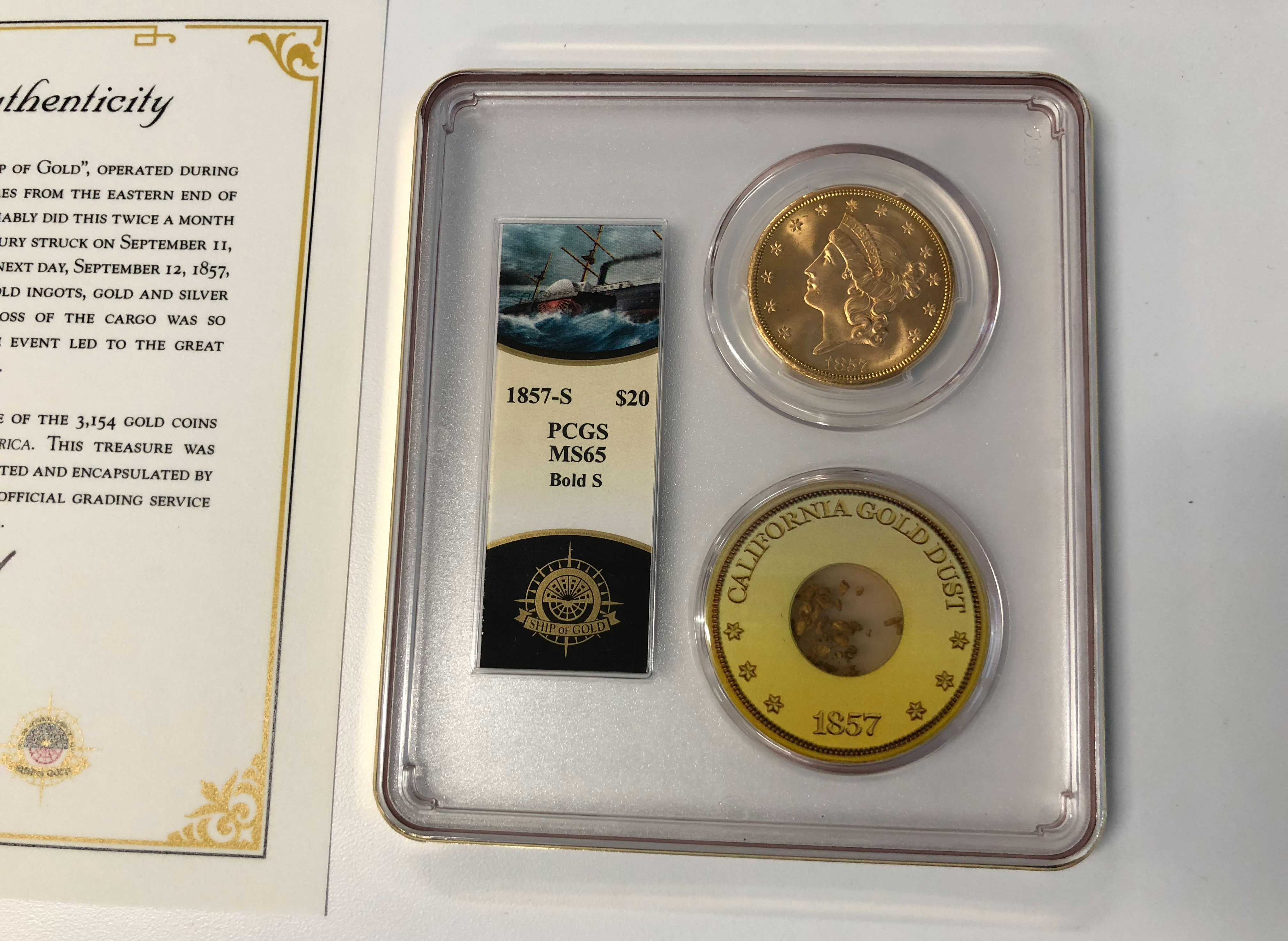
Pictured is the "gold mine" of coins as photographed by an undersea robot during the original discovery. The accompanying coin is one of the $20 Double Eagle gold pieces minted in San Francisco which was brought up from the ocean depths during the more recent recovery effort.
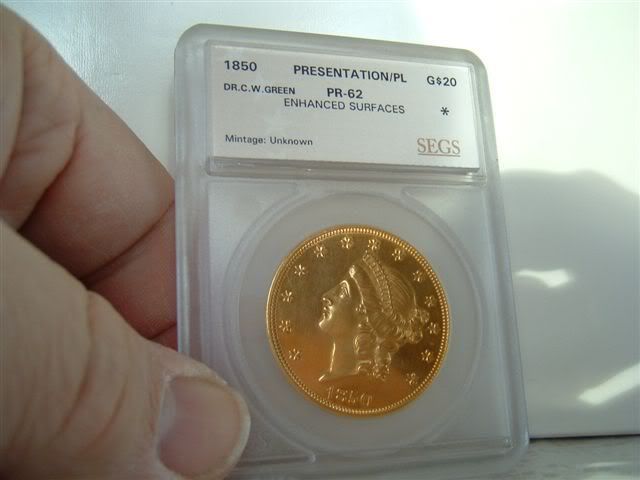
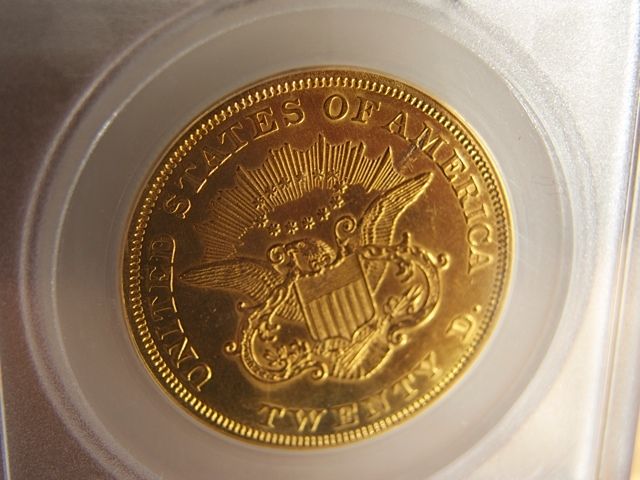
FWIW further below pictured is one of, if not the first, $20 Double Eagle which was minted at the Philadelphia mint in 1850, the first year of circulation. After acquiring it I learned that it was once in the possession of its designer James Longacre and had been subsequently auctioned from his estate. (The 1870 Longacre Estate auction description for the coin read "1850 Double Eagle Proof. This piece was from the first dies used for the double eagle, and might be termed a trial piece.")
For anyone interested in the historical implications that followed from the sinking of the ship SS Central America, here is a link to an interesting article suggesting that the loss of its gold was a major cause of an economic crisis that followed - a crisis that evidently impacted our own fledging university as well. (Both the Illinois Central and Chicago Railroads shut down. Per the Wikipedia article on the Panic of 1857, the evident impact upon Northwestern is further suggested by this comment: "The results of the Panic of 1857 were that the largely agrarian southern economy, which also had few railroads, suffered little, whereas the northern economy took a significant hit and made a slow recovery. The area affected the most by the Panic was the
Great Lakes region ...")
https://seanmunger.com/2013/09/12/the-s-s-central-america-the-ship-that-helped-wreck-a-nation/