
Maddux Bruns
- Thread starter Slow Natives
- Start date
You are using an out of date browser. It may not display this or other websites correctly.
You should upgrade or use an alternative browser.
You should upgrade or use an alternative browser.

I want to say I read or was told by someone that JT was a perfect storm. He had guys drafted behind him, or maybe someone ahead of him, that demanded certain money that they gave it to, and JT wanted more than they had to offer or something along those lines
Last edited:
JT Ginn picked #30 in the first round in 2018, turned it down and played at State.
Maddux Bruns just picked at #29 in 2021 so we will see.
Maddux Bruns just picked at #29 in 2021 so we will see.
Last edited:
I want to say I read or was told by someone that JT was a perfect storm. He had guys drafted behind him, or maybe someone ahead of him, that demanded certain money that they gave it to, and JT wanted more than they had to offer, or something along those lines
Biggest thing with Ginn is that he grew up loving Mississippi State and his dream was to play at MSU. I doubt Bruns has that same emotional attachment.
His coach has already told him if you want to get to the Bigs quicker, go on and sign as a 1st around draft pick.
Whether that’s really accurate - I have no idea, that’s just what he’s told him.
Hope he wants to come and play for the defending National Champions though and follow in the footsteps of TA.
Whether that’s really accurate - I have no idea, that’s just what he’s told him.
Hope he wants to come and play for the defending National Champions though and follow in the footsteps of TA.
His coach has already told him if you want to get to the Bigs quicker, go on and sign as a 1st around draft pick.
Whether that’s really accurate - I have no idea, that’s just what he’s told him.
Hope he wants to come and play for the defending National Champions though and follow in the footsteps of TA.
I don't either, but I would guess that it's probably more accurate for pitchers than position players. You can be a pitcher with big league potential and not get a lot of game experience because colleges can't afford to prioritize developing a pitcher over winning (at least not once you get in conference play). I would think if you are a position player with big league potential, you are going to get plenty of playing time even if you're raw and get to develop.
That said, I'm not sure which route you take matters that much.
Remind me where JT Ginn was drafted in high school but turned it down to play at State.
Are they the same person?
I don't have any data or evidence either, but to me it SEEMS (again, no data, just seems this way) that pitchers are known commodities because of stuff or velo or whatever, and if they are considered good out of high school, they get the same benefit of the doubt after college. I mean Ginn and Hoglund got drafted even during injury.I don't either, but I would guess that it's probably more accurate for pitchers than position players. You can be a pitcher with big league potential and not get a lot of game experience because colleges can't afford to prioritize developing a pitcher over winning (at least not once you get in conference play). I would think if you are a position player with big league potential, you are going to get plenty of playing time even if you're raw and get to develop.
That said, I'm not sure which route you take matters that much.
Position players, not so much. Seems like it depends on their numbers, whether that's HRs or OPS or whatever.
Personally I hope he passes on the money and comes to State and plays 4 years. BUT...if he were my son I would advise him to go get that money. Its a no brainer

Generally, college players are more likely to get to the majors than high school players. But I don’t know the stats just for first rounders.
Annual reminder that at least 95% of those drafted in the top 10 rounds sign.
True but JT upped his payout 50% and didn't have to ride buses around to rinky dink minor league ball parks either.
While the pay is great there's nothing at all appealing about minor leagues.
True but JT upped his payout 50% and didn't have to ride buses around to rinky dink minor league ball parks either.
While the pay is great there's nothing at all appealing about minor leagues.
I mean he's riding around Port St. Lucie now so ����*


I mean he's riding around Port St. Lucie now so*
He is older, more experienced and if he is going to rise, he will do it quicker now spending less time in the minors.
Let's see, JT had fun for a couple years at State, got paid more than he would have if he had spent years riding in buses and staying in cheap motels while playing in front of 500 fans instead of 10,000. It worked out for JT Ginn just fine but there is always a chance it doesn't. Bruns is most likely going to take the money and I can't blame him. That is unless they lowball him on the offer, thinking they can get him to sign below slot. In that case, I would love to have him.
Generally, college players are more likely to get to the majors than high school players. But I don’t know the stats just for first rounders.
Just went and looked at the tracker on MLB.com and once you get past the first four or five rounds, seems like ALOT of college guys going. I'm guessing once you get past the top 1% of HS players (who get drafted in top 5 rounds), you'd rather go with a guy who's played college ball. But I do NOT fault a top 5 round HS player for taking the money and signing.

I don't either, but I would guess that it's probably more accurate for pitchers than position players. You can be a pitcher with big league potential and not get a lot of game experience because colleges can't afford to prioritize developing a pitcher over winning (at least not once you get in conference play). I would think if you are a position player with big league potential, you are going to get plenty of playing time even if you're raw and get to develop.
That said, I'm not sure which route you take matters that much.
A couple of years ago before a game I talked to scout about pitchers. He said it's better for most pitchers to go to the minors than college due to not getting enough work in college to prepare for the rigors of MLB pitching. I have no idea of how true that is, just passing it along.
True but JT upped his payout 50% and didn't have to ride buses around to rinky dink minor league ball parks either.
While the pay is great there's nothing at all appealing about minor leagues.
Can you share a bad experience you had when you played minor league ball?
Dude we gave all heard the stories of minor league baseball, that is the ultimate grind.Can you share a bad experience you had when you played minor league ball?
Dude we gave all heard the stories of minor league baseball, that is the ultimate grind.
The big step up is AAA. You get two buses in AAA instead of cramming everyone into one.

Can you share a bad experience you had when you played minor league ball?
Never made it to the minors, but if I remember correctly, I hooked up with Jessica Biel in The Cape one summer...
View attachment 20979
quick mental picture of minor league ball as told to me....
Bo Davis was the CF on the Southern Miss CWS team .....when i asked him if he enjoyed college or pro life better, it was knee jerk....College by far....
As he paraphrased it: "In college, all of your teammates want to win, and are pulling for you.....in the pros, not a single teammate gives a crap about you or your family....they really don't care if they win or lose....all they care about is the opportunity to get on the field....they really want you to perform poorly or get hurt so they can play..."
Bo Davis was the CF on the Southern Miss CWS team .....when i asked him if he enjoyed college or pro life better, it was knee jerk....College by far....
As he paraphrased it: "In college, all of your teammates want to win, and are pulling for you.....in the pros, not a single teammate gives a crap about you or your family....they really don't care if they win or lose....all they care about is the opportunity to get on the field....they really want you to perform poorly or get hurt so they can play..."
Latest
-
01
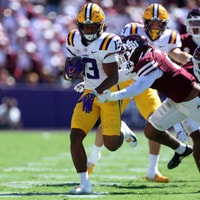 Maroon and White Football
"Nothing changes": Mississippi State's LJ Prudhomme and Marcus Williams discuss expectations with bruised team
Maroon and White Football
"Nothing changes": Mississippi State's LJ Prudhomme and Marcus Williams discuss expectations with bruised team
-
02
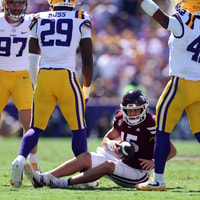 Maroon and White Football
Shuffled Mississippi State offense puts up yards, but no points in first shutout since 2020
Maroon and White Football
Shuffled Mississippi State offense puts up yards, but no points in first shutout since 2020
-
03
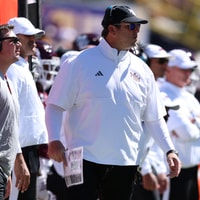 Maroon and White
Everything Mississippi State HC Jeff Lebby said after LSU loss
Maroon and White
Everything Mississippi State HC Jeff Lebby said after LSU loss
-
04
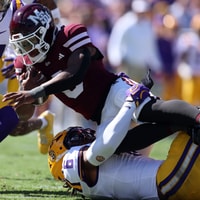 Maroon and White
Rapid Recap: No. 22 LSU 31-0 No. 16 Mississippi State
Maroon and White
Rapid Recap: No. 22 LSU 31-0 No. 16 Mississippi State
-
05
 Maroon and White
Inside the numbers: Mississippi State-LSU first half stats
Maroon and White
Inside the numbers: Mississippi State-LSU first half stats