The new offense seems to be better- albeit with growing pains. This is a google analysis of new offense:
Compare university South Carolina footbal offense through 5 games, in terms of run/pass plays, interceptions/fumbles: any trends/causality ?
Through the first 5 games of the 2026 season, the South Carolina Gamecocks football offense under new coordinator Kendal Briles has shown clear strategic pivots and high volatility in ball security. Following their recent 35-34 overtime loss to Kentucky, the Gamecocks sit at 2–3 overall (0–3 SEC), revealing stark trends and direct causality between their volume-based run-pass options and turnover patterns.
The Run/Pass Balance: An Ultra-Aggressive Ground Focus
A primary trend of Briles' "Bear Raid" system is its heavy, explosive commitment to the running game:
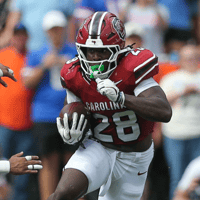
Rushing Dominance: Through five games, the Gamecocks have averaged 277.3 rushing yards per game, ranking 7th overall in the country. The rushing volume is heavily emphasized, pushing close to a 2-to-1 run-to-pass play-call ratio in standard conditions.
Passing Efficiency: Conversely, the passing game operates as a lower-volume extension of the run game, averaging 248.7 passing yards per game.
Interceptions vs. Fumbles
Interceptions: Quarterback LaNorris Sellers has been exceptionally disciplined in protecting the ball through the air, throwing 0 interceptions during their latest matchup against Kentucky, contributing to a very low seasonal interception rate.
Fumbles: While the air game remains safe, the ground game has been plagued by severe ball security issues. In the Week 5 game against Kentucky alone, the offense put the ball on the ground 4 times, losing 2 fumbles. Currently, the team has a -2 turnover margin, dragging them down to 105th overall in turnover differential.
Trends & Causality
The connection between South Carolina's play-calling choice and their turnover vulnerabilities shows clear causality:
The Double-Edged Sword of QB Rushing: LaNorris Sellers' dual-threat capabilities are the engine of the offense. For instance, against Kentucky, he rushed for 147 yards on 17 carries. However, this extreme volume of quarterback run plays directly caused 3 of the team's 4 fumbles. The physical toll and frequent contact from SEC defenses on designed QB runs are the leading catalyst for the team's fumbling problem.
Game Script vs. Aggression: Against lower-tier non-conference opponents (Kent State and Towson), the offense executed flawlessly. However, as SEC play triggered negative game scripts (such as playing from behind against Mississippi State and Alabama), the pressure to generate explosive chunks out of the run game increased. This rapid-tempo, high-contact style under Briles has caused an escalation in unforced mistakes and second-half execution lulls.
Low Interceptions due to Short Passing Schemes: Kendal Briles' scheme utilizes a high percentage of screen passes, short drag routes, and play-action jump-passes (such as Sellers' overtime TD to Maurice Brown II). Because the aerial assault acts as an extension of the run game rather than a deep, vertical drop-back system, Sellers rarely throws into heavy safety coverage, minimizing interception numbers.
last season's offensive output
In 2025, the South Carolina Gamecocks offense struggled significantly, which directly led to the off season staff overhaul and the hiring of coordinator Kendal Briles. Under the previous system, the offense averaged just 22.7 points per game and 336.3 total yards per game over a 4–8 season.
The comparison between last season's metrics and the current 2026 trends reveals a complete statistical inversion:
2025 vs. 2026 Offensive Output Comparison
Stat Category 2025 Full-Season 2026 Trend (5 Games)
Scoring Offense 22.7 PPG ~35.0 PPG (skewed by OOC games)
Rush Yards 111.1 YPG 277.3 YPG (Ranked 7th in FBS)
Passing Yards 225.3 YPG 248.7 YPG
Total Offense 336.3 YPG 526.0 YPG
Play-Call Identity Balanced-to-Pass (411 runs / 342 passes) Run-Heavy (Near 2-to-1 run ratio)
Interceptions Thrown 11 INTs Extremely Low (Sellers has minimized aerial turnovers)
Fumbles Lost 7 Lost fumbles (14 total fumbles)High Pace (2 lost in Week 5 vs. Kentucky alone)
Key Structural Differences & Trends
The Rushing Explosion: In 2025, South Carolina had one of the absolute worst rushing offenses in the SEC, averaging a meager 111.1 yards per game on the ground. In 2026, the overhauled offensive line and Briles' scheme have more than doubled that production to 277.3 yards per game.
The Evolution of LaNorris Sellers: Last year as a sophomore, Sellers threw for 2,437 yards, 13 touchdowns, and 8 interceptions, while only rushing for 270 net yards due to taking a staggering number of sacks behind a broken offensive line. In 2026, his role has completely changed; he is being used aggressively as a focal rusher, drastically shifting his statistical output from passing volume to rushing volume.
The Turnover Flip-Flop: In 2025, the primary ball-security threat was the passing game, where Gamecock quarterbacks threw 11 interceptions. In 2026, the script has flipped completely: the passing attack has protected the ball perfectly, but the high-velocity option ground game has drastically accelerated the rate of fumbles
--------------------------------
Perhaps - a similar overhaul of the defensive unit will get us back on track
Compare university South Carolina footbal offense through 5 games, in terms of run/pass plays, interceptions/fumbles: any trends/causality ?
Through the first 5 games of the 2026 season, the South Carolina Gamecocks football offense under new coordinator Kendal Briles has shown clear strategic pivots and high volatility in ball security. Following their recent 35-34 overtime loss to Kentucky, the Gamecocks sit at 2–3 overall (0–3 SEC), revealing stark trends and direct causality between their volume-based run-pass options and turnover patterns.
The Run/Pass Balance: An Ultra-Aggressive Ground Focus
A primary trend of Briles' "Bear Raid" system is its heavy, explosive commitment to the running game:
Rushing Dominance: Through five games, the Gamecocks have averaged 277.3 rushing yards per game, ranking 7th overall in the country. The rushing volume is heavily emphasized, pushing close to a 2-to-1 run-to-pass play-call ratio in standard conditions.
Passing Efficiency: Conversely, the passing game operates as a lower-volume extension of the run game, averaging 248.7 passing yards per game.
Interceptions vs. Fumbles
Interceptions: Quarterback LaNorris Sellers has been exceptionally disciplined in protecting the ball through the air, throwing 0 interceptions during their latest matchup against Kentucky, contributing to a very low seasonal interception rate.
Fumbles: While the air game remains safe, the ground game has been plagued by severe ball security issues. In the Week 5 game against Kentucky alone, the offense put the ball on the ground 4 times, losing 2 fumbles. Currently, the team has a -2 turnover margin, dragging them down to 105th overall in turnover differential.
Trends & Causality
The connection between South Carolina's play-calling choice and their turnover vulnerabilities shows clear causality:
The Double-Edged Sword of QB Rushing: LaNorris Sellers' dual-threat capabilities are the engine of the offense. For instance, against Kentucky, he rushed for 147 yards on 17 carries. However, this extreme volume of quarterback run plays directly caused 3 of the team's 4 fumbles. The physical toll and frequent contact from SEC defenses on designed QB runs are the leading catalyst for the team's fumbling problem.
Game Script vs. Aggression: Against lower-tier non-conference opponents (Kent State and Towson), the offense executed flawlessly. However, as SEC play triggered negative game scripts (such as playing from behind against Mississippi State and Alabama), the pressure to generate explosive chunks out of the run game increased. This rapid-tempo, high-contact style under Briles has caused an escalation in unforced mistakes and second-half execution lulls.
Low Interceptions due to Short Passing Schemes: Kendal Briles' scheme utilizes a high percentage of screen passes, short drag routes, and play-action jump-passes (such as Sellers' overtime TD to Maurice Brown II). Because the aerial assault acts as an extension of the run game rather than a deep, vertical drop-back system, Sellers rarely throws into heavy safety coverage, minimizing interception numbers.
last season's offensive output
In 2025, the South Carolina Gamecocks offense struggled significantly, which directly led to the off season staff overhaul and the hiring of coordinator Kendal Briles. Under the previous system, the offense averaged just 22.7 points per game and 336.3 total yards per game over a 4–8 season.
The comparison between last season's metrics and the current 2026 trends reveals a complete statistical inversion:
2025 vs. 2026 Offensive Output Comparison
Stat Category 2025 Full-Season 2026 Trend (5 Games)
Scoring Offense 22.7 PPG ~35.0 PPG (skewed by OOC games)
Rush Yards 111.1 YPG 277.3 YPG (Ranked 7th in FBS)
Passing Yards 225.3 YPG 248.7 YPG
Total Offense 336.3 YPG 526.0 YPG
Play-Call Identity Balanced-to-Pass (411 runs / 342 passes) Run-Heavy (Near 2-to-1 run ratio)
Interceptions Thrown 11 INTs Extremely Low (Sellers has minimized aerial turnovers)
Fumbles Lost 7 Lost fumbles (14 total fumbles)High Pace (2 lost in Week 5 vs. Kentucky alone)
Key Structural Differences & Trends
The Rushing Explosion: In 2025, South Carolina had one of the absolute worst rushing offenses in the SEC, averaging a meager 111.1 yards per game on the ground. In 2026, the overhauled offensive line and Briles' scheme have more than doubled that production to 277.3 yards per game.
The Evolution of LaNorris Sellers: Last year as a sophomore, Sellers threw for 2,437 yards, 13 touchdowns, and 8 interceptions, while only rushing for 270 net yards due to taking a staggering number of sacks behind a broken offensive line. In 2026, his role has completely changed; he is being used aggressively as a focal rusher, drastically shifting his statistical output from passing volume to rushing volume.
The Turnover Flip-Flop: In 2025, the primary ball-security threat was the passing game, where Gamecock quarterbacks threw 11 interceptions. In 2026, the script has flipped completely: the passing attack has protected the ball perfectly, but the high-velocity option ground game has drastically accelerated the rate of fumbles
--------------------------------
Perhaps - a similar overhaul of the defensive unit will get us back on track