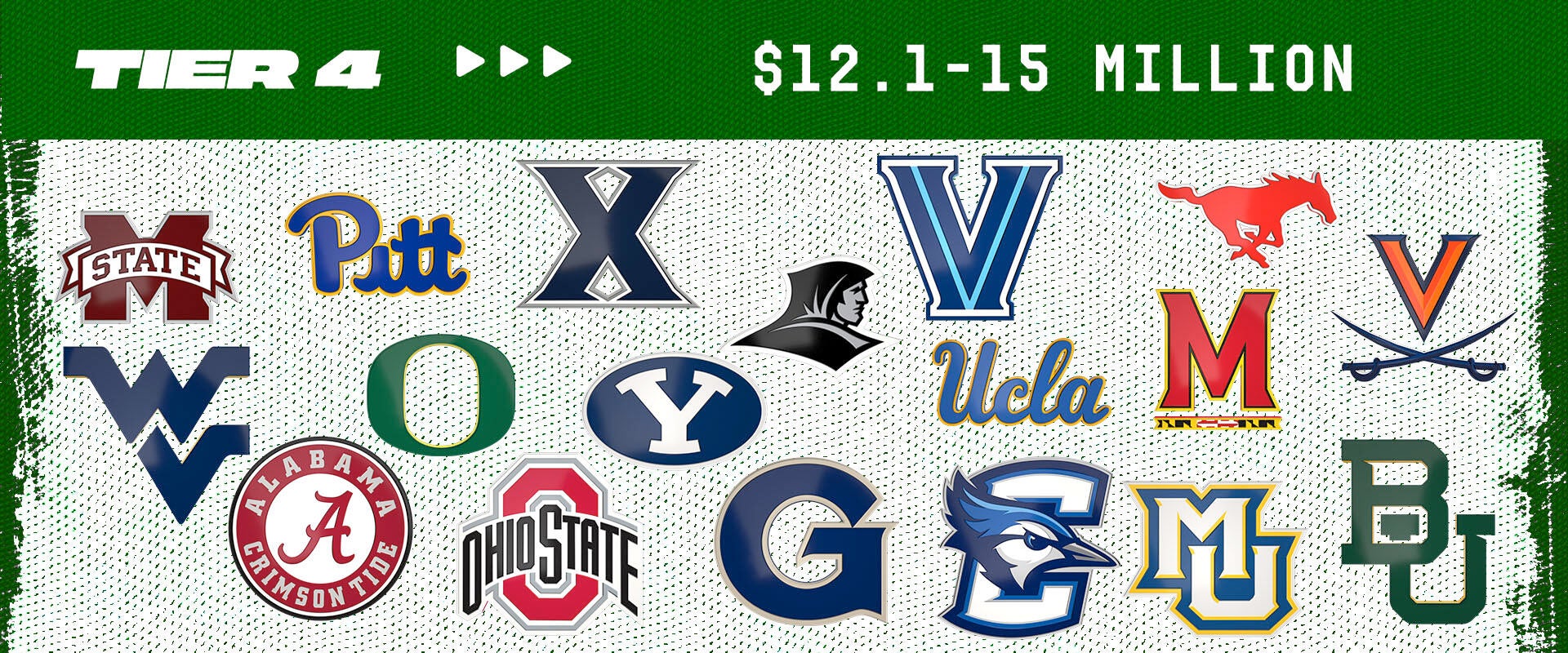
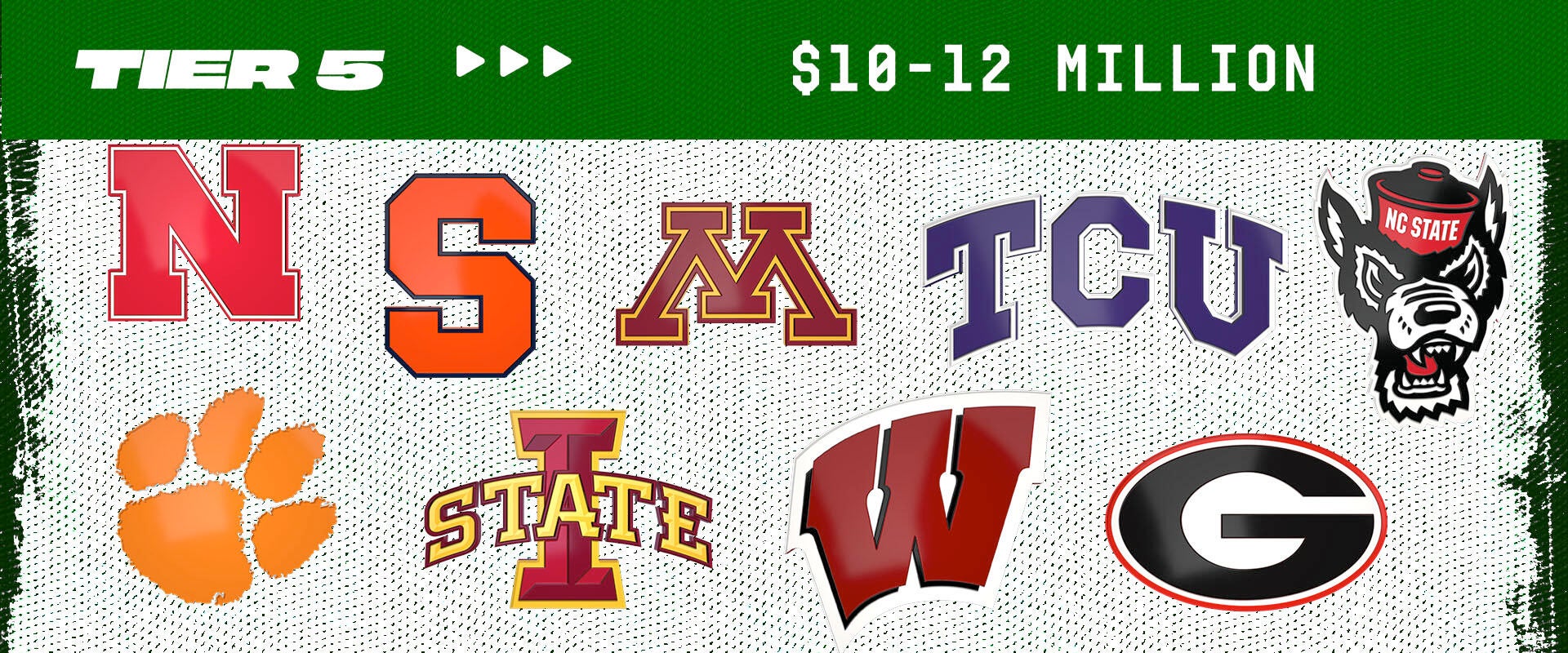
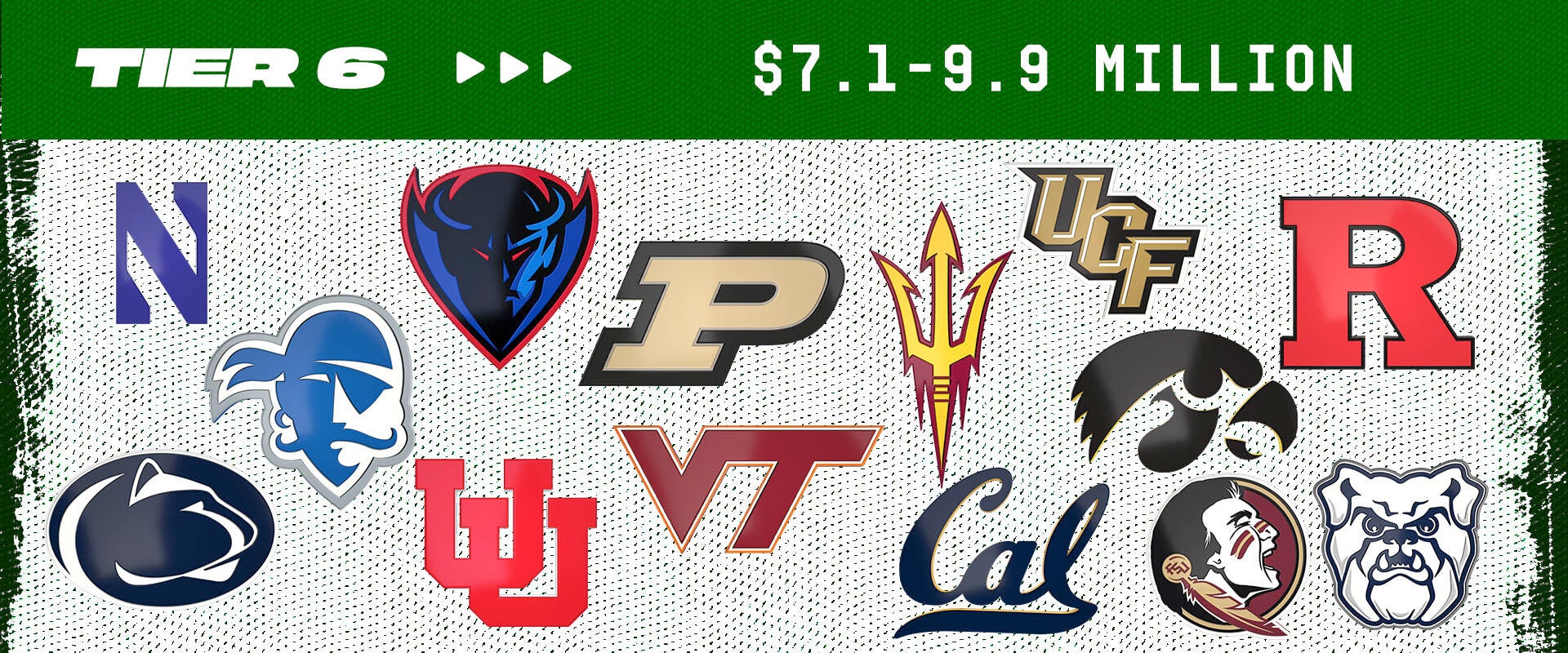
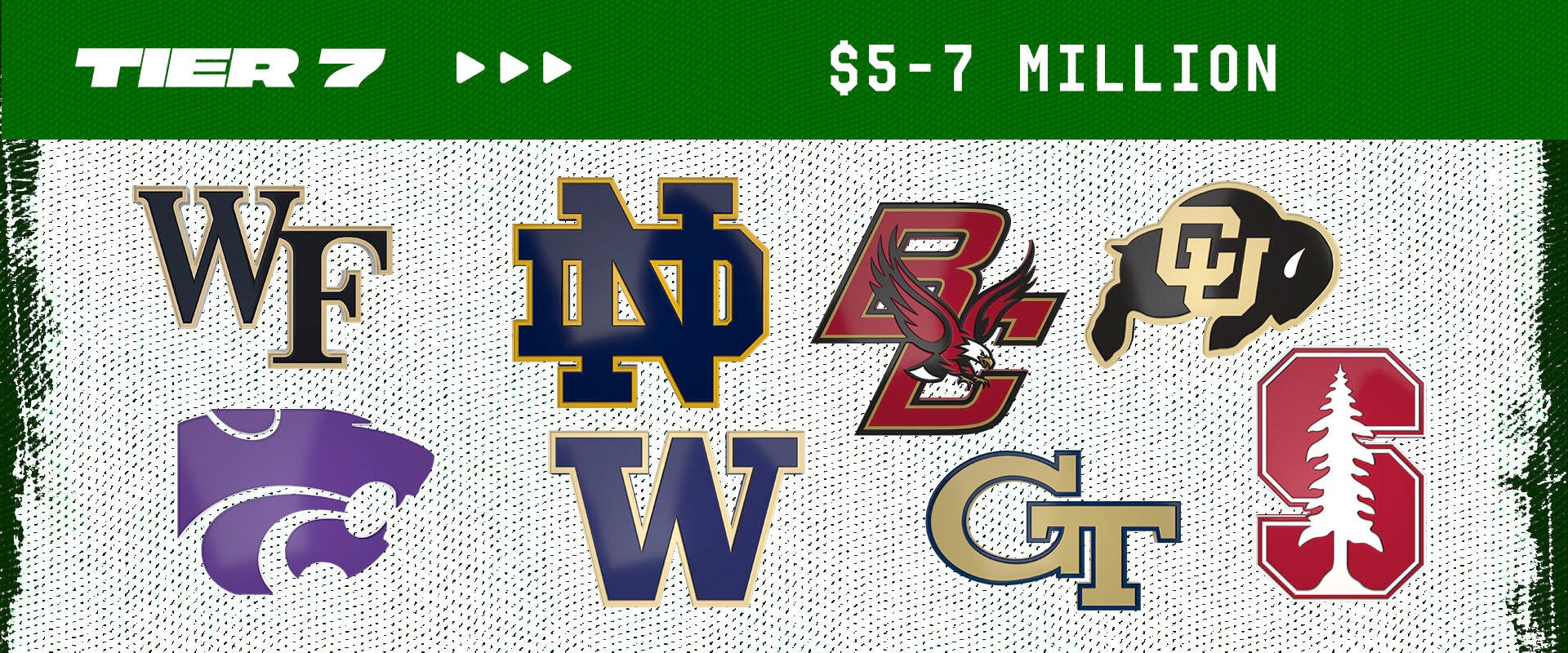
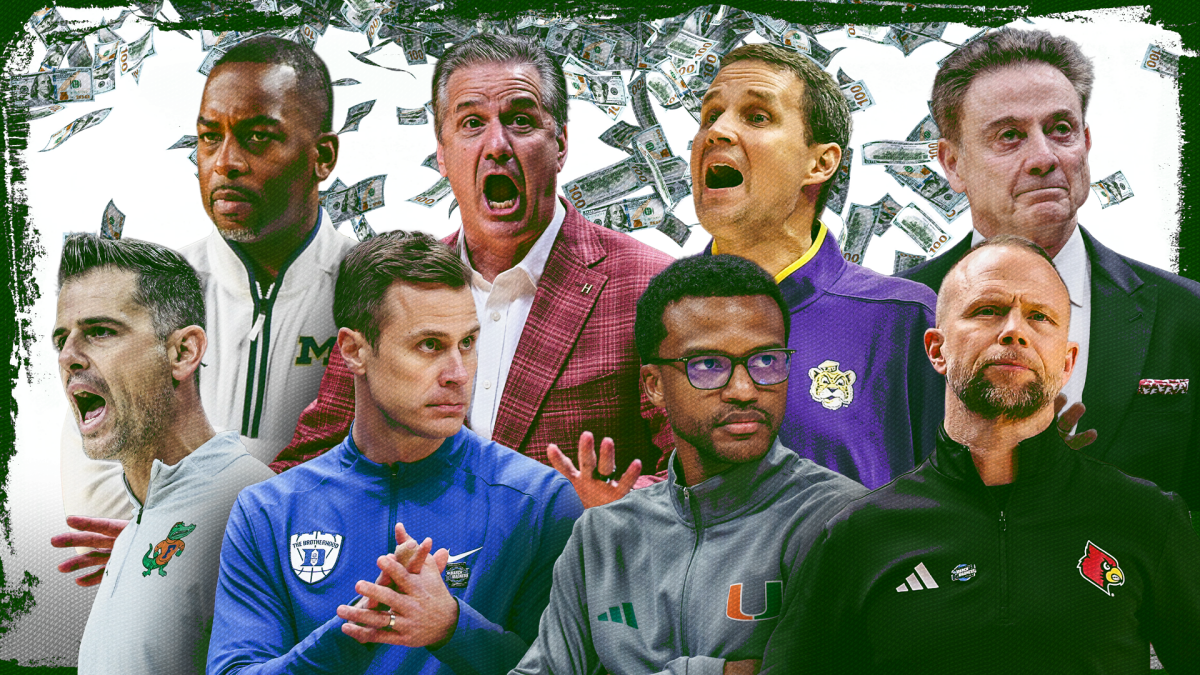
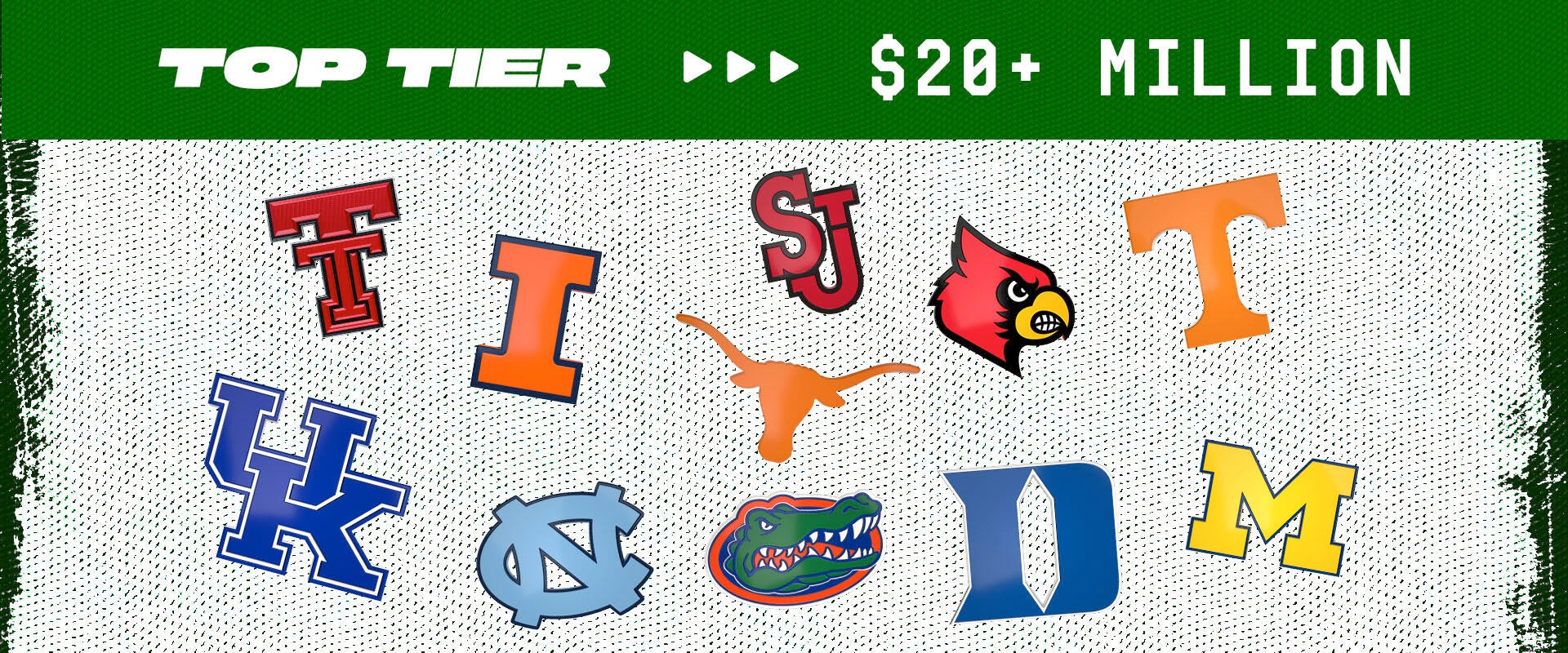
IOWA spending betw $7.1 & $9.9M on Roster. At least $20M: Illinois, Michigan, Duke, Florida, Kentucky, Louisville, UNC, St John's, Tenn, Texas Tech

Franisdaman

Heisman
Nov 3, 2012
17,932
27,671
113
$13.5 million is the average number across all 79 Power 5 programs, plus Gonzaga, which has operated as a high-major outfit for well over a decade.

Preseason #1 Florida and its huge retention situation with All-American Thomas Haugh (who comfortably projects as the highest earner sport), DPOY Rueben Chinyelu, All-SEC forward Alex Condon and Co. have a collective valuation north of $25 million

Last season there were only two teams believed to be operating at $20 million-plus:
Kentucky and (maybe) Louisville; 2026 seriously escalated college basketball's spending ceiling.

A year ago, the average price of a power-conference squad was in the realm of $7 million. But for the fourth straight offseason, the open market spiked yet again, leading to the most unruly portal frenzy yet. Numerous big-man-needy teams entered free agency with $4 million earmarked for a star center. That wasn't enough. Many of the best bigs in free agency earned close to a $5 million payday. Elite guards and wings usually commanded a price that encroached on $4 million. The market was further sent into commotion in the summer when dozens upon dozens of players sued for a fifth year of eligibility after an NCAA rule change in late June exposed them to (still very much ongoing) litigation.

The season is less than two weeks away. We still don't know which players who have lawyered up will win out.

With those circumstances in mind, our ambitious endeavor to uncover the NIL capacities at every high-major program had a few stipulations and non-negotiables. The first was how we defined the terms that place each program into one of our seven spending tiers. Every school listed is based on the hypothetical that every player who is trying to get eligible as of Oct. 21 will remain eligible.

Very important context: There are a lot of schools that would drop down a tier if they didn't wind up having to pay these fifth-year guys. But they are financially tied to paying them for now, so they have been slotted into their appropriate levels.

Additionally, some schools have incentives in their player contracts, though the structure of those incentives and the amounts vary wildly depending on the player. Nevertheless, if a school is in a position to reward its players with incentives and ultimately would have to pay those bonuses at the end of the season, that cost was also added to every program's total.

CBS Sports' sourcing is based on conversations (and longstanding relationships) with head coaches, assistants, athletic directors, general managers, agents and even some third-party consultants who have access to teams' NIL contracts. In some instances, sources provided a team's spending ledger under the agreement that documents and/or screenshots would not be shared to anyone else.

There are definitely a group of schools listed below that are believed by their competition to be operating with a budget that's 10%, 15%, even 20% larger than where we've slotted them. In many cases, we independently double-sourced a school's number. Sometimes a coach would give one number, and we would discreetly reach out to another person in an athletic department to verify. There were only a few instances when the number wasn't effectively the same. In those instances, we did our diligence and further vetted the information. There were only two cases where two numbers were not in alignment (the difference being more than $1.5 million but less than $2.5 million). We took the higher number both times.

More than half of the programs provided an exact number on background. Most others gave a narrow range they fell into. From there, we were able to compile a reasonably accurate listing of all 80 schools.

And from that list, we have an approximate average cost of every roster at the high-major level for the upcoming season. The SEC is comfortably No. 1, with the basketball-first Big East firmly taking second place in the spending hierarchy.


  • The Big Ten would be #2 if not for having one-third of its league limited to less than $10 million in spending in men's basketball. While some programs have definitely improved their year-over-year standing relative to where they ranked nationally a year ago, there's still a lot of places that are hitting a fiscal ceiling that could be reflected in the year-end standings.

Here is where every school slots on spending in men's basketball for the 2026-27 season.


Last edited:

Franisdaman

Heisman
Nov 3, 2012
17,932
27,671
113
The full story:


Iowa had more money to spend in this cycle, but it didn't go overboard in the point guard market. Rival coaches believe Iowa put some money away to try and land a dynamic 2027 five-star guard, Cayden Daughtry, but the price of the brick has skyrocketed there after he put together a rocket-ship summer on the grassroots circuit.
 

Franisdaman

Heisman
Nov 3, 2012
17,932
27,671
113
Meanwhile, Illinois and Michigan are the top dawgs in the Big Ten.

Retention was not cheap for the Illini, but keeping David Mirkovic, Andrej Stojakovic and the rest of the Balkans was well worth the price of admission. The Illini were prepared to dole out top-of-the-market money for Year 2 of Keaton Wagler, but he went pro (smart decision), so the Illini's Final Four hopes hinge heavily on just how good Providence transfer guard Stefan Vaaks and five-star guard Quentin Coleman can become.

The money is one of the bigger reasons why Michigan was able to retain nearly its entire rotation, even after Dusty May left for the Dallas Mavericks. Elliot Cadeau and Trey McKenney may be pound-for-pound the best backcourt duo in college hoops next season. Michigan had to re-negotiate a bit to keep the portal poachers away, but new coach Mike Boynton Jr. got the job done.
 

Hawksfor3

All-American
Dec 5, 2016
8,906
9,940
113
$13.5 million is the average number across all 79 Power 5 programs, plus Gonzaga, which has operated as a high-major outfit for well over a decade.

Preseason #1 Florida and its huge retention situation with All-American Thomas Haugh (who comfortably projects as the highest earner sport), DPOY Rueben Chinyelu, All-SEC forward Alex Condon and Co. have a collective valuation north of $25 million

Last season there were only two teams believed to be operating at $20 million-plus:
Kentucky and (maybe) Louisville; 2026 seriously escalated college basketball's spending ceiling.

A year ago, the average price of a power-conference squad was in the realm of $7 million. But for the fourth straight offseason, the open market spiked yet again, leading to the most unruly portal frenzy yet. Numerous big-man-needy teams entered free agency with $4 million earmarked for a star center. That wasn't enough. Many of the best bigs in free agency earned close to a $5 million payday. Elite guards and wings usually commanded a price that encroached on $4 million. The market was further sent into commotion in the summer when dozens upon dozens of players sued for a fifth year of eligibility after an NCAA rule change in late June exposed them to (still very much ongoing) litigation.

The season is less than two weeks away. We still don't know which players who have lawyered up will win out.

With those circumstances in mind, our ambitious endeavor to uncover the NIL capacities at every high-major program had a few stipulations and non-negotiables. The first was how we defined the terms that place each program into one of our seven spending tiers. Every school listed is based on the hypothetical that every player who is trying to get eligible as of Oct. 21 will remain eligible.

Very important context: There are a lot of schools that would drop down a tier if they didn't wind up having to pay these fifth-year guys. But they are financially tied to paying them for now, so they have been slotted into their appropriate levels.

Additionally, some schools have incentives in their player contracts, though the structure of those incentives and the amounts vary wildly depending on the player. Nevertheless, if a school is in a position to reward its players with incentives and ultimately would have to pay those bonuses at the end of the season, that cost was also added to every program's total.

CBS Sports' sourcing is based on conversations (and longstanding relationships) with head coaches, assistants, athletic directors, general managers, agents and even some third-party consultants who have access to teams' NIL contracts. In some instances, sources provided a team's spending ledger under the agreement that documents and/or screenshots would not be shared to anyone else.

There are definitely a group of schools listed below that are believed by their competition to be operating with a budget that's 10%, 15%, even 20% larger than where we've slotted them. In many cases, we independently double-sourced a school's number. Sometimes a coach would give one number, and we would discreetly reach out to another person in an athletic department to verify. There were only a few instances when the number wasn't effectively the same. In those instances, we did our diligence and further vetted the information. There were only two cases where two numbers were not in alignment (the difference being more than $1.5 million but less than $2.5 million). We took the higher number both times.

More than half of the programs provided an exact number on background. Most others gave a narrow range they fell into. From there, we were able to compile a reasonably accurate listing of all 80 schools.

And from that list, we have an approximate average cost of every roster at the high-major level for the upcoming season. The SEC is comfortably No. 1, with the basketball-first Big East firmly taking second place in the spending hierarchy.


  • The Big Ten would be #2 if not for having one-third of its league limited to less than $10 million in spending in men's basketball. While some programs have definitely improved their year-over-year standing relative to where they ranked nationally a year ago, there's still a lot of places that are hitting a fiscal ceiling that could be reflected in the year-end standings.

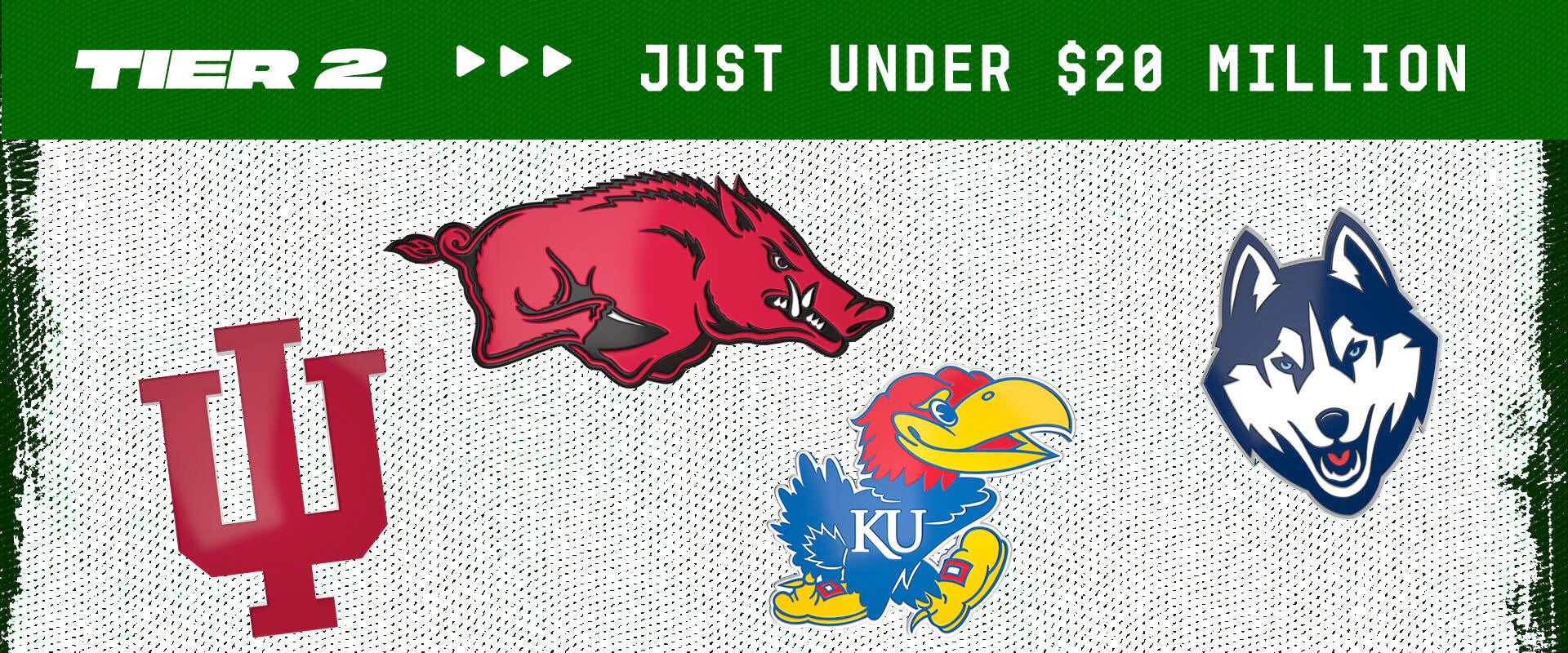
Here is where every school slots on spending in men's basketball for the 2026-27 season.


Tier 6??


2432Hawk

Heisman
Jun 22, 2002
6,617
12,324
113
Despite the clear disparity in roster 'worth', Iowa went as far or farther in the Big Dance than 4 of those ranked above them in the listed tiers last season.


Imagine Ben McCollom with a Top 4 (or higher) Tier money pool to stock his roster with ....

I don't want to imagine that, as it means he's likely coaching somewhere else :(
 
Last edited:
  • Sad
Reactions: HawkBall23

Franisdaman

Heisman
Nov 3, 2012
17,932
27,671
113
Despite the clear disparity in roster 'worth', Iowa went as far or farther in the Big Dance than 4 of those ranked above them in the listed tiers last season.

Imagine Ben McCollom with a Top 4 (or higher) Tier money pool to stock his roster with ....


I don't want to image that, as it means he's likely coaching somewhere else :(


I think that's why North Carolina wanted Ben so badly.

Ben + a $20M budget for players = @EvilMonkeyInTheCloset NATIONAL CHAMPIONSHIPS!!!
 

doughuddl2_rivals

All-Conference
Sep 5, 2009
1,275
1,848
113
$13.5 million is the average number across all 79 Power 5 programs, plus Gonzaga, which has operated as a high-major outfit for well over a decade.

Preseason #1 Florida and its huge retention situation with All-American Thomas Haugh (who comfortably projects as the highest earner sport), DPOY Rueben Chinyelu, All-SEC forward Alex Condon and Co. have a collective valuation north of $25 million

Last season there were only two teams believed to be operating at $20 million-plus:
Kentucky and (maybe) Louisville; 2026 seriously escalated college basketball's spending ceiling.

A year ago, the average price of a power-conference squad was in the realm of $7 million. But for the fourth straight offseason, the open market spiked yet again, leading to the most unruly portal frenzy yet. Numerous big-man-needy teams entered free agency with $4 million earmarked for a star center. That wasn't enough. Many of the best bigs in free agency earned close to a $5 million payday. Elite guards and wings usually commanded a price that encroached on $4 million. The market was further sent into commotion in the summer when dozens upon dozens of players sued for a fifth year of eligibility after an NCAA rule change in late June exposed them to (still very much ongoing) litigation.

The season is less than two weeks away. We still don't know which players who have lawyered up will win out.

With those circumstances in mind, our ambitious endeavor to uncover the NIL capacities at every high-major program had a few stipulations and non-negotiables. The first was how we defined the terms that place each program into one of our seven spending tiers. Every school listed is based on the hypothetical that every player who is trying to get eligible as of Oct. 21 will remain eligible.

Very important context: There are a lot of schools that would drop down a tier if they didn't wind up having to pay these fifth-year guys. But they are financially tied to paying them for now, so they have been slotted into their appropriate levels.

Additionally, some schools have incentives in their player contracts, though the structure of those incentives and the amounts vary wildly depending on the player. Nevertheless, if a school is in a position to reward its players with incentives and ultimately would have to pay those bonuses at the end of the season, that cost was also added to every program's total.

CBS Sports' sourcing is based on conversations (and longstanding relationships) with head coaches, assistants, athletic directors, general managers, agents and even some third-party consultants who have access to teams' NIL contracts. In some instances, sources provided a team's spending ledger under the agreement that documents and/or screenshots would not be shared to anyone else.

There are definitely a group of schools listed below that are believed by their competition to be operating with a budget that's 10%, 15%, even 20% larger than where we've slotted them. In many cases, we independently double-sourced a school's number. Sometimes a coach would give one number, and we would discreetly reach out to another person in an athletic department to verify. There were only a few instances when the number wasn't effectively the same. In those instances, we did our diligence and further vetted the information. There were only two cases where two numbers were not in alignment (the difference being more than $1.5 million but less than $2.5 million). We took the higher number both times.

More than half of the programs provided an exact number on background. Most others gave a narrow range they fell into. From there, we were able to compile a reasonably accurate listing of all 80 schools.

And from that list, we have an approximate average cost of every roster at the high-major level for the upcoming season. The SEC is comfortably No. 1, with the basketball-first Big East firmly taking second place in the spending hierarchy.


  • The Big Ten would be #2 if not for having one-third of its league limited to less than $10 million in spending in men's basketball. While some programs have definitely improved their year-over-year standing relative to where they ranked nationally a year ago, there's still a lot of places that are hitting a fiscal ceiling that could be reflected in the year-end standings.

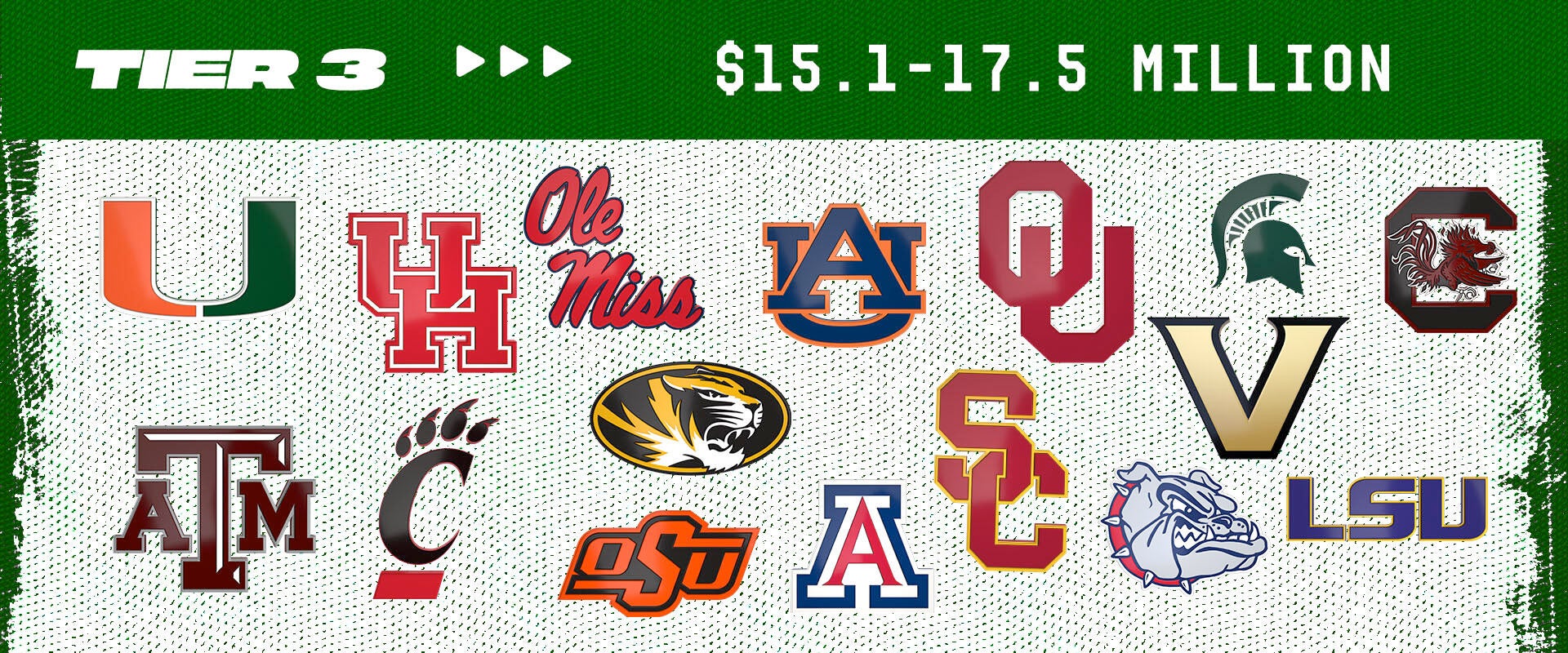
Here is where every school slots on spending in men's basketball for the 2026-27 season.


Will it ever plateau? 😔 😟
 

Kceasthawk@77

All-American
Feb 2, 2005
4,453
7,739
113
Donors gotta be better and step up for men’s basketball
Always fun to hear people tell others how to spend their money. Just sayin......And by the way if people think that Iowa will EVER be competing in these upper tiers financially, then you'd probably be better to start rooting for a different team, because its not happening. Hopefully we found a coach who can win with less through the way he runs his program. Maybe someday people with brains will realize how stupid this is and stop throwing their money away, but I'm not holding my breath.
 
Last edited:
  • Like
Reactions: The Big Z

Kceasthawk@77

All-American
Feb 2, 2005
4,453
7,739
113
I don’t find it fun at all. I’d like the donors of this university to give money to the only coach in this athletic department that has vultures from blue bloods waiting to poach.
"You'd like"? Again whose money is being spent? Maybe people who have earned wealth don't want to spend it paying teenagers to "play games". The players ARE being paid from the media rights deal, (which they should be). Any other money they get from actual NIL is fine, as well as anyone who wants to spend THEIR money, that's fine. Telling people they need to spend THEIR money they way WE want is idiotic. This whole thing is a mess, and contributing to it doesn't make it better. At some point some of these rich elite using their play money to subsidize college sports will probably dry up. Only ONE team wins every year. Many of these teams don't even win much more even with the money and some of these kids just move on the next year to the next higher bidder.
 
  • Like
Reactions: Unclesammy

IA79Cam

All-Conference
Jan 1, 2023
1,172
2,317
113
So schools spend as much on a 13-man basketball roster as they spend on an 85-man football roster?
Yes because 1 player can change the narrative of an entire program (ex. Caitlin) so the roster spots are far more valuable in basketball.
 

Hawkangler

All-Conference
Mar 16, 2014
2,249
4,875
113
Iowa should AT MINIMUM be right around the average. To be that far below it is pathetic.
Pony up $5M a year and maybe the Hawks can get a couple more five stars. When some of these kids are making what I earned in 10 - 15 years, I'll be da^ned if I'm shelling out to a 18 - 19 year old who'll probably piss it away.
 
  • Like
Reactions: Kceasthawk@77

Kceasthawk@77

All-American
Feb 2, 2005
4,453
7,739
113
Pony up $5M a year and maybe the Hawks can get a couple more five stars. When some of these kids are making what I earned in 10 - 15 years, I'll be da^ned if I'm shelling out to a 18 - 19 year old who'll probably piss it away.
To add they're already getting some cash from the TV deal and some donor money. I get everyone's angst that the top schools will pull away. I just don't see how this is sustainable long term, hopefully anyway. Iowa and 80% of the other D1 schools will never compete in a $$$$ bidding war. Even attempting do to so is only throwing good money after bad.
 
  • Like
Reactions: gjoens

Herky T Hawk

All-Conference
Feb 5, 2003
444
1,040
93
Once again, imagine if we were like Minnesota, Wisconsin, and Ohio State. Not having another in state P5 public school to compete with for fans, recruits, money. Keeping in mind that every one of those schools is in a state with a much larger population than Iowa. Combine ISU and Iowa’s NIL money and you’re cooking up on par with Indiana and Kansas.
 
Hawkeye Report

Latest

  1. 01 Hawkeye Report Basketball Recruiting Iowa WBB hosting '28 five-star forward Ella Peper for an unofficial visit
  2. 02 Hawkeye Report Basketball Iowa Women's Basketball: Frontcourt Preview
  3. 03 Hawkeye Report Football Game Preview: Iowa at Minnesota
  4. 04 Hawkeye Report Basketball The Friday Five
  5. 05 Hawkeye Report Olympics Alli Macke's 67th minute winner upends 5th-ranked UCLA