
Good luck Artemis
- Thread starter PSU Mike
- Start date
You are using an out of date browser. It may not display this or other websites correctly.
You should upgrade or use an alternative browser.
You should upgrade or use an alternative browser.


My son works at another rocket company there on the Cape. He had an amazing view.
2 million lbs of thrust per engine. Holy moley!
2 million lbs of thrust per engine. Holy moley!

Track the mission at www.nasa.gov.
”Artemis II, the first crewed mission of the Artemis program, launched from Kennedy Space Center in Florida at 6:35 p.m. EDT on Wednesday, April 1.
The mission will send NASA astronauts Reid Wiseman, Victor Glover, Christina Koch, and CSA (Canadian Space Agency) astronaut Jeremy Hansen on an approximately 10‑day journey around the Moon.”
”Artemis II, the first crewed mission of the Artemis program, launched from Kennedy Space Center in Florida at 6:35 p.m. EDT on Wednesday, April 1.
The mission will send NASA astronauts Reid Wiseman, Victor Glover, Christina Koch, and CSA (Canadian Space Agency) astronaut Jeremy Hansen on an approximately 10‑day journey around the Moon.”
Went to Florida to see the last shuttle launch. Saw the blast off from Jetty Park. Wow and when the sound finally gets to you, it makes your whole body vibrate. Spent 2 days travel to see a 5 minute event and it was over so quickly. I can imagine the sound wave because this had more power than the shuttle lift offs. Terrific to see in person.My son works at another rocket company there on the Cape. He had an amazing view.
2 million lbs of thrust per engine. Holy moley!

My son works at another rocket company there on the Cape. He had an amazing view.
2 million lbs of thrust per engine. Holy moley!
Did one of their senior leaders move to VA recently and then back to Florida?

Space picnic?
So, what's it like spending 10 days whizzing through space in a small area with three other people? There's no bathroom! WTH?!
I don't know about you but after eating a pile of mango salad with a side of couscous and beef brisket I just might become a tad fragrant. God bless them!
So, what's it like spending 10 days whizzing through space in a small area with three other people? There's no bathroom! WTH?!
I don't know about you but after eating a pile of mango salad with a side of couscous and beef brisket I just might become a tad fragrant. God bless them!

Perhaps Chef Jose Andres pre-packed some napkins and diapers.Space picnic?
So, what's it like spending 10 days whizzing through space in a small area with three other people? There's no bathroom! WTH?!
I don't know about you but after eating a pile of mango salad with a side of couscous and beef brisket I just might become a tad fragrant. God bless them!
Going around the moon for the third time , wow .
No, he works for Relativity Space, whose CEO is former Google CEO Eric Schmidt. Relativity is working towards the first launch in December of their Terran-R rocket. I'm trying to go as close as the employees can for that... not sure yet if they'll allow it.Did one of their senior leaders move to VA recently and then back to Florida?
https://www.relativityspace.com/

Who clogged it?Space picnic?
So, what's it like spending 10 days whizzing through space in a small area with three other people? There's no bathroom! WTH?!
I don't know about you but after eating a pile of mango salad with a side of couscous and beef brisket I just might become a tad fragrant. God bless them!


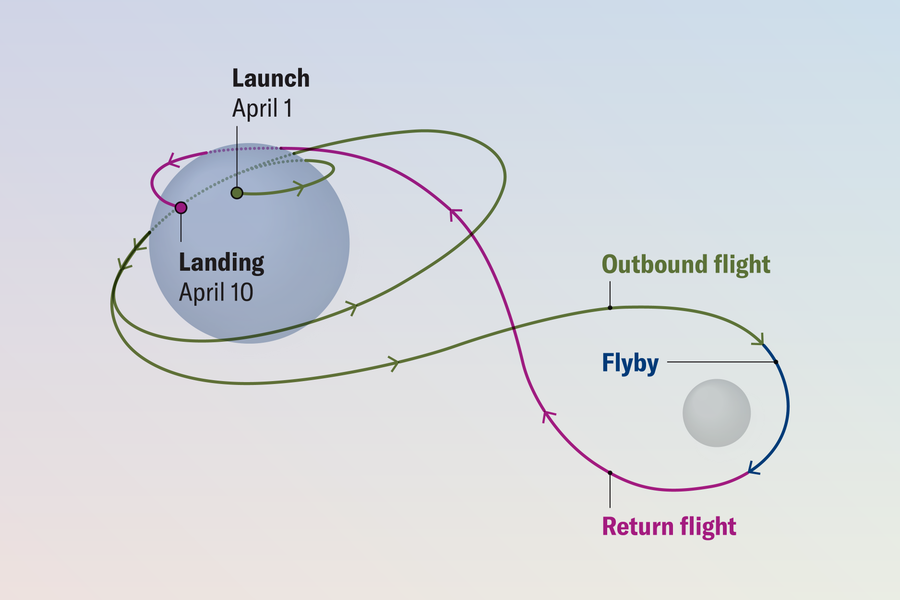
Artemis II’s journey to the moon, day by day
The four astronauts aboard the Orion spacecraft will carry out a packed schedule during their trip around the moon’s far sideLaunching as early as this evening, Artemis II’s astronauts are in for an epic 10-day odyssey around our closest cosmic neighbor.
Riding in the Orion spacecraft, the crew’s there-and-back-again voyage will trace out a figure-eight-like path around Earth and the moon, arcing about the lunar far side at the journey’s midpoint before being pulled back earthward by our planet’s gravity. Along the way, the four astronauts have a packed schedule of scientific activities and tests of Orion’s life-support systems.
After the launch and separation from the immense Space Launch System rocket, the crew will spend their first day in space positioning Orion in a high Earth orbit for its subsequent long-haul trip to the moon.
On day two, Orion will perform its “translunar injection burn,” firing its main engine to propel the craft all the way around the moon and back. The crew will perform smaller burns over the following two days to correct their path as needed while practicing the highly choreographed program for their short sojourn on the lunar far side.
On day five, Orion will slip into the moon’s gravitational sphere of influence, but it will not actually enter lunar orbit. Day six will take the Artemis II crew to the far side—and briefly outside of radio contact with Earth. Depending on the exact timing of the launch itself, the crew may also break the record for the farthest anyone has traveled from Earth, which was previously set in 1970 by the crew of Apollo 13. They’ll spend day six making naked-eye observations and taking photos of the moon, which at closest approach will appear as large as a basketball held at arm’s length. They’ll also try to capture new images of “Earthrise,” a view of our planet cresting like a shimmering jewel over the desolate lunar surface.
After their lunar encounter, the astronauts will spend the next few days prepping for their homecoming, especially atmospheric reentry, which will heat the spacecraft’s exterior to a blistering 3,000 degrees Fahrenheit (1,650 degrees Celsius) on day 10. Then the smaller crew module will detach from the rest of Orion, and a sequence of parachutes will deploy to slow their descent for a tranquil 17-mile-per-hour plunge to splashdown in the Pacific Ocean—where U.S. ships will be eagerly awaiting the astronauts’ safe return.
When I was on Metamucil 'coarse powder' on occasion I was able to lay 15" logs.
Last edited:

When I was on Metamucil 'coarse powder' I on occasion I was able to lay 15" logs.
This is what we’re up against.
Probably why NASA never thought you had The Right StuffWhen I was on Metamucil 'coarse powder' I on occasion I was able to lay 15" logs.
When Alan Shepard was waiting in Freedom 7 for the blast off, the NASA people kept putting off the blast off because they were over-cautious. Shepard had to pee in his suit. The Right Stuff is a great book, a good movie.

Actually, his name was Artemus, but he was the first to come to my mind as well.
"You ready, Artie?"
"Sure, Jim."
I don’t want to seem needy here but does nobody get this?Purdy Spackle?

This is cool:
I don't see Tang listed? Hope they didn't forget it.
Sorry, JimI don’t want to seem needy here but does nobody get this?



I don’t want to seem needy here but does nobody get this?


It will be interesting to see what happens during these days of social media.Capricorn One
View attachment 1242059
Last edited:
Recent developments from nasa.gov:
And AI Deep FakesIt will be interesting to seen what happens during these days of social media.
I would love to experience a Translunar Injection Burn. What must that feel like?


If Al Bundy came out w/ a newspaper tucked under his arm, I think we know who did it.
Purdy Spackle?
Purdy Lee "Psycho" Spackle was the "Mad Crapper" in National Lampoon's 1964 High School Yearbook parody.I don’t want to seem needy here but does nobody get this?
Purdy Lee "Psycho" Spackle was the "Mad Crapper" in National Lampoon's 1964 High School Yearbook parody.

It’s really bothering me that I remember that ****. It was hysterical though, and has a strong connection to Animal House, the movie; it was Larry (Pinto) Kroger’s senior year high school yearbook. Mandy is there too! Actually very well done. Anyhow, Godspeed to the brave astronauts.Purdy Lee "Psycho" Spackle was the "Mad Crapper" in National Lampoon's 1964 High School Yearbook parody.