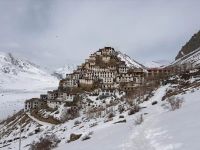
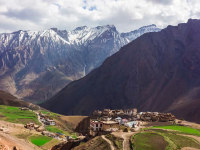
Kibber is a tiny village in India's Spiti Valley, sitting at roughly 14,000 feet above sea level in the Himalayas. Home to only a few hundred people, it is one of the highest permanently inhabited villages in the world. There are no trees, very little rainfall, and the landscape is essentially a massive high-altitude desert surrounded by enormous mountains. Winters are long, brutally cold, and heavy snow can isolate the village for months.
The nearest significant town is Kaza, several hours away by road. During the winter, travel can become extremely difficult. Medical care is limited, shopping options are minimal, and there certainly isn't a quick trip to Walmart. But Kibber isn't completely cut off. The village has electricity, a school, basic shops, a monastery, and guesthouses. Farming and livestock remain important parts of daily life.
And then there's the wildlife.
Kibber sits next to the Kibber Wildlife Sanctuary, where snow leopards, Himalayan ibex, blue sheep, wolves and red foxes roam. Snow leopard sightings are actually one of the reasons people travel to this remote corner of India. The scenery is spectacular...towering Himalayan peaks, enormous empty valleys, clear skies and virtually no light pollution. Life is quiet, simple, and deeply connected to the environment.
But at 14,000 feet, even simple things become more difficult. The cold, altitude, isolation and lack of modern conveniences would be a dealbreaker for a lot of people.
Previous HROT installments:
1. Could you live here: Supai, Arizona
2. Could you live here: Kerguelen Islands
3. Could you live here: La Rinconada, Peru (Andes Mountains)
4. Could you live here: Tristan da Cunha
HROTe installments:
5. Could you live here: Oymyakon, Siberia
6. Could you live here: Pitcairn Island
The nearest significant town is Kaza, several hours away by road. During the winter, travel can become extremely difficult. Medical care is limited, shopping options are minimal, and there certainly isn't a quick trip to Walmart. But Kibber isn't completely cut off. The village has electricity, a school, basic shops, a monastery, and guesthouses. Farming and livestock remain important parts of daily life.
And then there's the wildlife.
Kibber sits next to the Kibber Wildlife Sanctuary, where snow leopards, Himalayan ibex, blue sheep, wolves and red foxes roam. Snow leopard sightings are actually one of the reasons people travel to this remote corner of India. The scenery is spectacular...towering Himalayan peaks, enormous empty valleys, clear skies and virtually no light pollution. Life is quiet, simple, and deeply connected to the environment.
But at 14,000 feet, even simple things become more difficult. The cold, altitude, isolation and lack of modern conveniences would be a dealbreaker for a lot of people.
Previous HROT installments:
1. Could you live here: Supai, Arizona
2. Could you live here: Kerguelen Islands
3. Could you live here: La Rinconada, Peru (Andes Mountains)
4. Could you live here: Tristan da Cunha
HROTe installments:
5. Could you live here: Oymyakon, Siberia
6. Could you live here: Pitcairn Island