
2026 World Cup - General Discussion & Non-USA teams thread
- Thread starter Tom McAndrew
- Start date
You are using an out of date browser. It may not display this or other websites correctly.
You should upgrade or use an alternative browser.
You should upgrade or use an alternative browser.

goal by Croatia, in the last seconds of stoppage time. Insane. 2-2
Edit: After VAR review, a header to a player as part of the play is ruled offside, so the goal is wiped off the board.
Edit: After VAR review, a header to a player as part of the play is ruled offside, so the goal is wiped off the board.
Last edited:

Guessing only Americans & Canadians hate the clock lol90 minute game and clock is still running at 108
I’m fine with running clock but Geeze you never know when game is over.Guessing only Americans & Canadians hate the clock lol


The word are was unnecessary but I don’t expect you to understand why.lol. Ya I’m far more educated than you are but thanks for checking in.
I thought the officials were phenomenal tonight...just hate the dumb ruleNothing like generating controversy between last night and tonight.
90 minute game and clock is still running at 108
Does anyone ever know when time is over this review is crazy
I've explained this many times over the years. It really isn't all that difficult. But it's different than what happens in a lot of other sports, hence the confusion.
Each half is 45 minutes long, and thus the game is 90 minutes long. During each half, the ref tracks how much time is spent on goal celebrations, dealing with injuries, etc. The game clock never stops. However at the end of each half, the ref adds time based on how much time was tracked for non-playing actions. So at the end of the 1st half (i.e., when 45 minutes is reached), the ref adds X minutes (let's use 5 minutes as an example for this explanation). The 5 minutes that is posted isn't exactly 5 minutes. It means the added time is at least 5 minutes, but less than 6 minutes. So in this example, the clock will run from 45 minutes to 50:xx minutes. However, when they start the 2nd half, the clock will start at 45:00 and run to 90.
Two additional things also come into play. First, if there are stoppages for injuries, goal celebrations, VAR reviews, etc. during the added time, the ref again keeps track of that and will add that to the "added time." Second, you never stop play when a team is on an offensive thrust, until the offensive team kicks the ball out of bounds or loses possession of it.
So at the end of the Croatia - Portugal game, there was all kinds of time added to the "added time," as there were goal celebrations, VAR reviews, a substitution, and i believe (not certain) a yellow card. The ref is in communication with his crew (the 4th official often helps track the stoppage time), so the entire crew knew what the initial added time was, and how much time was added to that for the aforementioned stoppages.
FWIW, this timing approach is not used in the USA for high school or for college soccer. In those games, the clock is stopped on each injury, and after each goal, and when a player is carded. Depending on the situation (too complicated to explain in a few words), the clock may or may not be stopped for substitutions, and can be stopped for unusual events that cause play to be interrupted. Lastly, play is stopped when the clock gets to 0:00, regardless of whether a team is on an offensive thrust. This approach does make it easier for fans to know exactly how much time is left in the game. As for the players and the coaches, they do fine with either approach, as they are used to it, and can also ask the ref how much time is left.
Strategy question - it may have been explained and I may have missed it. Why would Portugal take Ronaldo out of a tie game with less than 15 minutes left? I'm thinking more of losing him for potential penalty kicks. What am I missing? If it's a simple explanation, I'll take my beating.
They think a fresher player gives them a better chance to win over the final 20, or possibly 50 minutes…heck, many think he’s not one of their best attackers as it is and shouldn’t get the minutes he’s getting.Strategy question - it may have been explained and I may have missed it. Why would Portugal take Ronaldo out of a tie game with less than 15 minutes left? I'm thinking more of losing him for potential penalty kicks. What am I missing? If it's a simple explanation, I'll take my beating.
The least competitive match I’ve seen this World Cup. Algeria was never in it.
The least competitive match I’ve seen this World Cup. Algeria was never in it.
One of the poorer knockout round games.
In the World Cup, a few that were even less competitive include:
- 5-1, Portugal over Uzbekistan
- any of the Tunisia games (lost 5-0 to Belgium, lost 5-1 to Sweden, lost 4-0 to Japan)
- 5-1, Belgium over New Zealand
- 6-0, Canada over Qatar

Fallout.
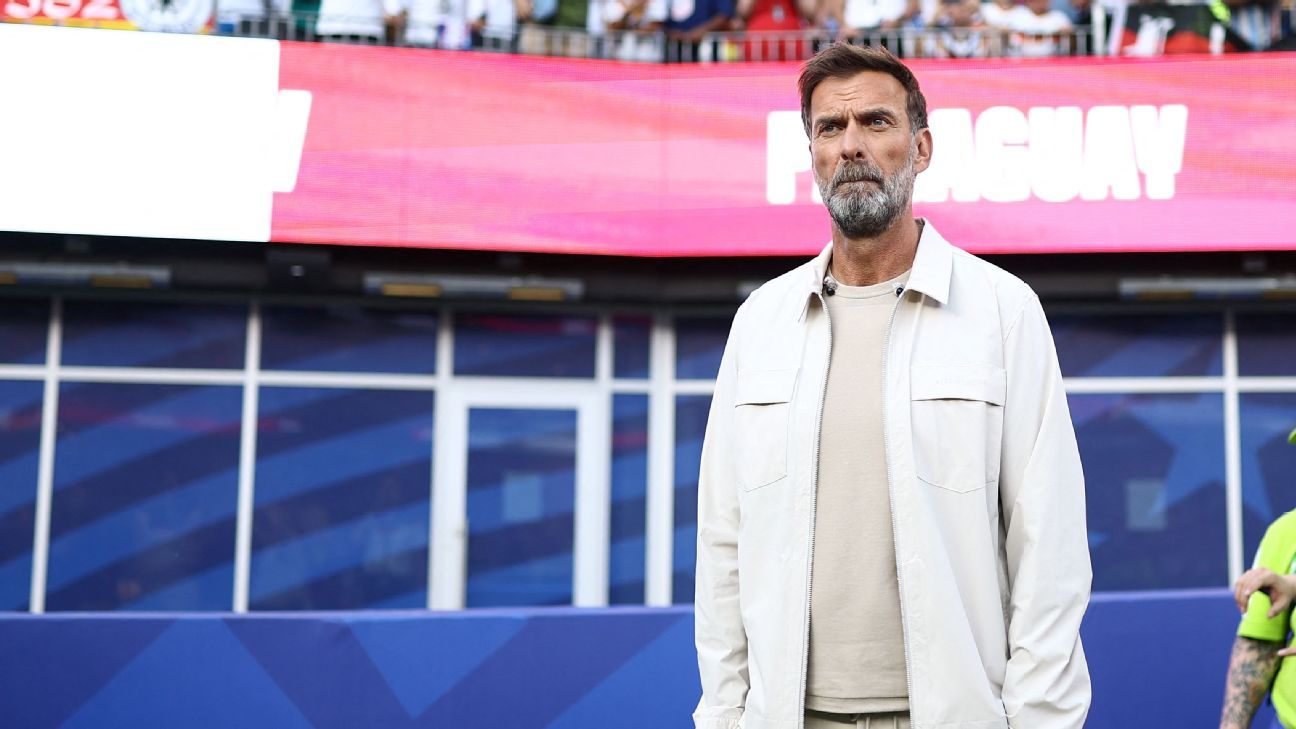
 www.espn.com
Klopp confirms talks over Germany job after Nagelsmann exit
Former Liverpool manager Jürgen Klopp said Friday he has had discussions with the German federation about taking over as national team coach after Julian Nagelsmann's exit.
www.espn.com
Germany with Klopp would be eine unheimliche MaschineFallout.
Klopp confirms talks over Germany job after Nagelsmann exit
Former Liverpool manager Jürgen Klopp said Friday he has had discussions with the German federation about taking over as national team coach after Julian Nagelsmann's exit.
This is as good a place to put this. One year ago today. 

How should it be changed?Got the call right again--hate the offside rule more than anything in sports lol
I'd eliminate it but I know that's just not realistic. I'd have to give that a lot of thought because it can't mirror hockey. I just hate the rule. I think the second disallowed goal by Croatia speaks to that but, again, just my opinion. Which I know is in the minority.How should it be changed?
Haaland would simply post up on the opposing goalkeeper all game and wait to be fedI'd eliminate it but I know that's just not realistic. I'd have to give that a lot of thought because it can't mirror hockey. I just hate the rule. I think the second disallowed goal by Croatia speaks to that but, again, just my opinion. Which I know is in the minority.
Latest
-
01
 BWI
Penn State wrestling freshman Jayden James will go for U20 Worlds gold Sunday after a perfect Saturday in Slovakia
BWI
Penn State wrestling freshman Jayden James will go for U20 Worlds gold Sunday after a perfect Saturday in Slovakia
-
02
 BWI
14 things I know, think, and question about Penn State football 14 days before the opener with Marshall
BWI
14 things I know, think, and question about Penn State football 14 days before the opener with Marshall
-
03
 BWI
Penn State camp intel: Chief concerns for the Nittany Lions heading into scrimmage No. 2
BWI
Penn State camp intel: Chief concerns for the Nittany Lions heading into scrimmage No. 2
-
04
 BWI
Penn State commit out indefinitely following injury
BWI
Penn State commit out indefinitely following injury
-
05
 BWI
Penn State coach Matt Campbell keeping focus 'in-house' amid chaotic college football landscape
BWI
Penn State coach Matt Campbell keeping focus 'in-house' amid chaotic college football landscape