OT: College enrollment and financial issues?
- Thread starter Leonard23
- Start date
You are using an out of date browser. It may not display this or other websites correctly.
You should upgrade or use an alternative browser.
You should upgrade or use an alternative browser.

This one is going viral today
Are you looking over my shoulder?

Don't know if any of these replies are true:
Electrical engineering get cut????

Love it!!
With huge drop in HS graduates just starting this year, these numbers will get worse and worse over next ten years minimum. Keep raising tuitions fukkos!
With huge drop in HS graduates just starting this year, these numbers will get worse and worse over next ten years minimum. Keep raising tuitions fukkos!
Are you looking over my shoulder?
Don't know if any of these replies are true:
Electrical engineering get cut????
Everything doesn’t stay the same. Syracuse and Clemson were sports powerhouses in the past, Syracuse in the 1950’s and Clemson ten years ago. Students aren’t going there for their sports programs anymore and their academics is slightly above average for their cost. With the federal government cutting funding, less international students and a message that college is no longer necessary and a waste of money, more colleges will go bankrupt and programs will be cut to survive. Didn’t everybody agree they needed to get rid of the liberal arts degrees or degrees that are less likely to get you a job?
Last edited:
“Universities had 17 years of warning. They responded by doing the opposite of what the math demanded.
In 2008, American birth rates fell off a cliff. The Great Recession made people stop having kids. Those never-born children would be turning 18 right now. The number of U.S. high school graduates peaked at roughly 3.9 million in 2025. By 2029, that number drops 15%. By 2041, it drops by nearly half a million students per year.
Every school in this tweet had access to the same Census data. They all saw the same curve.
Administrative positions at U.S. colleges grew 60% between 1993 and 2009, ten times the rate of tenured faculty growth. Non-instructional spending (student services, administration) grew 29% from 2010 to 2018. Instructional spending grew 17%. Average tuition at public four-year schools went from $3,500 in 2000 to $10,560 in 2023. Yale now has more administrators than undergraduate students. 5,460 administrators for fewer than 5,000 undergrads.
They built the cost structure of a growth company on top of a customer base that was mathematically guaranteed to shrink.
The split in this data tells you everything. Clemson, Syracuse, Duke, UNC, and Indiana are all cutting because the model broke. Alabama, Ole Miss, and the University of Florida are turning away more applicants than ever. Harvard gets five applications for every spot. The middle is where the cliff hits. Elite schools absorb demand. Everyone between elite and community college fights over a shrinking pool. The Fed published a study in December 2024 predicting 80 colleges will close in the next five years. Since 2016, over 100 already have. In 2024 alone, 28 shut down. One per week.
These program cuts and layoffs are a decade late. The birth rate data was sitting in Census spreadsheets the entire time. Everyone in higher education administration saw the enrollment cliff coming. They hired more administrators anyway.”
The future will be like the 1950’s where only the rich will be able to afford college.Love it!!
With huge drop in HS graduates just starting this year, these numbers will get worse and worse over next ten years minimum. Keep raising tuitions fukkos!

Crazy how UVM was once a destination school and now they are becoming an afterthought. Colleges aren't the only ones likely to downsize in the coming decade. I feel like K-12 schools may as well with the average number of children per household dwindling the last like 20 years. Can see many school systems merge/consolidate or outright close.Everything doesn’t stay the same. Syracuse and Clemson were sports powerhouses in the past, Syracuse in the 1950’s and Clemson ten years ago. Students aren’t going there for their sports programs anymore and their academics is slightly above average for their cost. With the federal government cutting funding, less international students and a message that college is no longer necessary and a waste of money. More colleges will go bankrupt and programs will be cut to survive.
Time truly IS a circle lol. I joked that the dogshit economy we are in is very similar to the issues plaguing everyone in the 2000s prior to the Great Recession.The future will be like the 1950’s where only the rich will be able to afford college.
The future will be like the 1950’s where only the rich will be able to afford college.
Twaddle
1. The cost of college back then, specifically public universities, did not limit applicants to the rich,
2, For some, predominantly males, there GI Bill money to help back then (and even now I believe).
3. These days, particularly at elite schools, there is a ton of scholarship money available.
Time truly IS a circle lol. I joked that the dogshit economy we are in is very similar to the issues plaguing everyone in the 2000s prior to the Great Recession.
At least right now the unemployment is OK. It isn't what it was/is in 2008.
Being a millennial I would say nearly all my friends lost at least one job in the Great Recession.
I get the Gen Z complaints about COL, but at least they have a job, when back then, people were graduating with advanced degrees (including ones now in demand) and thinking they'd be working at Starbucks if they were lucky.
Twaddle
1. The cost of college back then, specifically public universities, did not limit applicants to the rich,
2, For some, predominantly males, there GI Bill money to help back then (and even now I believe).
3. These days, particularly at elite schools, there is a ton of scholarship money available.
1. Yes. Because it was free, for example, at U of California schools. Gee, wonder who changed that...
2. Yeah I'm sure everyone is running to sign up.
3. Yes at the Ivies. And sure, tuition at RU is free for families earning under 60k. That leaves a huge gap.
And no, it's not an acceptable solution for kids to "just go to community college", as offered by people who went to Berkeley and CUNY for exactly 0 tuition dollars. Someone credentialed for RU, which these days means 1370 SAT average or better, does NOT belong at Brookdale so the rich skate by.
Crazy how UVM was once a destination school and now they are becoming an afterthought. Colleges aren't the only ones likely to downsize in the coming decade. I feel like K-12 schools may as well with the average number of children per household dwindling the last like 20 years. Can see many school systems merge/consolidate or outright close.
Schools and towns in NJ (and unions) have fought consolidation for decades, Budget pinches might change things, but I wouldn't count on it.
I wonder if UVM has had less interest because fewer kids are skiing.
Are you looking over my shoulder?
Don't know if any of these replies are true:
Electrical engineering get cut????
It's OK, we don't need electricity, nor statistics, nor people who understand Middle Eastern languages or Russian. We will just translate with our phones...and not...plug them in?
Something something AI something something plumber, am I right...people celebrating this would say.
And Cuse I agree is overpriced for what it is but this is happening at public schools. WVU cut all their language programs. So if you're a kid that grew up there and have any interest in diplomacy, translation, literature...too damn bad. That isn't right.
At least right now the unemployment is OK. It isn't what it was/is in 2008.
Being a millennial I would say nearly all my friends lost at least one job in the Great Recession.
I get the Gen Z complaints about COL, but at least they have a job, when back then, people were graduating with advanced degrees (including ones now in demand) and thinking they'd be working at Starbucks if they were lucky.
Actually, every generation has had stretches of difficulty. Talk to Boomers who graduated college in 1974 or 1975 about the job market after the Oil Embargo. Or the late 70's early 80s dealing with stagflation. That's not to minimize the difficulties of later generations, it's just that the myth that every Boomer getting a 6 figure (adjusted for inflation) job offer after majoring in poetry is just that, a myth.
In my lifetime the best entry level job picture was in the late 90's. It disappeared shortly thereafter.

Electrical engineers are not electricians.It's OK, we don't need electricity, nor statistics, nor people who understand Middle Eastern languages or Russian. We will just translate with our phones...and not...plug them in?
Something something AI something something plumber, am I right...people celebrating this would say.
And Cuse I agree is overpriced for what it is but this is happening at public schools. WVU cut all their language programs. So if you're a kid that grew up there and have any interest in diplomacy, translation, literature...too damn bad. That isn't right.
The trades, that some say will save or are an option for the future, will still be there. So our lights will stay on, our air conditioners will get fixed, etc.
As for the other things, consolidation is on the horizon… They won’t go completely away. There will be just less schools that offer these majors.
Last edited:
Oh, no, no, no, some will say. The AI data centers are going to drain the electrical grids, leaving none for the little people!!!Electrical engineers are not electricians.
The trades, that some say will save or are still an option for the future, will still be there. So our lights will stay on, our air conditioners will get fixed, etc.
As for the other things, consolidation is on the horizon… They won’t go completely away. They will be just there will be less schools that offer these majors

I figured out how to address my HVAC system that was not cooling our house yesterday using Grok. Saved myself a service call!
Just wait-the firefighting robots will start replacing humans some day!
Until they are real robots, that line of work will be safe.Oh, no, no, no, some will say. The AI data centers are going to drain the electrical grids, leaving none for the little people!!!
I figured out how to address my HVAC system that was not cooling our house yesterday using Grok. Saved myself a service call!
Just wait-the firefighting robots will start replacing humans some day!
My post was tongue in cheek, but I had to check with Grok and asked if any fire departments are using them.Until they are real robots, that line of work will be safe.
I was surprised--but to your point, not used for the bread and butter work of interior firefighting. They seem to be useful for defensive operations. Also may be useful in wildland fires:
- Los Angeles Fire Department (LAFD): Has used the Thermite RS3 (a tracked, remote-operated robotic firefighting vehicle from Howe & Howe) since late 2020. It delivers up to thousands of gallons of water per minute and has responded to dozens of commercial structure fires in defensive operations. LAFD has also deployed robot dogs (e.g., Boston Dynamics Spot or similar) for reconnaissance in tunnels and hazardous areas.
fireapparatusmagazine.com - Paris Fire Brigade (France): Deployed the Colossus robot (from Shark Robotics) during the 2019 Notre-Dame Cathedral fire. It operated inside the burning structure where humans couldn't go, extinguishing hotspots and clearing debris. The department continues to use similar robots for various missions.
shark-robotics.com - Other U.S. and international departments:
- FDNY (New York) uses Boston Dynamics Spot robot dogs for reconnaissance, sensor work, and stair navigation.
fireapparatusmagazine.com - Departments in the UK (e.g., Kent Fire and Rescue), China (Qingdao and others with Unitree robot dogs), South Korea (Hyundai-developed robots), and Ukraine have adopted firefighting or support robots.
unitree.com
- FDNY (New York) uses Boston Dynamics Spot robot dogs for reconnaissance, sensor work, and stair navigation.
- Tracked vehicles (like Thermite RS3 or Colossus): Heavy-duty units with water/foam cannons, designed for direct fire suppression.
- Quadruped "robot dogs": Agile for scouting, thermal imaging, gas detection, navigating rubble/stairs, and sometimes light suppression or rescue support.
- Drones and aerial robots: Widely used for overhead monitoring and mapping, especially in wildfires.
wfca.com
The technology is advancing quickly, with more departments testing or deploying them for both urban and wildland fires.

free for under 60K wtf????1. Yes. Because it was free, for example, at U of California schools. Gee, wonder who changed that...
2. Yeah I'm sure everyone is running to sign up.
3. Yes at the Ivies. And sure, tuition at RU is free for families earning under 60k. That leaves a huge gap.
And no, it's not an acceptable solution for kids to "just go to community college", as offered by people who went to Berkeley and CUNY for exactly 0 tuition dollars. Someone credentialed for RU, which these days means 1370 SAT average or better, does NOT belong at Brookdale so the rich skate by.

Crazy how UVM was once a destination school and now they are becoming an afterthought. Colleges aren't the only ones likely to downsize in the coming decade. I feel like K-12 schools may as well with the average number of children per household dwindling the last like 20 years. Can see many school systems merge/consolidate or outright close.
The University of Vermont faces a situation that could be impossible to solve. The state's population is both tiny and isn't growing. Immigrants aren't moving there. The number of young people is in free fall. In state students at UVM have dwindled to 20% of UVM's student body.
UVM increasingly survives by filling its spots with out of state students then raising their tuition. Rising prices reduces demand, hence UVM lowers the admission standards to accept weaker students, driving down UVM in the rankings, leading to less demand for out of state students.
UVM expects a 15% decline in freshman enrollment this fall.
Fortunately for Rutgers, New Jersey's population is rising (+ 1 million since 2000) and people moving to the state produce a lot of college-bound children. This enables Rutgers to enroll a strong class of students each fall without resorting to admissions gimmicks.

Last edited:
My post was tongue in cheek, but I had to check with Grok and asked if any fire departments are using them.
I was surprised--but to your point, not used for the bread and butter work of interior firefighting. They seem to be useful for defensive operations. Also may be useful in wildland fires:
Types of Robots in Use
- Los Angeles Fire Department (LAFD): Has used the Thermite RS3 (a tracked, remote-operated robotic firefighting vehicle from Howe & Howe) since late 2020. It delivers up to thousands of gallons of water per minute and has responded to dozens of commercial structure fires in defensive operations. LAFD has also deployed robot dogs (e.g., Boston Dynamics Spot or similar) for reconnaissance in tunnels and hazardous areas.
fireapparatusmagazine.com- Paris Fire Brigade (France): Deployed the Colossus robot (from Shark Robotics) during the 2019 Notre-Dame Cathedral fire. It operated inside the burning structure where humans couldn't go, extinguishing hotspots and clearing debris. The department continues to use similar robots for various missions.
shark-robotics.com- Other U.S. and international departments:
- FDNY (New York) uses Boston Dynamics Spot robot dogs for reconnaissance, sensor work, and stair navigation.
fireapparatusmagazine.com- Departments in the UK (e.g., Kent Fire and Rescue), China (Qingdao and others with Unitree robot dogs), South Korea (Hyundai-developed robots), and Ukraine have adopted firefighting or support robots.
unitree.com
These robots don't fully replace firefighters—they assist by providing reconnaissance, suppressing fires remotely, and handling tasks in "immediately dangerous to life or health" (IDLH) environments. Adoption is growing but limited by cost (advanced units can run $200k–$300k+), so larger or well-funded departments lead the way.
- Tracked vehicles (like Thermite RS3 or Colossus): Heavy-duty units with water/foam cannons, designed for direct fire suppression.
- Quadruped "robot dogs": Agile for scouting, thermal imaging, gas detection, navigating rubble/stairs, and sometimes light suppression or rescue support.
- Drones and aerial robots: Widely used for overhead monitoring and mapping, especially in wildfires.
wfca.com
The technology is advancing quickly, with more departments testing or deploying them for both urban and wildland fires.
We have the dogs and drones now.
The drones have been very successful.
But like I said, until they can incorporate the three things needed to do the job:

 and
and 
That’s a job tech and AI haven’t replaced the human element. They might have the first two, but that last one will be very tough to recreate in the lab.
Actually, every generation has had stretches of difficulty. Talk to Boomers who graduated college in 1974 or 1975 about the job market after the Oil Embargo. Or the late 70's early 80s dealing with stagflation. That's not to minimize the difficulties of later generations, it's just that the myth that every Boomer getting a 6 figure (adjusted for inflation) job offer after majoring in poetry is just that, a myth.
In my lifetime the best entry level job picture was in the late 90's. It disappeared shortly thereafter.
The Great Recession is the second largest economic calamity in US history second only to the depression. It's not really close. And same to Gen Z- while the economy is putrid now it is wonderful compared to 08.
The boomers could go to free college in many states, you didn't need a degree for a good job then AND the cost of a home relative to income was a much lower multiple. It's not even close. They had it the easiest, and then have totally destroyed much of the safety they had for everyone else.
At least, I guess, they're going to leave the house they bought for 100k and is now worth a million to the next generation.
Electrical engineers are not electricians.
The trades, that some say will save or are an option for the future, will still be there. So our lights will stay on, our air conditioners will get fixed, etc.
As for the other things, consolidation is on the horizon… They won’t go completely away. There will be just less schools that offer these majors.
Didn't say they were. They are essential however.
Maybe it's me but I kind of feel like we need more engineers and people who speak foreign languages, not fewer. Relying on AI and/or shrugging it off because the powers that be are spending money on nonsense rather than education is a recipe for disaster.
Oh, no, no, no, some will say. The AI data centers are going to drain the electrical grids, leaving none for the little people!!!
I figured out how to address my HVAC system that was not cooling our house yesterday using Grok. Saved myself a service call!
Just wait-the firefighting robots will start replacing humans some day!
Europe is way more advanced than the US in terms of development so not sure what that is referencing. I mean trains alone. I got on a train in Norway and thought I was in the first class cabin and it was just their usual service. You could have eaten off the floor. And everyone spoke English...and probably a few more languages.
Also, in places like Italy they would kill to have the problem we have in NJ where we have people buying shacks in bad school districts for nearly 7 figures while they are selling homes for 1 euro...and yet, we have people here saying no more building.
People don't like data centers because of their use of the grid and water. It's typical NIMBY not really a new thing.
free for under 60K wtf????
65, sorry.
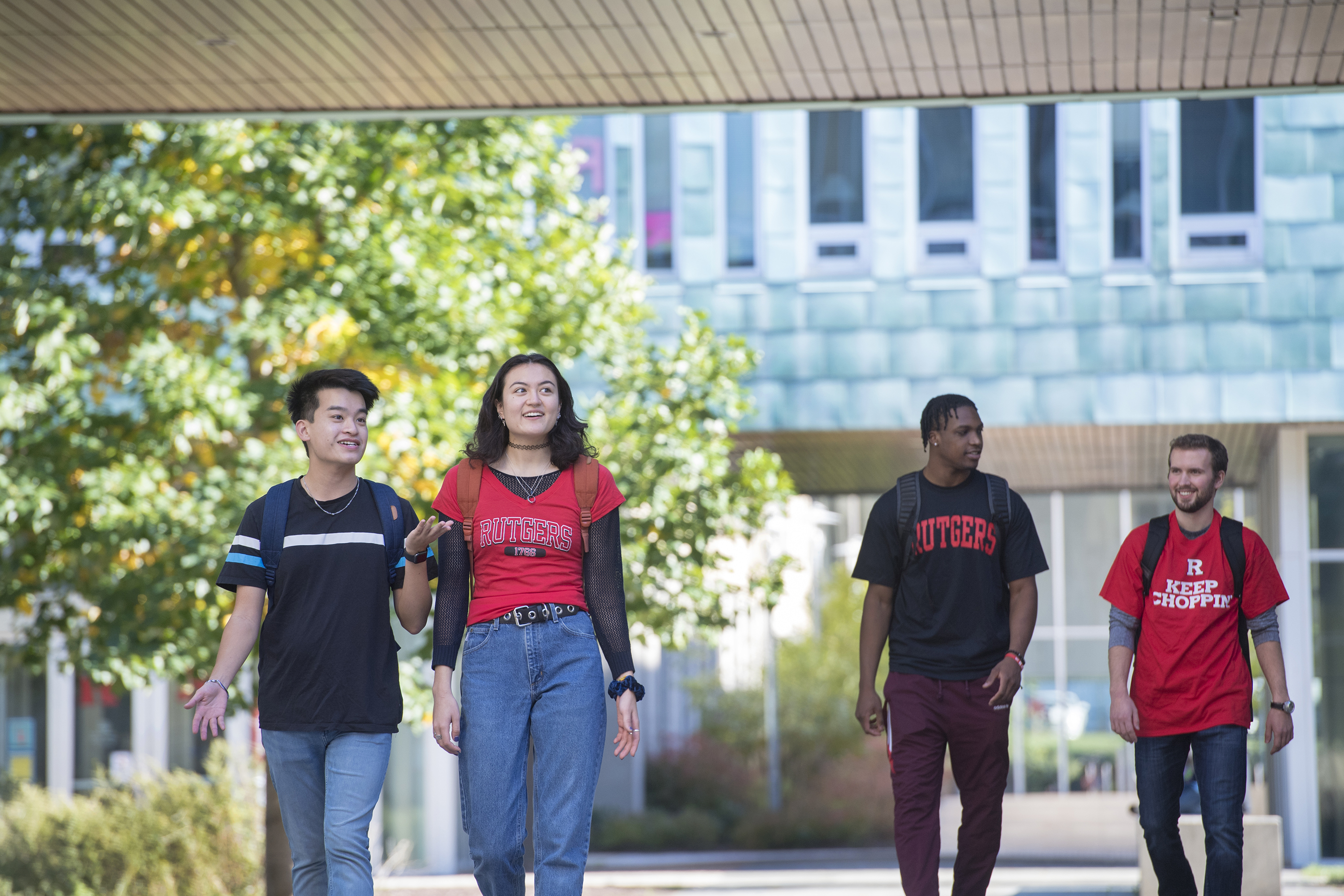
Rutgers Tuition-Free for More In-State Students
They are not going away.Didn't say they were. They are essential however.
Maybe it's me but I kind of feel like we need more engineers and people who speak foreign languages, not fewer. Relying on AI and/or shrugging it off because the powers that be are spending money on nonsense rather than education is a recipe for disaster.
As pointed out there are schools that just aren’t getting the students who are interested in some of these majors and programs. Why would an institution (especially a private one) keep selling something no one is buying?
I’ve seen it first hand with my own. One is a civil engineer and the other an architecture major who just graduated.
There were fewer in the engineering class compared to when the older one graduated a few years ago. Same across the board in all the engineering majors offered. The younger one who just graduated was the end of the peak of births, 2003. I’ve seen it in sports too at the HS and club level…there are just less kids.
The Great Recession is the second largest economic calamity in US history second only to the depression. It's not really close. And same to Gen Z- while the economy is putrid now it is wonderful compared to 08.
The boomers could go to free college in many states, you didn't need a degree for a good job then AND the cost of a home relative to income was a much lower multiple. It's not even close. They had it the easiest, and then have totally destroyed much of the safety they had for everyone else.
At least, I guess, they're going to leave the house they bought for 100k and is now worth a million to the next generation.
Free college in multiple states? Not in NJ, NY, CT, RI, Mass, Pa., VT, NH, ME , Ohio, Mich and even Texas, though it was dirt cheap in that state and still is. I have direct knowledge of those states. What states are you talking about?
Unemployment? Early '81 was worse than the Great Recession. The 1975 rate was essentially the same. And what good jobs that you didn't need a degree for 50 years ago do you need one for now?
Housing? You mean the days of 8-10% mortgages? And what generations are you talking about? There are gyrations of prices in both states over multiple generations.
Boomers destroyed the safety net? Boomers SAVED the safety net as without their numbers and youth in the 1979 - 1983 time period Social Security would have gone bankrupt. The Reagan - O'Neill compromise bought a generation to fix things further. That it didn't happen was/is a failure that ALL generations from the Greatest Generation through Gen Z share responsibility for. And who did the best under Social Security, and for that matter Medicare? My grandparent's generation, the generation preceding the Greatest Generation.
They are not going away.
As pointed out there are schools that just aren’t getting the students who are interested in some of these majors and programs. Why would an institution (especially a private one) keep selling something no one is buying?
I’ve seen it first hand with my own. One is a civil engineer and the other an architecture major who just graduated.
There were fewer in the engineering class compared to when the older one graduated a few years ago. Same across the board in all the engineering majors offered. The younger one who just graduated was the end of the peak of births, 2003. I’ve seen it in sports too at the HS and club level…there are just less kids.
The public schools are much more of an issue. The private schools can have whatever they want. I do think though a school like Cuse will really dent its reputation, which is on the decline, especially versus in my era (not our problem).
There's definitely fewer kids. That said, there's plenty of bright kids that are being routed into oblivion in the younger generation. They are not being encouraged to get any higher education be it engineering or anything else, especially men. That's a disaster. There are so many fields like nursing and education in particular where we need more people.
And as someone who does translation here and there, relying on AI for something like that is going to be a problem.
Free college in multiple states? Not in NJ, NY, CT, RI, Mass, Pa., VT, NH, ME , Ohio, Mich and even Texas, though it was dirt cheap in that state and still is. I have direct knowledge of those states. What states are you talking about?
Unemployment? Early '81 was worse than the Great Recession. The 1975 rate was essentially the same. And what good jobs that you didn't need a degree for 50 years ago do you need one for now?
Housing? You mean the days of 8-10% mortgages? And what generations are you talking about? There are gyrations of prices in both states over multiple generations.
Boomers destroyed the safety net? Boomers SAVED the safety net as without their numbers and youth in the 1979 - 1983 time period Social Security would have gone bankrupt. The Reagan - O'Neill compromise bought a generation to fix things further. That it didn't happen was/is a failure that ALL generations from the Greatest Generation through Gen Z share responsibility for. And who did the best under Social Security, and for that matter Medicare? My grandparent's generation, the generation preceding the Greatest Generation.
At the minimum, NYC and CA had it and others for pennies on the dollar.
I would love to hear from any economist that says the Great Recession was not the worst economic collapse since the Great Depression. Maybe a few would say 2020.
What is the cost of a home versus income in any place people want to live now versus pick a year? It gets worse literally every day. I am not sure how people are saying otherwise. Middle class towns in NJ have crappy houses for a million bucks which would mean for households earning over 300k. The average income in NJ is like 97k. You're going to tell me it was like that in the 80s? My parents bought a home in the 80s for about 3x the average US income that year, and it was on LI in a fantastic school district. That home now is probably worth close to 1M and it is a 3 bedroom 2 bathroom ranch. The average income on LI is not anywhere close to 300k.
Boomers ripped up the free college. They have done nothing to try to tamp down the insane cost of living crisis. And then wonder why younger generations are mad. Though like I said, at least Gen Z can have jobs, millennials didn't even get that.

Forbes:
(Use reading mode in Chrome)
Another institution plundering its endowment for survival is D-graded Rider University in Lawrenceville, New Jersey, with 3,700 students and a near 80% acceptance rate. Already on financial probation with its accrediting agency, it recently fired 25% of its faculty, cut pay by 14% and agreed to sell 56-acres of its campus, including the president's house, for $10 million.


 www.forbes.com
Forbes annual College Financial Grades assesses the financial health of more than 900 private not-for-profit colleges with enrollment of more than 500 students. For 2026, Forbes has revamped its analysis, thanks to novel data from Perspective Data Science, which zeroes in on colleges' true liquidity. Our ranking shows a stark disparity among private colleges. While the elite selective schools, with grades of A+ and A remain healthy and strong, a large number of colleges with near open admissions policies and sagging enrollment are on life support. Nearly half of the colleges we graded scored C or worse. Even more alarming, 27% of the institutions received our lowest grade of D, and many were found to be plundering their endowments to survive.
Financial Grades of NJ Private Colleges
Financial Report Card: The Weakest And Strongest Private Colleges In America
https://www.forbes.com/sites/schifr...st-and-strongest-private-colleges-in-america/(Use reading mode in Chrome)
Another institution plundering its endowment for survival is D-graded Rider University in Lawrenceville, New Jersey, with 3,700 students and a near 80% acceptance rate. Already on financial probation with its accrediting agency, it recently fired 25% of its faculty, cut pay by 14% and agreed to sell 56-acres of its campus, including the president's house, for $10 million.
Forbes College Financial Grades 2026
Forbes annual College Financial Grades assesses the financial health of more than 900 private not-for-profit colleges with enrollment of more than 500 students.
www.forbes.com
Forbes annual College Financial Grades assesses the financial health of more than 900 private not-for-profit colleges with enrollment of more than 500 students. For 2026, Forbes has revamped its analysis, thanks to novel data from Perspective Data Science, which zeroes in on colleges' true liquidity. Our ranking shows a stark disparity among private colleges. While the elite selective schools, with grades of A+ and A remain healthy and strong, a large number of colleges with near open admissions policies and sagging enrollment are on life support. Nearly half of the colleges we graded scored C or worse. Even more alarming, 27% of the institutions received our lowest grade of D, and many were found to be plundering their endowments to survive.
Financial Grades of NJ Private Colleges
| College | GPA | Financial Grade | City | State |
|---|---|---|---|---|
| Princeton University | 4.34 | A+ | Princeton | NJ |
| Seton Hall University | 3.03 | B | South Orange | NJ |
| Stevens Institute of Technology | 2.87 | B- | Hoboken | NJ |
| Monmouth University | 2.73 | B- | West Long Branch | NJ |
| Georgian Court University | 2.54 | C+ | NJ | |
| Fairleigh Dickinson University | 1.82 | C- | Teaneck | NJ |
| Pillar College | 1.5 | D | NJ | |
| Saint Elizabeth University | 1.48 | D | NJ | |
| Centenary University | 1.43 | D | NJ | |
| Saint Peter's University | 1.42 | D | Jersey City | NJ |
| Caldwell University | 1.41 | D | NJ | |
| Drew University | 0.87 | D | Madison | NJ |
| Rider University | 0.63 | D | Lawrenceville | NJ |
| Felician University | 0.56 | D | NJ |
Last edited:
Forbes grades for NY private colleges:
| College | GPA | Financial Grade | City | State |
|---|---|---|---|---|
| The Juilliard School | 4.5 | A+ | New York | NY |
| Colgate University | 4.5 | A+ | Hamilton | NY |
| Hamilton College | 4.5 | A+ | Clinton | NY |
| Columbia University | 4.5 | A+ | New York | NY |
| Hofstra University | 4.5 | A+ | Hempstead | NY |
| Union College (NY) | 4.46 | A+ | Schenectady | NY |
| Rochester Institute of Technology | 4.45 | A+ | Rochester | NY |
| Skidmore College | 4.44 | A+ | Saratoga Springs | NY |
| Syracuse University | 4.42 | A+ | Syracuse | NY |
| Vassar College | 4.4 | A+ | Poughkeepsie | NY |
| Cornell University | 4.22 | A | Ithaca | NY |
| Cooper Union | 4.18 | A | New York | NY |
| Le Moyne College | 4.18 | A | Syracuse | NY |
| Marist College | 4.1 | A | Poughkeepsie | NY |
| Hobart and William Smith Colleges | 4.05 | A | Geneva | NY |
| LIU Post | 4.03 | A | Greenvale | NY |
| Iona University | 4.02 | A | New Rochelle | NY |
| Pratt Institute | 3.85 | A- | Brooklyn | NY |
| Barnard College | 3.64 | B+ | New York | NY |
| St. Lawrence University | 3.59 | B+ | Canton | NY |
| Saint John Fisher University | 3.5 | B+ | Rochester | NY |
| Ithaca College | 3.48 | B+ | Ithaca | NY |
| Albany College of Pharmacy and Health Sciences | 3.47 | B+ | NY | |
| St. John's University (NY) | 3.42 | B+ | Queens | NY |
| University of Rochester | 3.37 | B+ | Rochester | NY |
| New York University | 3.27 | B | New York | NY |
| New York School of Interior Design | 3.17 | B | NY | |
| Alfred University | 3.05 | B | Alfred | NY |
| Mercy University | 2.98 | B- | NY | |
| Houghton College | 2.96 | B- | Houghton | NY |
| Mount Saint Mary College | 2.89 | B- | NY | |
| New York Institute of Technology | 2.88 | B- | Old Westbury | NY |
| Fordham University | 2.85 | B- | Bronx | NY |
| Central Yeshiva Tomchei Tmimim Lubavitz | 2.85 | B- | NY | |
| Bard College | 2.82 | B- | Annandale-on-Hudson | NY |
| Adelphi University | 2.81 | B- | Garden City | NY |
| Rensselaer Polytechnic Institute | 2.74 | B- | Troy | NY |
| Sarah Lawrence College | 2.72 | B- | Bronxville | NY |
| Canisius University | 2.56 | C+ | Buffalo | NY |
| Molloy College | 2.52 | C+ | Rockville Centre | NY |
| St Bonaventure University | 2.43 | C+ | St. Bonaventure | NY |
| Siena College | 2.42 | C+ | Loudonville | NY |
| Touro University | 2.41 | C+ | New York | NY |
| Rabbinical Seminary of America | 2.38 | C+ | NY | |
| New School | 2.33 | C+ | New York | NY |
| Yeshivath Viznitz | 2.3 | C | NY | |
| Wagner College | 2.3 | C | Staten Island | NY |
| Be'er Yaakov Talmudic Seminary | 2.28 | C | NY | |
| St. Joseph's College (NY) | 2.27 | C | Brooklyn | NY |
| Russell Sage College | 2.24 | C | Troy | NY |
| Manhattan School of Music | 2.23 | C | New York | NY |
| Paul Smiths College of Arts and Science | 2.09 | C | NY | |
| Rabbinical College Bobover Yeshiva Bnei Zion | 2.08 | C | NY | |
| D'Youville University | 2.02 | C | Buffalo | NY |
| St. Thomas Aquinas College | 1.94 | C- | Sparkill | NY |
| Mesivta Torah Vodaath Rabbinical Seminary | 1.89 | C- | NY | |
| Keuka College | 1.86 | C- | NY | |
| Uta Mesivta of Kiryas Joel | 1.85 | C- | NY | |
| College of Mount Saint Vincent | 1.8 | C- | Riverdale | NY |
| Metropolitan College of New York | 1.78 | C- | NY | |
| Yeshiva University | 1.75 | C- | New York | NY |
| Talmudical Seminary of Bobov | 1.74 | C- | NY | |
| Dominican University New York | 1.68 | D | NY | |
| United Talmudical Seminary | 1.66 | D | NY | |
| Yeshiva Kollel Tifereth Elizer | 1.66 | D | NY | |
| Clarkson University | 1.57 | D | Potsdam | NY |
| Pace University | 1.56 | D | New York | NY |
| Elmira College | 1.45 | D | Elmira | NY |
| Manhattanville College | 1.4 | D | Purchase | NY |
| Manhattan University | 1.38 | D | Riverdale | NY |
| Daemen University | 1.25 | D | NY | |
| Marymount Manhattan College | 1.24 | D | NY | |
| Hartwick College | 1.18 | D | Oneonta | NY |
| St. Francis College | 0.99 | D | Brooklyn | NY |
| Hilbert College | 0.91 | D | NY | |
| Niagara University | 0.9 | D | Niagara University | NY |
| Utica University | 0.46 | D | NY | |
| Villa Maria College | 0.4 | D | NY | |
| Boricua College | 0.33 | D | NY |
Forbes financial grades for PA private colleges:
| College | GPA | Financial Grade | City | State |
|---|---|---|---|---|
| Haverford College | 4.5 | A+ | Haverford | PA |
| Bryn Mawr College | 4.5 | A+ | Bryn Mawr | PA |
| Carnegie Mellon University | 4.5 | A+ | Pittsburgh | PA |
| Lafayette College | 4.5 | A+ | Easton | PA |
| University of Pennsylvania | 4.5 | A+ | Philadelphia | PA |
| Dickinson College | 4.5 | A+ | Carlisle | PA |
| Lehigh University | 4.5 | A+ | Bethlehem | PA |
| Villanova University | 4.5 | A+ | Villanova | PA |
| Swarthmore College | 4.5 | A+ | Swarthmore | PA |
| Bucknell University | 4.5 | A+ | Lewisburg | PA |
| Allegheny College | 4.5 | A+ | Meadville | PA |
| Muhlenberg College | 4.38 | A+ | Allentown | PA |
| Gettysburg College | 4.11 | A | Gettysburg | PA |
| Franklin and Marshall College | 4.09 | A | Lancaster | PA |
| Duquesne University | 4.09 | A | Pittsburgh | PA |
| Lycoming College | 4.08 | A | Williamsport | PA |
| Susquehanna University | 4.02 | A | Selinsgrove | PA |
| Saint Vincent College | 3.89 | A- | Latrobe | PA |
| Saint Joseph's University (PA) | 3.8 | A- | Philadelphia | PA |
| Washington & Jefferson College | 3.79 | A- | Washington | PA |
| Thomas Jefferson University | 3.56 | B+ | Philadelphia | PA |
| Wilson College | 3.47 | B+ | PA | |
| Mount Aloysius College | 3.41 | B+ | PA | |
| University of Scranton | 3.39 | B+ | Scranton | PA |
| King's College (PA) | 3.22 | B | Wilkes-Barre | PA |
| York College of Pennsylvania | 3.17 | B | PA | |
| Moravian University | 3.09 | B | Bethlehem | PA |
| Geisinger Commonwealth School of Medicine | 3.02 | B | PA | |
| Geneva College | 3.02 | B | PA | |
| Westminster College (PA) | 3.02 | B | New Wilmington | PA |
| Lebanon Valley College | 2.9 | B- | Annville | PA |
| Holy Family University | 2.86 | B- | PA | |
| Cedar Crest College | 2.77 | B- | Allentown | PA |
| Juniata College | 2.66 | C+ | Huntingdon | PA |
| Messiah University | 2.56 | C+ | Mechanicsburg | PA |
| Ursinus College | 2.5 | C+ | Collegeville | PA |
| Drexel University | 2.44 | C+ | Philadelphia | PA |
| Peirce College | 2.36 | C+ | PA | |
| Eastern University | 2.31 | C+ | PA | |
| Thiel College | 2.2 | C | PA | |
| Seton Hill University | 2.17 | C | Greensburg | PA |
| Elizabethtown College | 2.14 | C | Elizabethtown | PA |
| Gwynedd Mercy University | 2.12 | C | PA | |
| Marywood University | 2.04 | C | PA | |
| Point Park University | 1.88 | C- | PA | |
| Widener University | 1.88 | C- | Chester | PA |
| Gannon University | 1.8 | C- | PA | |
| Waynesburg University | 1.63 | D | PA | |
| Immaculata University | 1.51 | D | Immaculata | PA |
| La Salle University | 1.43 | D | Philadelphia | PA |
| Lancaster Bible College | 1.41 | D | PA | |
| Saint Francis University | 1.26 | D | Loretto | PA |
| Alvernia University | 1.17 | D | PA | |
| Mercyhurst University | 1.08 | D | PA | |
| Rosemont College | 0.99 | D | PA | |
| Neumann University | 0.89 | D | PA | |
| Delaware Valley University | 0.86 | D | PA | |
| Carlow University | 0.81 | D | PA | |
| Chestnut Hill College | 0.8 | D | PA | |
| La Roche University | 0.79 | D | PA | |
| Cairn University-Langhorne | 0.79 | D | PA | |
| Albright College | 0.73 | D | Reading | PA |
| University of Valley Forge | 0.55 | D | PA | |
| Harrisburg University of Science and Technology | 0.46 | D | PA | |
| Keystone College | 0.28 | D | PA |
Rider in 5 years will close or merge with TCNJ IMO. I think theyre in dire straights.Forbes:
Financial Report Card: The Weakest And Strongest Private Colleges In America
https://www.forbes.com/sites/schifr...st-and-strongest-private-colleges-in-america/
(Use reading mode in Chrome)
Another institution plundering its endowment for survival is D-graded Rider University in Lawrenceville, New Jersey, with 3,700 students and a near 80% acceptance rate. Already on financial probation with its accrediting agency, it recently fired 25% of its faculty, cut pay by 14% and agreed to sell 56-acres of its campus, including the president's house, for $10 million.
Forbes College Financial Grades 2026
Forbes annual College Financial Grades assesses the financial health of more than 900 private not-for-profit colleges with enrollment of more than 500 students.
Forbes annual College Financial Grades assesses the financial health of more than 900 private not-for-profit colleges with enrollment of more than 500 students. For 2026, Forbes has revamped its analysis, thanks to novel data from Perspective Data Science, which zeroes in on colleges' true liquidity. Our ranking shows a stark disparity among private colleges. While the elite selective schools, with grades of A+ and A remain healthy and strong, a large number of colleges with near open admissions policies and sagging enrollment are on life support. Nearly half of the colleges we graded scored C or worse. Even more alarming, 27% of the institutions received our lowest grade of D, and many were found to be plundering their endowments to survive.
Financial Grades of NJ Private Colleges
College GPA Financial Grade City State Princeton University 4.34 A+ Princeton NJ Seton Hall University 3.03 B South Orange NJ Stevens Institute of Technology 2.87 B- Hoboken NJ Monmouth University 2.73 B- West Long Branch NJ Georgian Court University 2.54 C+ NJ Fairleigh Dickinson University 1.82 C- Teaneck NJ Pillar College 1.5 D NJ Saint Elizabeth University 1.48 D NJ Centenary University 1.43 D NJ Saint Peter's University 1.42 D Jersey City NJ Caldwell University 1.41 D NJ Drew University 0.87 D Madison NJ Rider University 0.63 D Lawrenceville NJ Felician University 0.56 D NJ
most of those schools should shutRider in 5 years will close or merge with TCNJ IMO. I think theyre in dire straights.
Forbes:
Financial Report Card: The Weakest And Strongest Private Colleges In America
https://www.forbes.com/sites/schifr...st-and-strongest-private-colleges-in-america/
(Use reading mode in Chrome)
Another institution plundering its endowment for survival is D-graded Rider University in Lawrenceville, New Jersey, with 3,700 students and a near 80% acceptance rate. Already on financial probation with its accrediting agency, it recently fired 25% of its faculty, cut pay by 14% and agreed to sell 56-acres of its campus, including the president's house, for $10 million.
Forbes College Financial Grades 2026
Forbes annual College Financial Grades assesses the financial health of more than 900 private not-for-profit colleges with enrollment of more than 500 students.
Forbes annual College Financial Grades assesses the financial health of more than 900 private not-for-profit colleges with enrollment of more than 500 students. For 2026, Forbes has revamped its analysis, thanks to novel data from Perspective Data Science, which zeroes in on colleges' true liquidity. Our ranking shows a stark disparity among private colleges. While the elite selective schools, with grades of A+ and A remain healthy and strong, a large number of colleges with near open admissions policies and sagging enrollment are on life support. Nearly half of the colleges we graded scored C or worse. Even more alarming, 27% of the institutions received our lowest grade of D, and many were found to be plundering their endowments to survive.
Financial Grades of NJ Private Colleges
College GPA Financial Grade City State Princeton University 4.34 A+ Princeton NJ Seton Hall University 3.03 B South Orange NJ Stevens Institute of Technology 2.87 B- Hoboken NJ Monmouth University 2.73 B- West Long Branch NJ Georgian Court University 2.54 C+ NJ Fairleigh Dickinson University 1.82 C- Teaneck NJ Pillar College 1.5 D NJ Saint Elizabeth University 1.48 D NJ Centenary University 1.43 D NJ Saint Peter's University 1.42 D Jersey City NJ Caldwell University 1.41 D NJ Drew University 0.87 D Madison NJ Rider University 0.63 D Lawrenceville NJ Felician University 0.56 D NJ
Never heard of Pillar College. I guess Shoe is saved by their med school, would think Stevens would be above them. Really surprised Georgian Court is at the top, I guess their real estate is pricey.
Would think Drew would be able to sell some of their land, and it'd be worth more than Rider's, which is saying something. And they should do that now before the real estate bubble collapses.
Marymount Manhattan College is becoming Part of Northeastern University. Northeastern has been over enrolling for years and sending Freshman to satellite campus. Marymount is one of those satellites.Forbes grades for NY private colleges:
College GPA Financial Grade City State The Juilliard School 4.5 A+ New York NY Colgate University 4.5 A+ Hamilton NY Hamilton College 4.5 A+ Clinton NY Columbia University 4.5 A+ New York NY Hofstra University 4.5 A+ Hempstead NY Union College (NY) 4.46 A+ Schenectady NY Rochester Institute of Technology 4.45 A+ Rochester NY Skidmore College 4.44 A+ Saratoga Springs NY Syracuse University 4.42 A+ Syracuse NY Vassar College 4.4 A+ Poughkeepsie NY Cornell University 4.22 A Ithaca NY Cooper Union 4.18 A New York NY Le Moyne College 4.18 A Syracuse NY Marist College 4.1 A Poughkeepsie NY Hobart and William Smith Colleges 4.05 A Geneva NY LIU Post 4.03 A Greenvale NY Iona University 4.02 A New Rochelle NY Pratt Institute 3.85 A- Brooklyn NY Barnard College 3.64 B+ New York NY St. Lawrence University 3.59 B+ Canton NY Saint John Fisher University 3.5 B+ Rochester NY Ithaca College 3.48 B+ Ithaca NY Albany College of Pharmacy and Health Sciences 3.47 B+ NY St. John's University (NY) 3.42 B+ Queens NY University of Rochester 3.37 B+ Rochester NY New York University 3.27 B New York NY New York School of Interior Design 3.17 B NY Alfred University 3.05 B Alfred NY Mercy University 2.98 B- NY Houghton College 2.96 B- Houghton NY Mount Saint Mary College 2.89 B- NY New York Institute of Technology 2.88 B- Old Westbury NY Fordham University 2.85 B- Bronx NY Central Yeshiva Tomchei Tmimim Lubavitz 2.85 B- NY Bard College 2.82 B- Annandale-on-Hudson NY Adelphi University 2.81 B- Garden City NY Rensselaer Polytechnic Institute 2.74 B- Troy NY Sarah Lawrence College 2.72 B- Bronxville NY Canisius University 2.56 C+ Buffalo NY Molloy College 2.52 C+ Rockville Centre NY St Bonaventure University 2.43 C+ St. Bonaventure NY Siena College 2.42 C+ Loudonville NY Touro University 2.41 C+ New York NY Rabbinical Seminary of America 2.38 C+ NY New School 2.33 C+ New York NY Yeshivath Viznitz 2.3 C NY Wagner College 2.3 C Staten Island NY Be'er Yaakov Talmudic Seminary 2.28 C NY St. Joseph's College (NY) 2.27 C Brooklyn NY Russell Sage College 2.24 C Troy NY Manhattan School of Music 2.23 C New York NY Paul Smiths College of Arts and Science 2.09 C NY Rabbinical College Bobover Yeshiva Bnei Zion 2.08 C NY D'Youville University 2.02 C Buffalo NY St. Thomas Aquinas College 1.94 C- Sparkill NY Mesivta Torah Vodaath Rabbinical Seminary 1.89 C- NY Keuka College 1.86 C- NY Uta Mesivta of Kiryas Joel 1.85 C- NY College of Mount Saint Vincent 1.8 C- Riverdale NY Metropolitan College of New York 1.78 C- NY Yeshiva University 1.75 C- New York NY Talmudical Seminary of Bobov 1.74 C- NY Dominican University New York 1.68 D NY United Talmudical Seminary 1.66 D NY Yeshiva Kollel Tifereth Elizer 1.66 D NY Clarkson University 1.57 D Potsdam NY Pace University 1.56 D New York NY Elmira College 1.45 D Elmira NY Manhattanville College 1.4 D Purchase NY Manhattan University 1.38 D Riverdale NY Daemen University 1.25 D NY Marymount Manhattan College 1.24 D NY Hartwick College 1.18 D Oneonta NY St. Francis College 0.99 D Brooklyn NY Hilbert College 0.91 D NY Niagara University 0.9 D Niagara University NY Utica University 0.46 D NY Villa Maria College 0.4 D NY Boricua College 0.33 D NY
Marymount Manhattan College is becoming Part of Northeastern University. Northeastern has been over enrolling for years and sending Freshman to satellite campus. Marymount is one of those satellites.
Hold up. They're going to send freshmen who think they're going to Boston to NYC instead?
Oh man. The Shop Rite crew would lose their crap finding out Brad and Chad will be in the UES instead of with the other parents' kids they're trying to impress in Boston. Even though UES is probably safer, could be more fun too.
Marymount Manhattan College is becoming Part of Northeastern University. Northeastern has been over enrolling for years and sending Freshman to satellite campus. Marymount is one of those satellites.
I assume Northeastern is still a co-op school. A Manhattan campus would open up a whole lot of co-op term possibilities.

Northeastern's enrollment management strategy sends a bunch of frosh to both Oakland CA (old Mills College campus) and London UK. On the student's (read: parents') dime of course. Don't get to Boston until their sophomore year.Hold up. They're going to send freshmen who think they're going to Boston to NYC instead?
Oh man. The Shop Rite crew would lose their crap finding out Brad and Chad will be in the UES instead of with the other parents' kids they're trying to impress in Boston. Even though UES is probably safer, could be more fun too.
Northeastern's enrollment management strategy sends a bunch of frosh to both Oakland CA (old Mills College campus) and London UK. On the student's (read: parents') dime of course. Don't get to Boston until their sophomore year.
That is wild and seems to me to not create a cohesive environment. And people complain about RU being spread out.
Latest
-
01
 The Knight Report
Rutgers vs UMass odds: Early point spread released on Scarlet Knights, Minutemen
The Knight Report
Rutgers vs UMass odds: Early point spread released on Scarlet Knights, Minutemen
-
02
 The Knight Report
Rutgers Football Fall Camp Preview for 2026: Linebackers
The Knight Report
Rutgers Football Fall Camp Preview for 2026: Linebackers
-
03
 The Knight Report
Anyone, Anywhere, Anytime: How Joe Woodley Landed in the Perfect Fit at Rutgers
The Knight Report
Anyone, Anywhere, Anytime: How Joe Woodley Landed in the Perfect Fit at Rutgers
-
04
 On3
Big Ten, SEC leaders vote to support Protect College Sports Act
On3
Big Ten, SEC leaders vote to support Protect College Sports Act
-
05
 Rivals
4-star SG RJ Moore discusses final 7 schools
Rivals
4-star SG RJ Moore discusses final 7 schools