News today
- Thread starter ILisBest
- Start date
You are using an out of date browser. It may not display this or other websites correctly.
You should upgrade or use an alternative browser.
You should upgrade or use an alternative browser.


From Grok-This is wikipedia, so I'd have to check further to see if accurate. But the # of major hurricanes has increased.
1950-1974 - 26 category 4 hurricanes
1975-1999 - 23 category 4 hurricanes
2000-2025 - 40 category 4 hurricanes
Around 8–9 Category 4 hurricanes have made landfall in the continental United States since 2000 (as of 2026), depending on exact definitions of “hit” (e.g., peak intensity at initial landfall vs. any U.S. impact).1
This count is based on official NOAA/AOML HURDAT data and Saffir-Simpson scale classifications for sustained winds of 130–156 mph (Category 4) at or near U.S. landfall. Note that hurricanes can fluctuate in intensity, and some weaken slightly right at landfall.36
Key Examples (with Category 4 U.S. landfall or peak impact):
- Hurricane Charley (2004): Made landfall in southwest Florida (near Cayo Costa/Punta Gorda) as a Category 4 with ~130–150 mph winds.48
- Hurricane Harvey (2017): Landfall near Rockport, Texas, as a Category 4 (~130 mph).58
- Hurricane Irma (2017): Florida landfall as Category 4.36
- Hurricane Laura (2020): Louisiana landfall as Category 4.36
- Hurricane Ida (2021): Louisiana landfall as Category 4.36
- Hurricane Ian (2022): Florida landfall as Category 4.36
- Hurricane Helene (2024): Florida Big Bend (near Perry) as Category 4.36
Other notable storms like Michael (2018) were Category 5 at peak U.S. landfall, so they are excluded. Some years (e.g., early 2000s) had no major (Cat 3+) landfalls.1
The arsonist doesn’t want to pay for the cleanup of his party’s mess
It is pretty scary the amount of dopes that bought into selling racism for cash and votes.It is pretty hilarious. People have been terrified of this group that gets together and....walks around. Very dangerous!
From Grok-
Around 8–9 Category 4 hurricanes have made landfall in the continental United States since 2000 (as of 2026), depending on exact definitions of “hit” (e.g., peak intensity at initial landfall vs. any U.S. impact).1
This count is based on official NOAA/AOML HURDAT data and Saffir-Simpson scale classifications for sustained winds of 130–156 mph (Category 4) at or near U.S. landfall. Note that hurricanes can fluctuate in intensity, and some weaken slightly right at landfall.36
Key Examples (with Category 4 U.S. landfall or peak impact):
- Hurricane Charley (2004): Made landfall in southwest Florida (near Cayo Costa/Punta Gorda) as a Category 4 with ~130–150 mph winds.48
- Hurricane Harvey (2017): Landfall near Rockport, Texas, as a Category 4 (~130 mph).58
- Hurricane Irma (2017): Florida landfall as Category 4.36
- Hurricane Laura (2020): Louisiana landfall as Category 4.36
- Hurricane Ida (2021): Louisiana landfall as Category 4.36
- Hurricane Ian (2022): Florida landfall as Category 4.36
- Hurricane Helene (2024): Florida Big Bend (near Perry) as Category 4.36
Other notable storms like Michael (2018) were Category 5 at peak U.S. landfall, so they are excluded. Some years (e.g., early 2000s) had no major (Cat 3+) landfalls.1
Yes, I believe the #s I gave were storms that were Category 4 at any point, not at landfall. 40 category 4 hurricanes have formed in the Atlantic since 2000, per wiki.
This is what Google AI says - "Yes, in the last 50 years, Atlantic hurricanes have not necessarily increased in total frequency, but they have become more intense, destructive, and faster-strengthening. The proportion of Category 3 or higher storms has roughly doubled since 1980, with storms now over twice as likely to undergo rapid intensification compared to 50 years ago."
Yeah. Unfortunately for you, your comment had nothing to do with the premise of the post, which was “landfall”. It was literally the first sentence of the X post. As for the storms being more destructive, that’s exactly what the X post addressed and you would be wrong.Yes, I believe the #s I gave were storms that were Category 4 at any point, not at landfall. 40 category 4 hurricanes have formed in the Atlantic since 2000, per wiki.
This is what Google AI says - "Yes, in the last 50 years, Atlantic hurricanes have not necessarily increased in total frequency, but they have become more intense, destructive, and faster-strengthening. The proportion of Category 3 or higher storms has roughly doubled since 1980, with storms now over twice as likely to undergo rapid intensification compared to 50 years ago."
Yeah. Unfortunately for you, your comment had nothing to do with the premise of the post, which was “landfall”. It was literally the first sentence of the X post. As for the storms being more destructive, that’s exactly what the X post addressed and you would be wrong.
It’s obviously true. More people, more development, more damage. Higher costs to rebuild. Again, common sense.
I’m not wrong about more category 4 hurricanes developing in recent years.
Barry is an even bigger POS than I had him pegged for in 2008.
Posting this at midnight? This is what you are looking at? Stealing TJ’s line, you must be fun at parties.
SIAP, this news is from February.
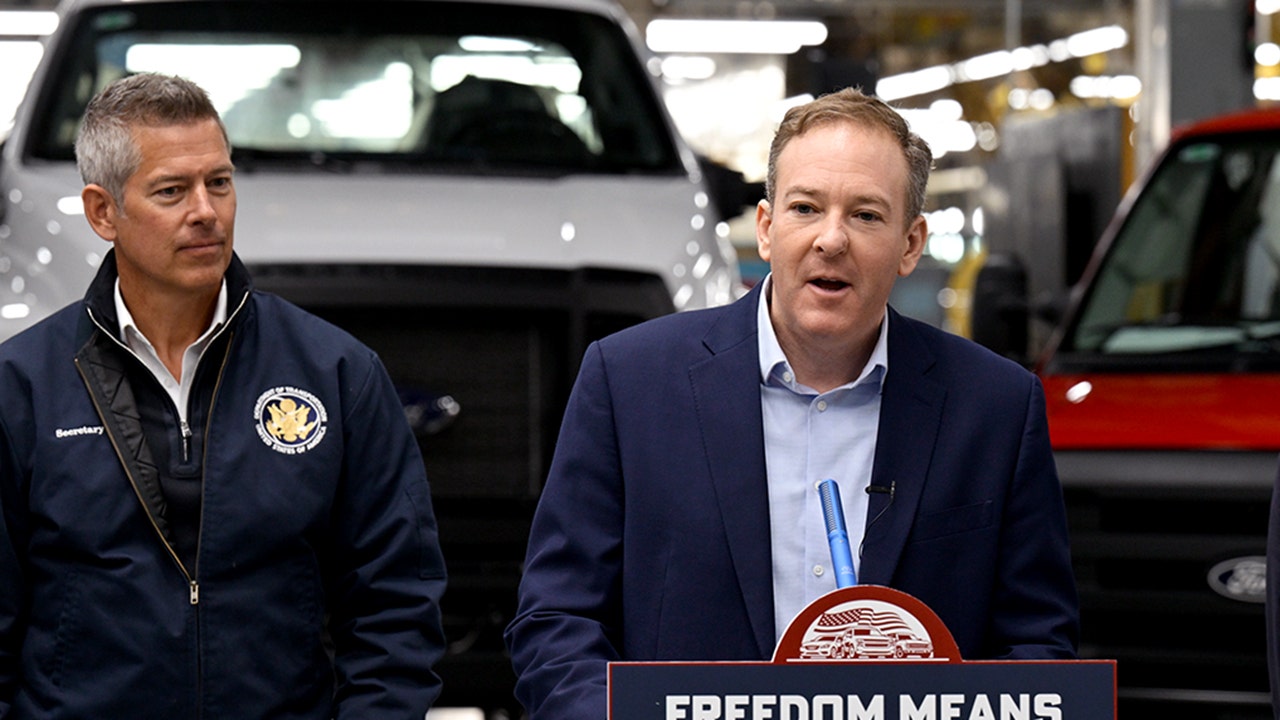
Ever wonder why some vehicles shut off at a stop light and then restart when it is time to go? I always thought it was a fuel economy thing but it goes back to the Obama administration. To meet tougher emission laws the green Obama folk gave regulatory credits to manufacturers who installed this "feature". The Trump admin eliminated it in February as part of a sweeping effort to bring sanity to the EPA.
 www.foxnews.com
Ever wonder why some vehicles shut off at a stop light and then restart when it is time to go? I always thought it was a fuel economy thing but it goes back to the Obama administration. To meet tougher emission laws the green Obama folk gave regulatory credits to manufacturers who installed this "feature". The Trump admin eliminated it in February as part of a sweeping effort to bring sanity to the EPA.
Obama-era greenhouse gas rules gone as EPA’s Zeldin signs ‘single largest deregulatory action’ in history
EPA administrator Lee Zeldin eliminates Obama-era greenhouse gas finding in what he calls the "largest deregulatory action," saving $1.3 trillion.
www.foxnews.com
Last edited:
Wind farms on land or at sea are not environmentally friendly at all. The greenies sure have some contradictory stances. They do dumb things to keep a crappy little insect from going extinct, especially if a development/project goes against their beliefs, yet the wind farms being harmful, they don’t care. Pathetic.
She’s a POS. Virginians should have known better in the first place.

I've been dabbling in hard boiled fiction writing since college and recently got back into it.
I’m featured in Issue 12 of Dark Yonder, one of today’s leading neo noir literary journals.
My story "Ten is the Point" joins a lineup of ten original short stories written by authors from all around the world. You can pre-order the ebook version of it now. The full issue goes live on April 30.
Pre-order here: https://www.amazon.com/dp/B0GY68JPX3
I’m featured in Issue 12 of Dark Yonder, one of today’s leading neo noir literary journals.
My story "Ten is the Point" joins a lineup of ten original short stories written by authors from all around the world. You can pre-order the ebook version of it now. The full issue goes live on April 30.
Pre-order here: https://www.amazon.com/dp/B0GY68JPX3
Can Joey and his miscreants foul up America more than already exposed !
A Trillion here and a Trillion there starts to add up !SIAP, this news is from February.
Ever wonder why some vehicles shut off at a stop light and then restart when it is time to go? I always thought it was a fuel economy thing but it goes back to the Obama administration. To meet tougher emission laws the green Obama folk gave regulatory credits to manufacturers who installed this "feature". The Trump admin eliminated it in February as part of a sweeping effort to bring sanity to the EPA.
Obama-era greenhouse gas rules gone as EPA’s Zeldin signs ‘single largest deregulatory action’ in history
EPA administrator Lee Zeldin eliminates Obama-era greenhouse gas finding in what he calls the "largest deregulatory action," saving $1.3 trillion.
Last edited:
Piers comes to the USA to have the experience of the true First Amendment.
# 14; Thousands of Army troops buried in hundreds of miles of collapsed undergrown storage facilities, rockets, fuel, ammo, drones, etc !
There was a huge underground facility near a city.
Bunker busters did their job.
There were multiple mushroom explosions going thousands of feet in the air.
Additional explosions continued for 4 hours.
Last edited:
Wind farms on land or at sea are not environmentally friendly at all. The greenies sure have some contradictory stances. They do dumb things to keep a crappy little insect from going extinct, especially if a development/project goes against their beliefs, yet the wind farms being harmful, they don’t care. Pathetic.
Whales are continually washing ashore where there are ocean windmills.
She’s a POS. Virginians should have known better in the first place.
A Federal Judge has ruled the Gerrymandering vote un-constructional.
Last edited:
Latest
-
01
 Orange and Blue News
Illinois beats Cincinnati 105-96 in exhibition behind Stojakovic, freshman backcourt
Orange and Blue News
Illinois beats Cincinnati 105-96 in exhibition behind Stojakovic, freshman backcourt
-
02
 Orange and Blue News
Touted Illinois freshman Quentin Coleman set for debut in exhibition at Cincinnati
Orange and Blue News
Touted Illinois freshman Quentin Coleman set for debut in exhibition at Cincinnati
-
03
 On3 Basketball
Top 10 Big Ten basketball transfers changing teams ahead of 2026-27 season
On3 Basketball
Top 10 Big Ten basketball transfers changing teams ahead of 2026-27 season
-
04
 Orange and Blue News
Illinois at Cincinnati: Five things to watch in exhibition opener
Orange and Blue News
Illinois at Cincinnati: Five things to watch in exhibition opener
-
05
 On3 Football
College Football Playoff nearing deal to expand to 24 teams
On3 Football
College Football Playoff nearing deal to expand to 24 teams