when I went to college, in economics, the Keynesian version, the "acceptable" inflation was viewed a 4% year..It wasn't until Greenspan in 2012, that the 2% standard was set..The average over last 30 years has been 2.4-2.6%Inflation is theft. The 2% target is not grounded in science, it’s just been the acceptable level of theft.
Biden purposefully let inflation run hot, democrats were practicing Modern Monetary Theory and it did not get the results they intended. It lead to high inflation and it was the #1 issue in the election and the American voter spoke.
The economy
- Thread starter Rastafarian
- Start date
You are using an out of date browser. It may not display this or other websites correctly.
You should upgrade or use an alternative browser.
You should upgrade or use an alternative browser.


I love some economics so i had Grok summarize it for me. Found it interseting, so sharing.when I went to college, in economics, the Keynesian version, the "acceptable" inflation was viewed a 4% year..It wasn't until Greenspan in 2012, that the 2% standard was set..The average over last 30 years has been 2.4-2.6%
The 2% inflation target now used by most major central banks (including the Federal Reserve, European Central Bank, Bank of Canada, and others) wasn't the result of a single, precise economic calculation or a universally agreed-upon optimal rate from theory. Its origins are more practical and historical than purely scientific, and yes — it has elements of being somewhat arbitrary in its exact choice, though it has since been supported by economic rationale. How It Originated The modern practice of explicit inflation targeting began in New Zealand in the late 1980s/early 1990s:
- New Zealand faced very high inflation in prior decades and was reforming its central bank (the Reserve Bank of New Zealand) to make it more independent.
- In 1989 legislation required the government and central bank to agree on an inflation target range, with accountability if it wasn't met.
- The specific initial range of 0–2% (later settling around 2% as the midpoint or focal point) emerged somewhat casually. Accounts from participants (including former central bank governor Don Brash) describe it as starting from an offhand remark or "plucked out of the air" during political discussions or interviews to anchor public expectations and provide room for measurement error or flexibility. It wasn't derived from a detailed academic model at the outset.
- New Zealand's approach proved successful in reducing and stabilizing inflation, which drew global attention.
- Canada adopted a 1–3% range (midpoint 2%) in 1991.
- Other countries (UK, Australia, Sweden, etc.) followed in the 1990s.
- The number 2% became a coordinating focal point — once a few major players used it, others converged on the same number for consistency, credibility, and to avoid appearing outlier or irresponsible.
- The Fed didn't formally announce a 2% target until January 2012 under Chair Ben Bernanke (using the PCE price index).
- However, it had an implicit 2% target in mind since around the mid-1990s (during Alan Greenspan's tenure), based on internal FOMC discussions. For example:
- Debates in 1994–1996 considered targets below 3%, with 2% emerging as a consensus low-but-not-too-low level.
- Greenspan preferred secrecy for policy flexibility.
- Bernanke (a strong advocate of inflation targeting from his academic work) pushed for making it explicit to improve communication, anchor expectations, and enhance policy effectiveness.
- Avoids deflation risk — Deflation (falling prices) is dangerous because it can lead to delayed spending, debt burdens rising in real terms, and a downward spiral (as seen in the Great Depression or Japan's "lost decades"). A small positive inflation rate provides a buffer.
- Measurement bias in inflation data — Official indexes (like CPI or PCE) tend to slightly overstate true inflation due to issues like quality improvements, new goods, and substitution. A measured 2% might correspond to something closer to true price stability (around 0–1% actual).
- "Greasing the wheels" of the economy — Mild inflation allows relative price adjustments without nominal cuts (e.g., it's easier to give a below-average performer a 1% raise while others get 3% than to cut someone's pay 1%). Wages are "sticky" downward.
- Monetary policy room / zero lower bound — Interest rates can't easily go much below zero. If inflation (and thus nominal rates) is too low, central banks have less room to cut rates during recessions before hitting zero. Studies (including ones Bernanke cited) suggested 2% gives a low but "acceptably small" risk of hitting the lower bound, preserving ability to stimulate the economy.
very interesting, thanks...so we're basing all this 2% drama on a "somewhat arbitrary number". Just think if they'd have picked 3% out of the air, we'd be having entirely different arguments.I love some economics so i had Grok summarize it for me. Found it interseting, so sharing.
The 2% inflation target now used by most major central banks (including the Federal Reserve, European Central Bank, Bank of Canada, and others) wasn't the result of a single, precise economic calculation or a universally agreed-upon optimal rate from theory. Its origins are more practical and historical than purely scientific, and yes — it has elements of being somewhat arbitrary in its exact choice, though it has since been supported by economic rationale. How It Originated The modern practice of explicit inflation targeting began in New Zealand in the late 1980s/early 1990s:
This model spread quickly:
- New Zealand faced very high inflation in prior decades and was reforming its central bank (the Reserve Bank of New Zealand) to make it more independent.
- In 1989 legislation required the government and central bank to agree on an inflation target range, with accountability if it wasn't met.
- The specific initial range of 0–2% (later settling around 2% as the midpoint or focal point) emerged somewhat casually. Accounts from participants (including former central bank governor Don Brash) describe it as starting from an offhand remark or "plucked out of the air" during political discussions or interviews to anchor public expectations and provide room for measurement error or flexibility. It wasn't derived from a detailed academic model at the outset.
- New Zealand's approach proved successful in reducing and stabilizing inflation, which drew global attention.
Adoption by the Federal Reserve (US)
- Canada adopted a 1–3% range (midpoint 2%) in 1991.
- Other countries (UK, Australia, Sweden, etc.) followed in the 1990s.
- The number 2% became a coordinating focal point — once a few major players used it, others converged on the same number for consistency, credibility, and to avoid appearing outlier or irresponsible.
Why 2% Specifically? (The Main Rationales That Developed)While the initial choice had arbitrary roots, economists and central banks later coalesced around several practical reasons why ~2% (rather than 0%, 1%, 3%, or higher/lower) makes sense:
- The Fed didn't formally announce a 2% target until January 2012 under Chair Ben Bernanke (using the PCE price index).
- However, it had an implicit 2% target in mind since around the mid-1990s (during Alan Greenspan's tenure), based on internal FOMC discussions. For example:
- Debates in 1994–1996 considered targets below 3%, with 2% emerging as a consensus low-but-not-too-low level.
- Greenspan preferred secrecy for policy flexibility.
- Bernanke (a strong advocate of inflation targeting from his academic work) pushed for making it explicit to improve communication, anchor expectations, and enhance policy effectiveness.
In short: No, 2% wasn't pulled from rigorous optimization models saying "exactly 2.000% maximizes welfare." It started as a pragmatic, somewhat arbitrary number from New Zealand's political/legislative process, then spread globally and gained intellectual justification as a reasonable compromise — low enough for "price stability," high enough to provide buffers against deflation and policy constraints.Central banks like the Fed now describe it as the rate "most consistent" with their mandates (maximum employment + stable prices), based on decades of experience rather than pure theory. Some economists debate whether it should be higher (e.g., 3–4%) in light of recent low-rate environments, but 2% remains the strong global consensus.
- Avoids deflation risk — Deflation (falling prices) is dangerous because it can lead to delayed spending, debt burdens rising in real terms, and a downward spiral (as seen in the Great Depression or Japan's "lost decades"). A small positive inflation rate provides a buffer.
- Measurement bias in inflation data — Official indexes (like CPI or PCE) tend to slightly overstate true inflation due to issues like quality improvements, new goods, and substitution. A measured 2% might correspond to something closer to true price stability (around 0–1% actual).
- "Greasing the wheels" of the economy — Mild inflation allows relative price adjustments without nominal cuts (e.g., it's easier to give a below-average performer a 1% raise while others get 3% than to cut someone's pay 1%). Wages are "sticky" downward.
- Monetary policy room / zero lower bound — Interest rates can't easily go much below zero. If inflation (and thus nominal rates) is too low, central banks have less room to cut rates during recessions before hitting zero. Studies (including ones Bernanke cited) suggested 2% gives a low but "acceptably small" risk of hitting the lower bound, preserving ability to stimulate the economy.
As i think @PawPride pointed out, deflation would be a pretty bad thing so I understand having a little bit of cushion.very interesting, thanks...so we're basing all this 2% drama on a "somewhat arbitrary number". Just think if they'd have picked 3% out of the air, we'd be having entirely different arguments.
But its kind of like the income tax. What starts out at one target can quickly become something else.

Wrong. What I posted suggests that perhaps we could have authorized the production of a few less F-35's and a few more minesweepers. That's arguing for the reallocation of existing funds, not an increase in funding.interestingly, you have just made the case why we need a large defense budget that developes and buys things that sometimes seem questionable. We haven't had a need for minesweepers for how long...decades? So what's the need? Well, now there's a need and we now question "why don't we have more" or "why are they stained there instead of here".
As I have posted during debates about defense budgets, when conflict starts, you go with the equipment you have not the equipment you wish you had. Bet we wish we had spend more on developing anti drone defense......
yea, we don't want deflation..then nobody buys in anticipation of a lower price tomorrowAs i think @PawPride pointed out, deflation would be a pretty bad thing so I understand having a little bit of cushion.
But its kind of like the income tax. What starts out at one target can quickly become something else.
Wrong. What I posted suggests that perhaps we could have authorized the production of a few less F-35's and a few more minesweepers. That's arguing for the reallocation of existing funds, not an increase in funding.
but then you won't have enough F35s to meet requirements. You do know, or maybe you don't, that when the military buys equipment they buy the number of things that fit within unit structural requirements. It' not just a bunch of generals sitting around a table throwing numbers out "why don't we buy 20, no let's get 26" . Now I guess you could reduce the size of squadrons or wings but a lot of effort goes into determining the proper size of the units. We've got to get you some education on the military.Wrong. What I posted suggests that perhaps we could have authorized the production of a few less F-35's and a few more minesweepers. That's arguing for the reallocation of existing funds, not an increase in funding.
Why is an army squad the size it is,,,how about a platoon? why don't we just cut them back one person and then send them into combat? They're sized that way for a reason
LOL, that's precious, Ned. But incorrect.but then you won't have enough F35s to meet requirements. You do know, or maybe you don't, that when the military buys equipment they buy the number of things that fit within unit structural requirements. It' not just a bunch of generals sitting around a table throwing numbers out "why don't we buy 20, no let's get 26" .
Defense procurement contracts frequently have little to do with minimum actual need. They have at least as much to do with maintaining spending levels and generating business for various and sundry Congresspersons' constituent defense contractors. There's a name for it: it's called porkbarrel politics.
boy have you been brainwashed. Just so happens that one of my specialties in the army was procurement. I spent 3 years heading the contacts department in a DCASMA (look it up), graduated from DoD program management course, was a charter acceptance in the Army's program management career field and spent two years as a Dept of Army Systems coordinator in the office of the Deputy Chief of Staff for Research Development and Acquisition. So, if you have no objections, I'll put my knowledge and experience in the world of military procurement in competition with yours any day.LOL, that's precious, Ned. But incorrect.
Defense procurement contracts frequently have little to do with minimum actual need. They have at least as much to do with maintaining spending levels and generating business for various and sundry Congresspersons' constituent defense contractors. There's a name for it: it's called porkbarrel politics.
And just so you are on solid ground in conversations, there are actually two separate fields in the acquisition process..the requirements, the people who spend careers designing the strategies and tactics needed for the battlefield and setting requirements for the equipment and TOE (look it up). Then there are the acquisition/procurement guys who take those requirements, and actually prepare and analyse requests for proposals to come up with the equipment to meet the requirements. Military procurement is a far cry from what you apparently think it is. This may or not come as a surprise, but career officers and NCOs are some of the most educated, disciplined, committed, and effective people in the country. What they do has a specific purpose and decisions they make have life or death implications. In some instances, their own
You should pay attention to people with more experience and knowledge in fields other than yours. You might actually learn something.

This exceeds the 2020 pandemic peak by 600,000 when nearly the entire economy was shut down.
Since the 2008 Financial Crisis, the number of people not in the labor force has surged +25.7 million and +35.1 million since 2000.
As a % of the labor force, this metric stands at 61.2%, the highest level since the 1970s, excluding the pandemic.
All while the US population stands at a record 342.5 million, up +61.4 million since January 2000.
Cracks in the labor market are spreading.
not good. I'm already down couple hundred thousand from my highs...that's the bad news. Good news I won't fall into the tax the rich marginal rates. There's always a bright side
More good news, I recently sold a condo, so I have 500k in cash just waiting for the right time to invest.
Not happy about more marines being sent to region though
good analysis. All the more reason we need to get this over as quickly as possible
Ned: I'm not trying to impugn your service, or the education, discipline and commitment of the procurement officers you mentioned, but they ultimately report to civilian leadership, both at the Pentagon and in the Congress. And those civilian leaders, particularly the members of Congress, have always had an abiding interest in "bringing home the bacon" for any defense contractors (or subcontractors) who are based in their district. That is just a plain fact, and the professionalism of the procurement officers you mentioned does not change that fact.boy have you been brainwashed. Just so happens that one of my specialties in the army was procurement. I spent 3 years heading the contacts department in a DCASMA (look it up), graduated from DoD program management course, was a charter acceptance in the Army's program management career field and spent two years as a Dept of Army Systems coordinator in the office of the Deputy Chief of Staff for Research Development and Acquisition. So, if you have no objections, I'll put my knowledge and experience in the world of military procurement in competition with yours any day.
And just so you are on solid ground in conversations, there are actually two separate fields in the acquisition process..the requirements, the people who spend careers designing the strategies and tactics needed for the battlefield and setting requirements for the equipment and TOE (look it up). Then there are the acquisition/procurement guys who take those requirements, and actually prepare and analyse requests for proposals to come up with the equipment to meet the requirements. Military procurement is a far cry from what you apparently think it is. This may or not come as a surprise, but career officers and NCOs are some of the most educated, disciplined, committed, and effective people in the country. What they do has a specific purpose and decisions they make have life or death implications. In some instances, their own
You should pay attention to people with more experience and knowledge in fields other than yours. You might actually learn something.
OK, I can't argue that point...it is a matter of fact that members of Congress fight for systems that employ people in their districts. Heck when I was working that was the underlying premise of why I went to members offices and made sure they understood that fact. But that is a small, very small part of of the military acquisition process. Civilian leadership in the pentagon, not so much. In my experience, I never had any leader step in front of any requirement/acquisition program. In fact, just the opposite, they strongly supported development of military requirements and the acquisition of equipment to meet those requirements.Ned: I'm not trying to impugn your service, or the education, discipline and commitment of the procurement officers you mentioned, but they ultimately report to civilian leadership, both at the Pentagon and in the Congress. And those civilian leaders, particularly the members of Congress, have always had an abiding interest in "bringing home the bacon" for any defense contractors (or subcontractors) who are based in their district. That is just a plain fact, and the professionalism of the procurement officers you mentioned does not change that fact.
Now if you want to talk about negatives of the process, in addition to members of Congress interjections - don't forget for every congressmen with his own agenda, there is at least an equal and opposite congressmen with an opposite agenda - and there are numerous steps in the process to redirect efforts of congressmen who try to take military procurements in a direction opposite what the military wants. I know, a little run on) Those are all the social set asides that Congress has set up in acquiring products...things like small business set asides, minority owned business, woman owned business set asides...in some cases up to 15% of contract value...somewhere, someone has determined that it's acceptable for the pentagon to pay more for what it buys in order to satisfy a greater good. But somehow that doesn't ever seem to get to those who accuse the military of paying to much.
Beyond oil and gold, aluminum will be in focus in Monday trading after Bahrain started a phased production shutdown at the world’s largest single-site smelter of the metal. State-owned Aluminium Bahrain BSC has been facing disruptions because of the standstill at the Strait of Hormuz, which has prevented outbound shipments of finished metal and incoming supplies of alumina feedstock. Prices touched the highest level since 2022 last week.

This is a non story hyped by leftist msm to attack Trump.
don't we already use migrant workers for farm work? answer yes we doThis is a non story hyped by leftist msm to attack Trump.
I can see why people are frustrated
so that leads to the "BIG" question, do you solve this problem by raising up the 80% or bringing down the 20%...or do you grow the pie by bringing everybody up.
There's a reason why transfer payments are not included in GDP.
There's no doubt that life is a financial grind for many people. The question is what's the solution. A lot of Americans blame things like greedy corporations, the rich, and Trump's policies. I find that amusing because I think corporations have tried to maximize profits forever and the biggest run up in prices occurred when Trump wasn't in office. I don't think most people understand that affordability is just as big of an issue in places like Canada & Europe.so that leads to the "BIG" question, do you solve this problem by raising up the 80% or bringing down the 20%...or do you grow the pie by bringing everybody up.
There's a reason why transfer payments are not included in GDP.
I know I'll get criticized for this but I have a lot more sympathy for a young couple trying to raise a family on a combined income of $80,000 than I do for people who dropped out of school, had kids out of wedlock, and live a meager lifestyle relying on social welfare. 22% of the population now receive welfare. We've created a society dependent on government welfare rather than individual initiative.so that leads to the "BIG" question, do you solve this problem by raising up the 80% or bringing down the 20%...or do you grow the pie by bringing everybody up.
There's a reason why transfer payments are not included in GDP.
I read this morning that 12% of the population is on SNAP. Mindblown.I know I'll get criticized for this but I have a lot more sympathy for a young couple trying to raise a family on a combined income of $80,000 than I do for people who dropped out of school, had kids out of wedlock, and live a meager lifestyle relying on social welfare. 22% of the population now receive welfare. We've created a society dependent on government welfare rather than individual initiative.
Had AI fact check it, and it seems to be correct.
12% of the population is on SNAP. In a booming economy. That seems ridiculously high to me. I would have guessed 2% if I had to guess out of the blue.
I have a heart. I aknolwedge nutrition assistance is a good thing. But I also don't think 12% of our population needs to be on SNAP. Times are just not that bad.
12% of the population is on SNAP. In a booming economy. That seems ridiculously high to me. I would have guessed 2% if I had to guess out of the blue.
I have a heart. I aknolwedge nutrition assistance is a good thing. But I also don't think 12% of our population needs to be on SNAP. Times are just not that bad.
As of the most recent comprehensive data from the U.S. Department of Agriculture (USDA) Economic Research Service and other reliable sources like USAFacts and Pew Research Center:
- In fiscal year 2024 (October 2023–September 2024), SNAP served an average of 41.7 million participants per month, which represented 12.3% of the U.S. resident population.
- In the early part of fiscal year 2025 (through May 2025 or the first eight months), average monthly participation was around 42.1–42.4 million people, still equating to approximately 12.3% of the population (with slight month-to-month variation but no major shift reported in the overall percentage).
- As of late 2025 (e.g., November 2025 data references in USDA tables), numbers remain in the low-to-mid 42 million range, consistent with this rate given U.S. population estimates around 340–345 million.

The rich get richer and more get poorer. Oh well lets blame the poor and immigrants.
and why would that be?The rich get richer and more get poorer. Oh well lets blame the poor and immigrants.
You know, there are a heck of a lot of people who start off poor, but somehow end up rich. So being poor is not an insurmountable obstacle to future success

Because it's much easier to attain wealth if you're already well off. He never said poor people can't climb up through social rankings, but it's much more difficult and much harder to absorb losses if you start out poor than if you start out middle class or higher.and why would that be?
You know, there are a heck of a lot of people who start off poor, but somehow end up rich. So being poor is not an insurmountable obstacle to future success
I read this morning that 12% of the population is on SNAP. Mindblown.
so, here's something for consideration...watched you tube video last night with the premise that a 2 earner family might be entering a fiscal trap, when having only one of the couple working and the other staying home might be more fiscally sound. The "lecturer" made a good case for a family of 4 - 2 kids obviously. When both parents work the family has the added costs of childcare, the need for 2 cars with resultant higher insurance, gas, repair costs, etc.I read this morning that 12% of the population is on SNAP. Mindblown.
The best world, which I agree with, is that when first married with 2 earner family, live off income of one and save the other, then with kids one stays home with kids and becomes a traditional mother, then when kids go to school, or later, partner returns to work and saves salary for investments.
Of course, if you are well off it's easier to attain wealth. But I guess my point, was that just because you start off poor you don't have to stay that way for the rest of your life. There are multiple ways either through hard work, education, trade schools, the military, that can be the levers from poor to middle class. Like I posted there are a lot of people who start off poor who end up rich.Because it's much easier to attain wealth if you're already well off. He never said poor people can't climb up through social rankings, but it's much more difficult and much harder to absorb losses if you start out poor than if you start out middle class or higher.
Weird thats what you took from what I said.and why would that be?
You know, there are a heck of a lot of people who start off poor, but somehow end up rich. So being poor is not an insurmountable obstacle to future success
16% of people who start poor escape poverty. What a win!
well, if 16% can escape, why not 17% or 20% maybe 25%?Weird thats what you took from what I said.
16% of people who start poor escape poverty. What a win!
Do you think that someone who lives from Medicare/snap checks from month to month has the incentive to get off them?
No doubt, that's the American dream. The problem is that for a lot of the youth in this country, it seems like the American dream is becoming harder and harder to attain. I empathize with them because I graduated in '08 at the start of the housing crisis and I remember how damn hard it was to find a job/get ahead during that. It just seems like it's all gotten worse since then and as history tells us, nothing good comes from having a large swath of the youthful population angry and resenting their gov't.Of course, if you are well off it's easier to attain wealth. But I guess my point, was that just because you start off poor you don't have to stay that way for the rest of your life. There are multiple ways either through hard work, education, trade schools, the military, that can be the levers from poor to middle class. Like I posted there are a lot of people who start off poor who end up rich.

The military can be a helluva way to move yourself and your family up the ladder, that's for sure.Of course, if you are well off it's easier to attain wealth. But I guess my point, was that just because you start off poor you don't have to stay that way for the rest of your life. There are multiple ways either through hard work, education, trade schools, the military, that can be the levers from poor to middle class. Like I posted there are a lot of people who start off poor who end up rich.
To answer your first question, there are a multitude of reasons why that number is not higher. You can take the time to read about those but I doubt you will at this point.well, if 16% can escape, why not 17% or 20% maybe 25%?
Do you think that someone who lives from Medicare/snap checks from month to month has the incentive to get off them?
But a simpler response is, if .5% of households make a million why cant 1%, 5%, or 10%?
I am a believer that those on Medicare/SNAP would rather not be on those programs if given the choice. The demonization of poor people isn't something new but its definitely something I personally don't subscribe to.
we then come back to the importance of family, education, opportunity and even desire. There is a "passage" that many have taken to reach the dream. I'll admit that it's harder now, especially if you graduated about the time of job decline (going through at right now with a 2025 graduate). You lose some years, which you likely already have, but life is for a long time, so recovery is possible, even likely.No doubt, that's the American dream. The problem is that for a lot of the youth in this country, it seems like the American dream is becoming harder and harder to attain. I empathize with them because I graduated in '08 at the start of the housing crisis and I remember how damn hard it was to find a job/get ahead during that. It just seems like it's all gotten worse since then and as history tells us, nothing good comes from having a large swath of the youthful population angry and resenting their gov't.
Latest
-
01
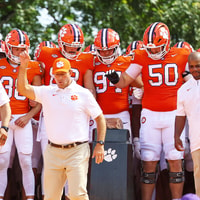 Tiger Illustrated Football
The internal vibe of Clemson's football team heading into Miami matchup
Tiger Illustrated Football
The internal vibe of Clemson's football team heading into Miami matchup
-
02
 Tiger Illustrated Football
Where we think this Clemson football team stands entering October
Tiger Illustrated Football
Where we think this Clemson football team stands entering October
-
03
 Tiger Illustrated Football
CLEMSON FOOTBALL: The Day After
Tiger Illustrated Football
CLEMSON FOOTBALL: The Day After
-
04
 Tiger Illustrated Football
Clemson grinds up Cal en route to win No. 3
Tiger Illustrated Football
Clemson grinds up Cal en route to win No. 3
-
05
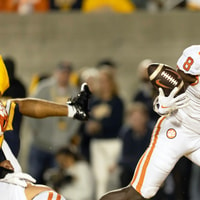 Tiger Illustrated Football
Davidson, ground game lead Clemson past Cal 24-10
Tiger Illustrated Football
Davidson, ground game lead Clemson past Cal 24-10