OT: Division 1 Hockey Recruiting: How Does It Work?
- Thread starter SteveVA2
- Start date
You are using an out of date browser. It may not display this or other websites correctly.
You should upgrade or use an alternative browser.
You should upgrade or use an alternative browser.


It isn't odd, that's just how hockey works. Unlike other sports, high school hockey isn't very competitive with the exception of a few places like Minnesota, so a bigger emphasis is placed on club/travel leagues. While most sports age out at U18 or high school, hockey has levels all the way up through U20, and each age level has a nickname. U8 is mite, U10 is squirt, U12 is peewee, U14 is bantam, U16 and U18 are midget, and U20 is junior. Most players end their travel career after U18, but the better players will go on to play junior. The elite players will often play an age level above, so you'd see future pros playing junior when they're 17 for example, which is why they are drafted out of junior leagues rather than U18 leagues. Sometimes players who go to junior early will then go to college at normal college age, but many times hockey players don't start college until after they've aged out of junior, so they'd be in their early 20s as freshmen. A buddy of mine did this, he played at a high level here in NJ and then was picked up by a junior team in Ottawa and played well enough there to earn a D1 scholarship. Hockey can be confusing as it isn't as linear as most other sports, there are many paths a player can take. It sounds like Princeton's coaches want your grand nephew to develop a little more before playing for them, which is pretty normal. Hope this helps and good luck to him!Didn’t the coach explain it to him? Sounds odd to me unless it’s his grades?
Thank you. He understands as do his parents. He’s going to a U18 team. I didn’t understand.It isn't odd, that's just how hockey works. Unlike other sports, high school hockey isn't very competitive with the exception of a few places like Minnesota, so a bigger emphasis is placed on club/travel leagues. While most sports age out at U18 or high school, hockey has levels all the way up through U20, and each age level has a nickname. U8 is mite, U10 is squirt, U12 is peewee, U14 is bantam, U16 and U18 are midget, and U20 is junior. Most players end their travel career after U18, but the better players will go on to play junior. The elite players will often play an age level above, so you'd see future pros playing junior when they're 17 for example, which is why they are drafted out of junior leagues rather than U18 leagues. Sometimes players who go to junior early will then go to college at normal college age, but many times hockey players don't start college until after they've aged out of junior, so they'd be in their early 20s as freshmen. A buddy of mine did this, he played at a high level here in NJ and then was picked up by a junior team in Ottawa and played well enough there to earn a D1 scholarship. Hockey can be confusing as it isn't as linear as most other sports, there are many paths a player can take. Hope this helps and good luck to your grand nephew!
No problem. Definitely check out a game when he gets there, Hobey Baker is a beautiful arena!Thank you. He understands as do his parents. He’s going to a U18 team. I didn’t understand.
In my experience that’s the norm. Most of the serious talent don’t even make it through high school. They will get drafted and play juniors while attending high school virtually. Then continue after graduation until their D1 coach tells them it’s time. It can be an unsettling process for some especially if they don’t perform well in Juniors or if the D1 coach gets fired. IMO Definitely not an ideal process for young players.My grand nephew was just accepted to Princeton to play hockey, but first he needs to spend two years playing junior hockey. Can someone explain to me what this is about?
But it t can also work the other way. A young guy in my building did two years of junior’s then went directly in to the nhl draft.In my experience that’s the norm. Most of the serious talent don’t even make it through high school. They will get drafted and play juniors while attending high school virtually. Then continue after graduation until their D1 coach tells them it’s time. It can be an unsettling process for some especially if they don’t perform well in Juniors or if the D1 coach gets fired. IMO Definitely not an ideal process for young players.
There were a bunch of guys. They said they all play together or something, I don’t really follow hockey. This guys name was Jack or something like that. His friends that lived here Nico, Dougie, Jonas, Michael, Damon, Mackenzie and Kevin. Nice bunch of guys.
Last edited:
Good post. I will add that most kids are not physically ready or have the skills to compete in college hockey until they age out of juniors. Only the true 5 stars enter around age 19. Most college hockey players are 20-24 and schools like Princeton (and other Ivy's) tend to recruit Canadian players (where juniors is pretty much mandatory whether you go to college or pro).It isn't odd, that's just how hockey works. Unlike other sports, high school hockey isn't very competitive with the exception of a few places like Minnesota, so a bigger emphasis is placed on club/travel leagues. While most sports age out at U18 or high school, hockey has levels all the way up through U20, and each age level has a nickname. U8 is mite, U10 is squirt, U12 is peewee, U14 is bantam, U16 and U18 are midget, and U20 is junior. Most players end their travel career after U18, but the better players will go on to play junior. The elite players will often play an age level above, so you'd see future pros playing junior when they're 17 for example, which is why they are drafted out of junior leagues rather than U18 leagues. Sometimes players who go to junior early will then go to college at normal college age, but many times hockey players don't start college until after they've aged out of junior, so they'd be in their early 20s as freshmen. A buddy of mine did this, he played at a high level here in NJ and then was picked up by a junior team in Ottawa and played well enough there to earn a D1 scholarship. Hockey can be confusing as it isn't as linear as most other sports, there are many paths a player can take. It sounds like Princeton's coaches want your grand nephew to develop a little more before playing for them, which is pretty normal. Hope this helps and good luck to him!
What amazes me is how expensive and time consuming it is to become an elite hockey player. I’m not just talking about equipment. My grand nephew traveled all over the US and attended training camps in Europe. He played on a team in Connecticut and he went to prep school there and his parents rented a house and alternated staying with him. His grandparents, my sister and bil, often traveled to watch him compete and took care of his sibling when needed. It was pretty exhausting. Let me add, regardless of hockey, my grand nephew has the academic skills to do Princeton. He’s very disciplined.
Hockey is very expensive and there are only 64 D-1 schools. And not a lot of full scholarships. Congrats to your grand nephew! He must be a good player. Can't beat that Princeton education.What amazes me is how expensive and time consuming it is to become an elite hockey player. I’m not just talking about equipment. My grand nephew traveled all over the US and attended training camps in Europe. He played on a team in Connecticut and he went to prep school there and his parents rented a house and alternated staying with him. His grandparents, my sister and bil, often traveled to watch him compete and took care of his sibling when needed. It was pretty exhausting. Let me add, regardless of hockey, my grand nephew has the academic skills to do Princeton. He’s very disciplined.
A former co-worker of mine had her son in hockey and was on elite travel teams and spent summers in camps in Canada. He's on a club team now with a school with a rising D-1 program. Be very grateful.
Last edited:
Hockey is the worst when it comes to finances and player development. And if playing D1 is the goal not only are there roughly 60 programs (far fewer than other sports) but American-born players are competing with Canadians and Europeans for those spots. I was thrilled when my son quit AAA hockey to focus on his other sport because the road to D1 hockey or juniors/pros is brutal. My buddy’s kid was a top 50 prospect with Hughes…left HS early when he got drafted for Juniors, had a D1 scholarship in his back pocket to top program…then kid gets traded a few times, development stalls, the D1 coach gets fired and the schollie disappears, and long story short after a few years in the hockey meat-grinder now 24 year old kid is playing D3. Total nightmare.What amazes me is how expensive and time consuming it is to become an elite hockey player. I’m not just talking about equipment. My grand nephew traveled all over the US and attended training camps in Europe. He played on a team in Connecticut and he went to prep school there and his parents rented a house and alternated staying with him. His grandparents, my sister and bil, often traveled to watch him compete and took care of his sibling when needed. It was pretty exhausting. Let me add, regardless of hockey, my grand nephew has the academic skills to do Princeton. He’s very disciplined.
Very normal, play juniors for 2 years. Your grand nephew must be an elite player to get that offer. Average freshman in D1 hockey is almost 21, its just the way it is.My grand nephew was just accepted to Princeton to play hockey, but first he needs to spend two years playing junior hockey. Can someone explain to me what this is about?
Best thing is to have them in juniors and have Princeton pre- approve cyber classes that would transfer, that way they can be in grad school while playing at Princeton if they so choose.
Ivy does not allow grad students to play intercollegiate sports. That’s why you have so many Ivy transfers to finish out their playing eligibility.Very normal, play juniors for 2 years. Your grand nephew must be an elite player to get that offer. Average freshman in D1 hockey is almost 21, its just the way it is.
Best thing is to have them in juniors and have Princeton pre- approve cyber classes that would transfer, that way they can be in grad school while playing at Princeton if they so choose.

Told both my boys early, you guys can be hockey players but we will not be a hockey (or lacrosse - they played both) family.
DIII was good enough for both as was club lacrosse. I was more into future job prospects than an NHL one. Considering the latter was never going to happen for either.
Younger one as a freshman played against a school a few years ago with aspirations of having a D1 program. So what did they "recruit" to get there...Canadian (Juniors) men basically. He really got knocked around in that particular game and ended up with a concussion. Sat out all of last season.
Good luck to your grand nephew, @SteveVA2 !
DIII was good enough for both as was club lacrosse. I was more into future job prospects than an NHL one. Considering the latter was never going to happen for either.
Younger one as a freshman played against a school a few years ago with aspirations of having a D1 program. So what did they "recruit" to get there...Canadian (Juniors) men basically. He really got knocked around in that particular game and ended up with a concussion. Sat out all of last season.
Good luck to your grand nephew, @SteveVA2 !
Last edited:

"left HS early when he got drafted for Juniors, had a D1 scholarship in his back pocket to top program…then kid gets traded a few times, development stalls, the D1 coach gets fired and the schollie disappears, and long story short after a few years in the hockey meat-grinder now 24 year old kid is playing D3. Total nightmare."
Unfortunately this is all too common an occurrence and if you think its much easier or different at the D3 level, that is also a misconception. Happens there too and I've seen former solid D1 prospects find themselves a "healthy scratch" at the D3 level. Top 6 talent at a good D3 level program can absolutely play D1 somewhere and if you don't fit a role, you may very well not play at any level once you get to NCAA hockey. Very narrow window in which to seize an opportunity.
Unfortunately this is all too common an occurrence and if you think its much easier or different at the D3 level, that is also a misconception. Happens there too and I've seen former solid D1 prospects find themselves a "healthy scratch" at the D3 level. Top 6 talent at a good D3 level program can absolutely play D1 somewhere and if you don't fit a role, you may very well not play at any level once you get to NCAA hockey. Very narrow window in which to seize an opportunity.
+1"left HS early when he got drafted for Juniors, had a D1 scholarship in his back pocket to top program…then kid gets traded a few times, development stalls, the D1 coach gets fired and the schollie disappears, and long story short after a few years in the hockey meat-grinder now 24 year old kid is playing D3. Total nightmare."
Unfortunately this is all too common an occurrence and if you think its much easier or different at the D3 level, that is also a misconception. Happens there too and I've seen former solid D1 prospects find themselves a "healthy scratch" at the D3 level. Top 6 talent at a good D3 level program can absolutely play D1 somewhere and if you don't fit a role, you may very well not play at any level once you get to NCAA hockey. Very narrow window in which to seize an opportunity.
My older guy found that out the hard way, but it worked out. He was a forward almost the whole time he played, defense only in an emergency because he could skate. Gets to first day of practice and there are tons of forwards. Coach jokingly asks, "Okay, who can skate backwards then?" My boy raises his hand and skates over to the defensive grouping. Started the first game.
Co-Workers kid went to Deerfield Acadamy in MA. Made her repeat junior HS year because you have to be there for min 2 yrs and everyone must play 3 sports. At the end of your time there you are pretty much guaranteed Ivy. Dont know if she continues hockey in collegeKids who attend elite prep schools all over the country can forego junior and go directly to college
Revisiting this thread.
My grand nephew has played two years of junior hockey and was preparing to enter Princeton until the NCAA just changed some age related rules. Bear with me because the information comes from my sister, his grandmother, and admittedly she does totally understand.
Under the new NCAA rules, athletes of a certain age must have a minimum number of academic credits when entering. So my nephew is planning to take 12 credits while playing his third year in Canada. This then makes him a transfer student as far as Princeton is concerned. As a result he would not be able to play his first year at Princeton. He did not want to do that.
Meanwhile he was contacted by West Point. They were looking for high performing academic athletes. He as interviewed by a Colonel. Both liked what they saw, and he was offered a spot beginning July 2027. He was also contacted by Brown who tried to see if they could get a work around Ivy requirements.
No guarantee when I’m telling you is actually what happened but it seems pretty close.
My grand nephew has played two years of junior hockey and was preparing to enter Princeton until the NCAA just changed some age related rules. Bear with me because the information comes from my sister, his grandmother, and admittedly she does totally understand.
Under the new NCAA rules, athletes of a certain age must have a minimum number of academic credits when entering. So my nephew is planning to take 12 credits while playing his third year in Canada. This then makes him a transfer student as far as Princeton is concerned. As a result he would not be able to play his first year at Princeton. He did not want to do that.
Meanwhile he was contacted by West Point. They were looking for high performing academic athletes. He as interviewed by a Colonel. Both liked what they saw, and he was offered a spot beginning July 2027. He was also contacted by Brown who tried to see if they could get a work around Ivy requirements.
No guarantee when I’m telling you is actually what happened but it seems pretty close.
Is there an exception to the new eligibility rules for hockey? The rule states that a player eligibility clock starts when he turns 19 or enrolls in school, whatever comes first.It isn't odd, that's just how hockey works. Unlike other sports, high school hockey isn't very competitive with the exception of a few places like Minnesota, so a bigger emphasis is placed on club/travel leagues. While most sports age out at U18 or high school, hockey has levels all the way up through U20, and each age level has a nickname. U8 is mite, U10 is squirt, U12 is peewee, U14 is bantam, U16 and U18 are midget, and U20 is junior. Most players end their travel career after U18, but the better players will go on to play junior. The elite players will often play an age level above, so you'd see future pros playing junior when they're 17 for example, which is why they are drafted out of junior leagues rather than U18 leagues. Sometimes players who go to junior early will then go to college at normal college age, but many times hockey players don't start college until after they've aged out of junior, so they'd be in their early 20s as freshmen. A buddy of mine did this, he played at a high level here in NJ and then was picked up by a junior team in Ottawa and played well enough there to earn a D1 scholarship. Hockey can be confusing as it isn't as linear as most other sports, there are many paths a player can take. It sounds like Princeton's coaches want your grand nephew to develop a little more before playing for them, which is pretty normal. Hope this helps and good luck to him!
Hockey recruiting is crazy even compared to football.
I have season tickets to Maine. They announce a lot of recruits several years in advance, then when that year rolls around only about 1/3 of the kids who were announced end up there and the rest of the class is a surprise. Huge turnover with the portal as well.
I have season tickets to Maine. They announce a lot of recruits several years in advance, then when that year rolls around only about 1/3 of the kids who were announced end up there and the rest of the class is a surprise. Huge turnover with the portal as well.
College hockey was one of the sports that fought against the new rules. The original rules would have killed the sport. The age 19 or enrolls in school helps but now limits the number of years the kids will be in school. Most kids are not mature enough to play right out of HS so that is why the junior years are important. Plus it helps to shake out the early/late bloomers since most kids commit much earlier.Is there an exception to the new eligibility rules for hockey? The rule states that a player eligibility clock starts when he turns 19 or enrolls in school, whatever comes first.
Sorry, I don't really know. I'm not as familiar with the new rules.Is there an exception to the new eligibility rules for hockey? The rule states that a player eligibility clock starts when he turns 19 or enrolls in school, whatever comes first.
Latest
-
01
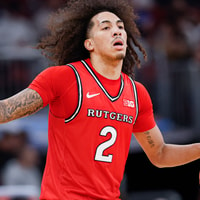 The Knight Report
Rutgers Basketball Practice Notebook: Pre-preseason takeaways
The Knight Report
Rutgers Basketball Practice Notebook: Pre-preseason takeaways
-
02
 The Knight Report
Join The Knight Report TODAY and get it for 60% off!
The Knight Report
Join The Knight Report TODAY and get it for 60% off!
-
03
 The Knight Report
How former Rutgers Football players performed in the NFL's Week Four
The Knight Report
How former Rutgers Football players performed in the NFL's Week Four
-
04
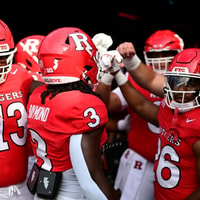 The Knight Report Football
ESPN FPI projects Rutgers Football's 2026 schedule - Week Six
The Knight Report Football
ESPN FPI projects Rutgers Football's 2026 schedule - Week Six
-
05
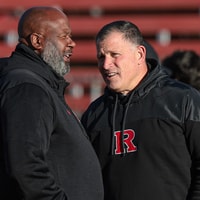 The Knight Report
Rutgers Football versus Maryland Game Time Announced
The Knight Report
Rutgers Football versus Maryland Game Time Announced