Rented one (Model 3 dual motor) this weekend in Palm Springs. Elon Musk knows how to engineer some crazy ****. Never thought I'd enjoy driving it as much as I did. There are a few things about it I didn't care too much for, but overall it drove great. Not something I'd want on long trips, but as a daily commuter, around the town, car it wouldn't be a bad car to have.
Finally got to try and drive a Tesla.
- Thread starter Mntneer
- Start date
You are using an out of date browser. It may not display this or other websites correctly.
You should upgrade or use an alternative browser.
You should upgrade or use an alternative browser.

Rented one (Model 3 dual motor) this weekend in Palm Springs. Elon Musk knows how to engineer some crazy ****. Never thought I'd enjoy driving it as much as I did. There are a few things about it I didn't care too much for, but overall it drove great. Not something I'd want on long trips, but as a daily commuter, around the town, car it wouldn't be a bad car to have.
We had a model 3 come in the other day with the owner looking to trade it on a new Mustang EV. Know why he wanted to trade? The Tesla had been in for battery service 3 times over two years and the battery had degraded over 45% to the point it wouldn't take a full charge!
It was almost worthless with the weak battery and replacing it exceeded the overall value of what the customer had left in the vehicle. So he figured better to trade now, than be stuck spending more than the vehicle is worth to replace its 25K dying battery.
He got 20K on the trade.
Must be one unlucky SOB. I have probably 20 friends that have a Tesla and none of them have had any issues at all…battery or otherwise.We had a model 3 come in the other day with the owner looking to trade it on a new Mustang EV. Know why he wanted to trade? The Tesla had been in for battery service 3 times over two years and the battery had degraded over 45% to the point it wouldn't take a full charge!
It was almost worthless with the weak battery and replacing it exceeded the overall value of what the customer had left in the vehicle. So he figured better to trade now, than be stuck spending more than the vehicle is worth to replace its 25K dying battery.
He got 20K on the trade.
But you might be able to sell 1 or 2 more Mustangs telling that story
That is the "dirty little secret" about these EV's as they're being pushed onto an unsuspecting public duped into believing they're so much cheaper & better for our environment. These batteries are not only expensive to produce, but dangerous to dispose of.Battery life is the biggest hurdle with any electric or hybrid vehicle. Got rid of my wife's Prius as soon as she was done with home health care, as I was worried we'd see battery issues after a few years.
Beyond that maintenance on them will stun most ICE vehicle owners and that's because of the cost to replace the batteries!
excerpt
A new electric car battery replacement can cost anywhere between $4,000 and $20,000, depending on the type of electric car you drive and the labor rate. However, you can find refurbished batteries for much less, even as low as $2,000, if there’s one available for your vehicle.
...more
excerpt
If you are looking to buy an EV to save money, you might be surprised to see all these expenses you hadn’t thought about. Whether you didn’t factor in the higher insurance premiums or the electricity cost, there can be bills down the road you aren’t prepared for. Additionally, the higher cost of buying the EV can be a shocker, sometimes costing several thousand more than a comparable gas car.
Tesla is a good vehicle, but it's had its share of problems...particularly the first generation models.
The 2020 Tesla Model 3 has been recalled 14 times by NHTSA. View Recalls
JD Power:
According to JD Power, this score “Measures the level of defects, malfunctions and design flaws experienced by vehicle owners. Covers the entire vehicle from engine to infotainment system. A higher rating means fewer problems.”
Tesla has not been rated for individual models by JD Power, because the company does not allow the industry benchmarking company to survey owners of their cars in the 15 states where permission is required by law. However, in an unofficial ranking of all brands by reliability in 2021, Tesla was rated 30th out of 33 manufacturers for reliability by JD Power.
source:
excerpt:
You would think that the company that holds almost a quarter of the market share for electric vehicles would have to make consistent, quality cars, but this is not the case. According to Consumer Reports, Tesla is one of the most unreliable car manufacturers. Only Lincoln fared worse out of twenty-six brands tracked in their surveys since the turn of the century.
The 2020 Tesla Model 3 has been recalled 14 times by NHTSA. View Recalls
JD Power:
According to JD Power, this score “Measures the level of defects, malfunctions and design flaws experienced by vehicle owners. Covers the entire vehicle from engine to infotainment system. A higher rating means fewer problems.”
Tesla has not been rated for individual models by JD Power, because the company does not allow the industry benchmarking company to survey owners of their cars in the 15 states where permission is required by law. However, in an unofficial ranking of all brands by reliability in 2021, Tesla was rated 30th out of 33 manufacturers for reliability by JD Power.
source:
excerpt:
You would think that the company that holds almost a quarter of the market share for electric vehicles would have to make consistent, quality cars, but this is not the case. According to Consumer Reports, Tesla is one of the most unreliable car manufacturers. Only Lincoln fared worse out of twenty-six brands tracked in their surveys since the turn of the century.
Costs to replace Tesla batteries:
excerpt:
Tesla sometimes suggests complete battery replacements for problems that don’t require it. Automotive YouTuber Rich Rebuilds experienced that for himself when he helped someone avoid a $22,500 repair bill for a total battery replacement on their Model 3.
more
excerpt:
With Model S production starting in 2012 and higher volumes not coming until 2014, only recently have those vehicles started to come off their powertrain warranty. We have seen quotes from Tesla for battery pack replacements between $20,000 and $30,000. That’s a lot of money, but the good news is that Tesla’s battery packs have been known to last a long time.
excerpt:
Tesla sometimes suggests complete battery replacements for problems that don’t require it. Automotive YouTuber Rich Rebuilds experienced that for himself when he helped someone avoid a $22,500 repair bill for a total battery replacement on their Model 3.
more
excerpt:
With Model S production starting in 2012 and higher volumes not coming until 2014, only recently have those vehicles started to come off their powertrain warranty. We have seen quotes from Tesla for battery pack replacements between $20,000 and $30,000. That’s a lot of money, but the good news is that Tesla’s battery packs have been known to last a long time.
Quite frankly, Ford used to build a crappy product. The company has invested billions into improving overall quality, and the results show. Ford is now among the more reliable name brands, but still not among the best.
excerpt
Ford cars have decent expected reliability these days. There are some brands that need fewer repairs in an average year, and there are brands that cost less to maintain, but you can certainly do worse than the blue oval. According to Repair Pal, the average Ford vehicle has to be taken to the shop about 0.3 times per year for unexpected repairs. This amounts to less than one surprise problem every three years. This is 25% below the industry average of 0.4 repairs in a given year. And out of these problems, Repair Pal only classifies 15% of them as severe issues. This results in an average cost of $775 per year to maintain the average Ford vehicle.
Not only are Ford's better built today than in the past, Ford motor credit is #1 in consumer auto financing and has been for the past few years!
excerpt
Ford cars have decent expected reliability these days. There are some brands that need fewer repairs in an average year, and there are brands that cost less to maintain, but you can certainly do worse than the blue oval. According to Repair Pal, the average Ford vehicle has to be taken to the shop about 0.3 times per year for unexpected repairs. This amounts to less than one surprise problem every three years. This is 25% below the industry average of 0.4 repairs in a given year. And out of these problems, Repair Pal only classifies 15% of them as severe issues. This results in an average cost of $775 per year to maintain the average Ford vehicle.
Not only are Ford's better built today than in the past, Ford motor credit is #1 in consumer auto financing and has been for the past few years!
- Ford Credit ranks No. 1 among mass market brands consumer financing study for 2021
- Ford Credit scores highest in account management and communication, as well as billing and payment process
- 2021 is Ford Credit’s fifth year with the top ranking since 2015
Last edited:
Looks like Ford and Tesla are rated 18 and 19 respectively in reliability with Mercedes bringing up the rear.We had a model 3 come in the other day with the owner looking to trade it on a new Mustang EV. Know why he wanted to trade? The Tesla had been in for battery service 3 times over two years and the battery had degraded over 45% to the point it wouldn't take a full charge!
It was almost worthless with the weak battery and replacing it exceeded the overall value of what the customer had left in the vehicle. So he figured better to trade now, than be stuck spending more than the vehicle is worth to replace its 25K dying battery.
He got 20K on the trade.
I found this: Posted on November 27, 2022
“The Ford Mustang Mach-E is arguably one of the most popular EVs outside Teslas in the United States today, but Consumer Reports does not seem to be too impressed with the all-electric crossover for now. As per the magazine’s recent Auto Reliability Survey, Consumer Reports no longer counts the Ford Mustang Mach-E as one of its recommended vehicles.”
I did a bit of research on EVs and I was surprised to learn the handling is lacking compared to conventional cars. I thought with the battery weight distributed over the length and width of the frame, the handling would be great, but that’s not the case.
1. Toyota
2. Lexus
3. BMW
4. Mazda
5. Honda
6. Audi
7. Subaru
8. Acura
9. Kia
10. Lincoln
11. Buick
12. Genesis
13. Hyundai
14. Volvo
15. Nissan
16. Ram
17. Cadillac
18. Ford
19. Tesla
20. Chevrolet
21. GMC
22. Volkswagen
23. Jeep
24. Mercedes-Benz
Looks like Ford and Tesla are rated 18 and 19 respectively in reliability with Mercedes bringing up the rear.
I found this: Posted on November 27, 2022
“The Ford Mustang Mach-E is arguably one of the most popular EVs outside Teslas in the United States today, but Consumer Reports does not seem to be too impressed with the all-electric crossover for now. As per the magazine’s recent Auto Reliability Survey, Consumer Reports no longer counts the Ford Mustang Mach-E as one of its recommended vehicles.”
I did a bit of research on EVs and I was surprised to learn the handling is lacking compared to conventional cars. I thought with the battery weight distributed over the length and width of the frame, the handling would be great, but that’s not the case.
1. Toyota
2. Lexus
3. BMW
4. Mazda
5. Honda
6. Audi
7. Subaru
8. Acura
9. Kia
10. Lincoln
11. Buick
12. Genesis
13. Hyundai
14. Volvo
15. Nissan
16. Ram
17. Cadillac
18. Ford
19. Tesla
20. Chevrolet
21. GMC
22. Volkswagen
23. Jeep
24. Mercedes-Benz
Most of my customers are into EVs for the novelty. Pure Pony riders wouldn't be caught dead (literally) in a Mustang EV. They're actually upset the vehicle carries the revered Mustang badge!
Truth be told Ford pinned Mustang's outstanding brand loyalty onto its new entry into the compact sedan EV market to help with its marketing. It sure enough pissed off traditional ICE Mustang loyalists, but brought significant attention to the new EV model. It's worked too. It's our #1 EV seller!
2023 Ford Mustang Mach E SUV crossover Sedan
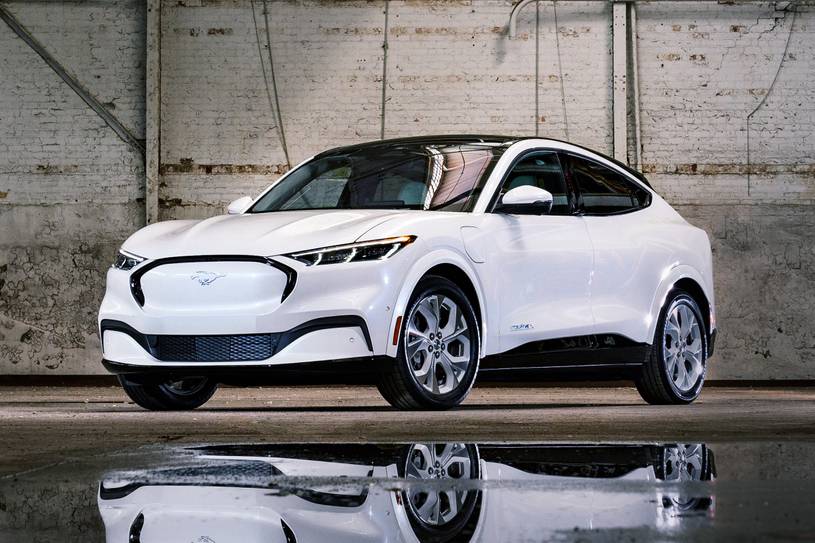
Total MSRP $47,495. What others are paying $48,226. Low supply is pushing the market average 15-20% above MSRP. Federal EV Tax Credit eligibility up to $7,500 (subject to income limits)
https://www.fleet.ford.com/showroom/suvs/mach-e/2023/
Last edited:
I've never driven an EV. I'd consider getting one except I don't know if I want or need to get a new car so I'd probably get a used one, and if I got a used EV I'd be afraid of the original owner getting all the use out of the battery pack and then having it die on my and I gotta buy a new one. I guess I'd have to look to see if there's a warranty. But as I understand it, the maintenance costs for EVs come less often but are bigger when they do come, so you fear the original owner getting all the benefit of that and then selling to you right before the big bills come.
This is the dilemma many potential EV owners face. Unless they are financially able to afford the arguably higher costs of brand new EV's, most folks are looking at pre-owned. The factors you mentioned, as well as the added costs for electricity, insurance, or other hard-to-locate replacement parts keeps many potential EV pre-owned buyers away. Another thing folks don't typically consider when deciding on an EV, there aren't that many qualified technicians trained to properly diagnose and service them!I've never driven an EV. I'd consider getting one except I don't know if I want or need to get a new car so I'd probably get a used one, and if I got a used EV I'd be afraid of the original owner getting all the use out of the battery pack and then having it die on my and I gotta buy a new one. I guess I'd have to look to see if there's a warranty. But as I understand it, the maintenance costs for EVs come less often but are bigger when they do come, so you fear the original owner getting all the benefit of that and then selling to you right before the big bills come.
It's not like you can just pull into your local service shop and have "Joe beer can" check the servo motor on your EV! Our EV service techs have to go back to school and spend sometimes as much as a year in training learning how to diagnose and repair Ford EV's. Without that Blue Oval certification from Ford, most of our service techs aren't even allowed to work on them! These vehicles have sophisticated electronics components, and require well trained service technicians to properly remove, or install them. As it is with many new models, plenty of bugs have to be worked out, and often times the original owners catch most of those issues.
My suggestion for anyone considering EV ownership, carefully weigh both the initial costs up front for purchase, as well as the residual costs of ownership and ongoing maintenance. EV's are being pushed as cheaper alternatives to ICE vehicles which require gasoline, oil changes and tune ups. However just as you said when something "breaks" on an EV, it's not only damn expensive to replace, often times it's a financial nightmare.
Last edited:
This was exactly the situation our Tesla owner (mentioned earlier ITT) was faced with when he decided to trade his four year old Model 3 for a brand new Mach-E EV. The battery had degraded to only 45% of capacity, and replacing it would have cost him well in excess of the vehicle's re-sale value. He liked the vehicle, but didn't want to eat the expense of a new battery pack that with labor and all other fees attached, would have cost him around 25K to replace! So he traded in the model 3 for a brand new Mach-E. He liked the Tesla, but couldn't justify spending more to replace the battery than the vehicle was worth at trade in.as I understand it, the maintenance costs for EVs come less often but are bigger when they do come, so you fear the original owner getting all the benefit of that and then selling to you right before the big bills come.
Some of you might be wondering what did we do with the Tesla? We found a battery re-furbishing manufacturer who spent roughly 8K rebuilding the battery pack and installing new resistor modules and transducers to help restore the battery's charging capacity. We gave the Model 3 owner 20K towards the purchase of a new Mustang EV, but we actually only had roughly 12K in it once the lien holder was paid off. We used that additional 8K to have the battery rebuilt, and sold the refurbished 4 year old Model 3 with a 2 year new battery warranty for a little over 31K...almost 92% of it's original sticker! (but still much less than a brand new model 3)
Most folks wouldn't be able to swing a deal like that, and would be forced to eat the loss of value on the Tesla either replacing the battery or taking less at resale. We were able to recover those costs and make money on the trade where we collected damn near 15K in clear profit on the resale. (we got our money back for rebuilding the battery) Moral of the story: don't try this at home, and do your homework on EVs before making a decision to trade in your ICE vehicle.
$$$$$$$$$$$$$$$$$$$$$$$$$$$$$$$$$$$$$$$$$$$$$$$$$$$$$$$$$$$$$$$$$$$$$$$$$$
Last edited:
I’m interested in EVs, but they don’t quite have the range I’d like yet and I’d also like the commercial technology to mature further.I've never driven an EV. I'd consider getting one except I don't know if I want or need to get a new car so I'd probably get a used one, and if I got a used EV I'd be afraid of the original owner getting all the use out of the battery pack and then having it die on my and I gotta buy a new one. I guess I'd have to look to see if there's a warranty. But as I understand it, the maintenance costs for EVs come less often but are bigger when they do come, so you fear the original owner getting all the benefit of that and then selling to you right before the big bills come.
You are aware in your top 10 list is a Ford? (or at least a Ford product?)Looks like Ford and Tesla are rated 18 and 19 respectively in reliability with Mercedes bringing up the rear.
I found this: Posted on November 27, 2022
“The Ford Mustang Mach-E is arguably one of the most popular EVs outside Teslas in the United States today, but Consumer Reports does not seem to be too impressed with the all-electric crossover for now. As per the magazine’s recent Auto Reliability Survey, Consumer Reports no longer counts the Ford Mustang Mach-E as one of its recommended vehicles.”
I did a bit of research on EVs and I was surprised to learn the handling is lacking compared to conventional cars. I thought with the battery weight distributed over the length and width of the frame, the handling would be great, but that’s not the case.
1. Toyota
2. Lexus
3. BMW
4. Mazda
5. Honda
6. Audi
7. Subaru
8. Acura
9. Kia
10. Lincoln
11. Buick
12. Genesis
13. Hyundai
14. Volvo
15. Nissan
16. Ram
17. Cadillac
18. Ford
19. Tesla
20. Chevrolet
21. GMC
22. Volkswagen
23. Jeep
24. Mercedes-Benz
This ironically is the "other" factor that keeps potential EV buyers skeptical. Until or unless both the battery range and recharging times are extended/reduced....EVs are simply not practical for most of today's automotive consumers.I’m interested in EVs, but they don’t quite have the range I’d like yet and I’d also like the commercial technology to mature further.
Those factors along with the high costs of both E-vehicle purchasing and extended battery maintenance will keep EVs more of a novelty instead of cheaper alternatives to ICE vehicles for the foreseeable future.
A final word about EV batteries....the deal we got on re-furbishing the Tesla's battery would not be possible for everyday EV owners. The refurbishing manufacturer we discovered is a vendor/supplier to one of the dealer aftermarket networks we are tied into (they actually refurbish batteries for all makes and models for dealers) and this manufacturer works on volume and contracts with various dealerships. Their large capacity allows them to offer dealerships savings in exchange for a steady volume of work which reduces their overall costs, which are then passed along to us. The Tesla owner as I mentioned was facing a 25K battery replacement bill. That battery likely would have been refurbished by either our vendor or a similar supplier, but the Tesla owner would at the end be charged mark ups and other commercial retail fees we avoid because of our ongoing business arrangement within the vendor/supplier network.
Last edited:
(I am NOT trying to sell you a new Mach E) this is just for informational purposes. The first thing you notice once you get behind the wheel of one of these vehicles is the layout of the dash. There is no oil pressure gauge, temp gauge, or even fuel gauge! Instead there are readouts for "driving range" "power usage" & "est. time to charge battery" ...takes some getting used to but very cool.I've never driven an EV.
Then you don't hear the typical "vrooom" of an ICE vehicle when you start it up! Instead, push a button & you hear a distinct "whine"...or high pitched "buzz" which lets you know the battery is discharging. There is no gear or transmission shift stick. Instead you "dial in" the mode you want to drive in (varies depending on which model you have) Once you've selected your drive mode, you're all set to zoom off!
Acceleration is smooth and swift. There is no "gear shifting" as power is transferred directly from the battery to the drive motors by each axle. You are tracking 60 mph seemingly standing still! Increase speed, again it's effortless acceleration. (no "upshifting" to a lower or "passing" gear as in ICE vehicles) The speeds you can travel quickly take some getting used to as your mind doesn't tell you you're doing 80mph, but your speedometer does! You don't hear the familiar engine "roar" as you are gaining speed...only the tires humming on the pavement!
Slow down, take time to enjoy how responsive the vehicle is with no engine "strain". After a few minutes you get used to the difference and can really enjoy the thrill of driving an EV (until it's time to recharge the battery!) :stuck_out_tongue_winking_eye:
Last edited:
I think hybrid is a pretty good system. I'm a Ford truck fanatic, but I like Toyota cars for everyday drivers. My wife has a 2022 rav4 hybrid. What's your take on the hybrids?(I am NOT trying to sell you a new Mach E) this is just for informational purposes. The first thing you notice once you get behind the wheel of one of these vehicles is the layout of the dash. There is no oil pressure gauge, temp gauge, or even fuel gauge! Instead there are readouts for "driving range" "power usage" & "est. time to charge battery" ...takes some getting used to but very cool.
Then you don't hear the typical "vrooom" of an ICE vehicle when you start it up! Instead, push a button & you hear a distinct "whine"...or high pitched "buzz" which lets you know the battery is discharging. There is no gear or transmission shift stick. Instead you "dial in" the mode you want to drive in (varies depending on which model you have) Once you've selected your drive mode, you're all set to zoom off!
Acceleration is smooth and swift. There is no "gear shifting" as power is transferred directly from the battery to the drive motors by each axle. You are tracking 60 mph seemingly standing still! Increase speed, again it's effortless acceleration. (no "upshifting" to a lower or "passing" gear as in ICE vehicles) The speeds you can travel quickly take some getting used to as your mind doesn't tell you you're doing 80mph, but your speedometer does!
Slow down, take time to enjoy how responsive the vehicle is with no engine "strain". After a few minutes you get used to the difference and can really enjoy the thrill of driving an EV (until it's time to recharge the battery!) :stuck_out_tongue_winking_eye:
Good choice! Matter of fact if absolute top fuel mileage is your biggest concern, hybrid is really the way to go. They are pricey, but the advantage of having the fuel tank extends driving range for longer trips and the EV side makes the fuel savings worthwhile.I think hybrid is a pretty good system. I'm a Ford truck fanatic, but I like Toyota cars for everyday drivers. My wife has a 2022 rav4 hybrid. What's your take on the hybrids?
When you're ready to drop over 50K on a new Mach EV, maybe you'll shoot me a private message? Be prepared however to get on a wait list for one...right now build outs for new Mustang EV orders are anywhere from 3 to six months!I’m interested in EVs, but they don’t quite have the range I’d like yet and I’d also like the commercial technology to mature further.
Yikes!
Last edited:
I've read that EVs accelerate very quickly. I've also heard they're so quiet that they're thinking about adding fake noise to them because pedestrians can't hear them coming and it can lead to accidents.(I am NOT trying to sell you a new Mach E) this is just for informational purposes. The first thing you notice once you get behind the wheel of one of these vehicles is the layout of the dash. There is no oil pressure gauge, temp gauge, or even fuel gauge! Instead there are readouts for "driving range" "power usage" & "est. time to charge battery" ...takes some getting used to but very cool.
Then you don't hear the typical "vrooom" of an ICE vehicle when you start it up! Instead, push a button & you hear a distinct "whine"...or high pitched "buzz" which lets you know the battery is discharging. There is no gear or transmission shift stick. Instead you "dial in" the mode you want to drive in (varies depending on which model you have) Once you've selected your drive mode, you're all set to zoom off!
Acceleration is smooth and swift. There is no "gear shifting" as power is transferred directly from the battery to the drive motors by each axle. You are tracking 60 mph seemingly standing still! Increase speed, again it's effortless acceleration. (no "upshifting" to a lower or "passing" gear as in ICE vehicles) The speeds you can travel quickly take some getting used to as your mind doesn't tell you you're doing 80mph, but your speedometer does! You don't hear the familiar engine "roar" as you are gaining speed...only the tires humming on the pavement!
Slow down, take time to enjoy how responsive the vehicle is with no engine "strain". After a few minutes you get used to the difference and can really enjoy the thrill of driving an EV (until it's time to recharge the battery!) :stuck_out_tongue_winking_eye:
Question,Rented one (Model 3 dual motor) this weekend in Palm Springs. Elon Musk knows how to engineer some crazy ****. Never thought I'd enjoy driving it as much as I did. There are a few things about it I didn't care too much for, but overall it drove great. Not something I'd want on long trips, but as a daily commuter, around the town, car it wouldn't be a bad car to have.
As a renter you might not know But
Is the charging take 8 + hours?
Required Charging?
Seems excessive.
Yes very true. As I mentioned earlier it takes some getting used to not hearing the typical engine rev you're used to when accelerating, EVs just quickly pick up speed and it's almost as if you're standing still! Same thing outside...no motor, no engine noise. The only thing a pedestrian might hear is the growl of the tires on dry pavement, but even then it's not as easy to hear at lower speeds. The "fake noise" would be a small but discernable whine in part caused by the movement of air through baffles embedded on the front grille...sort of the same idea as a deer whistle, but with a distinct pitch someone would instantly know is an oncoming car.I've read that EVs accelerate very quickly. I've also heard they're so quiet that they're thinking about adding fake noise to them because pedestrians can't hear them coming and it can lead to accidents.
Last edited:
It depends on the battery, its capacity, and how much driving range you need. It also depends on how depleted the power pack is and how you charge it. So there is no standard charging time.Question,
As a renter you might not know But
Is the charging take 8 + hours?
Required Charging?
Seems excessive.
Last edited:
Not readyIt depends on the battery, its capacity, and how much driving range you need. It also depends on how depleted the power pack is. So there is no standard charging time.
Our rav4 sounds like the jettsons.I've read that EVs accelerate very quickly. I've also heard they're so quiet that they're thinking about adding fake noise to them because pedestrians can't hear them coming and it can lead to accidents.
They added noise to it
Say if you don't mind me asking, what sort of driving range do you get with the Rav4 hybrid, and how much of that is under battery power alone?Our rav4 sounds like the jettsons.
They added noise to it
Well you know not surprisingly you are not unlike most automotive consumers today! Except for the sheer novelty of having a new "play toy" to brag about with family, friends or business associates, there really is no practical reason to choose an EV over an ICE vehicle. They are prohibitively more expensive, they don't offer near the driving range or convenience ICE vehicles do, and despite creepy Joe Biden's inexcusable refusal to allow domestic energy producers to drill for more oil, even with the increases in prices for gasoline overall ICE vehicles remain much cheaper to operate.Not ready
Again, the dirty little secret about EVs is they are not really cheaper to operate comparing their overall expense to ICE vehicles. Add in the exorbitant costs for both manufacturing, replacing, and disposal of their batteries once they are used up. This article puts it all into perspective...EV's have a long way to go before they become competitive cost effective replacements for ICE vehicles.
https://www.autoevolution.com/news/...s-study-shows-its-not-that-simple-173016.html
excerpt:
What makes EV more expensive in the first year are repairs and service campaigns. Repairs are costlier because they are so new to most companies. That makes them spend twice as much time in average diagnosis hours than ICE vehicles. Technicians want to be sure they are getting these cars fixed right. Therefore, they spend more time in contact with the factories and talking to other specialists about the issues.
Electric cars also demand more labor hours to get things repaired: 1.5 times more on average. Finally, the labor rate for EV technicians is 1.3 times more expensive than those of people fixing an ICE vehicle.
...more
excerpt
EVs can be significantly more expensive to repair, and that affects the cost of ownership.
- Battery packs make EVs heavier than similar-sized ICE vehicles. That means they collide with greater momentum. It also means EVs make greater use of expensive, lightweight, high-strength materials to try and offset the battery weight. Those materials are expensive to replace, too.
excerpt:
electric cars have their own dirty little secret: Every electric vehicle, and most hybrid vehicles, rely on large lithium-ion batteries weighing hundreds of pounds. One of the largest, the battery for the Mercedes-Benz EQC, comes in at 1,400 pounds. Typically made with cobalt, nickel, and manganese, among other components, these batteries cost thousands of dollars and come with an environmental burden: They require ingredients sourced from polluting mines and smelters around the world, and they can ultimately contaminate soil and water supplies if improperly disposed. The truth that is being swept under the rug.... none of the lithium-ion batteries in electric vehicles are recyclable in the same sense that paper, glass, and lead car batteries are. Although efforts to improve recycling methods are underway, generally only around half the materials in these batteries is currently extracted and repurposed. And without the most valuable ingredients, there will be little economic incentive to invest in recycling technologies. The result, if nothing is done to tip the scales, could be a massive health and environmental crisis.
So when you consider their upfront expense, the cost of repairing or maintaining them, and the added costs of manufacturing, replacing and ultimately disposing of their batteries...EV's are NOT the financial windfall they're being promoted as. In their favor the technology has recently advanced significantly. The costs of operating them is starting to become competitive with ICE vehicles, and in some cases they can be cheaper to operate in the sort term. However, until the driving range issues and battery re-charging issues are solved, not to mention meeting the demand for more & cheaper power generation...EV's will remain an expensive novelty for most automotive consumers who like the OP are simply not ready yet for this next revolution in automotive transportation.
Last edited:
Hybrid maybe, all electric not ready -even for sleepy Joe & Garage Kept Vet.Well you know not surprisingly you are not unlike most automotive consumers today! Except for the sheer novelty of having a new "play toy" to brag about with family, friends or business associates, there really is no practical reason to choose an EV over an ICE vehicle. They are prohibitively more expensive, they don't offer near the driving range or convenience ICE vehicles do, and despite creepy Joe Biden's inexcusable refusal to allow domestic energy producers to drill for more oil, even with the increases in prices for gasoline overall ICE vehicles remain much cheaper to operate.
Again, the dirty little secret about EVs is they are not really cheaper to operate comparing their overall expense to ICE vehicles. Add in the exorbitant costs for both manufacturing, replacing, and disposal of their batteries once they are used up. This article puts it all into perspective...EV's have a long way to go before they become competitive cost effective replacements for ICE vehicles.
https://www.autoevolution.com/news/...s-study-shows-its-not-that-simple-173016.html
excerpt:
What makes EV more expensive in the first year are repairs and service campaigns. Repairs are costlier because they are so new to most companies. That makes them spend twice as much time in average diagnosis hours than ICE vehicles. Technicians want to be sure they are getting these cars fixed right. Therefore, they spend more time in contact with the factories and talking to other specialists about the issues.
Electric cars also demand more labor hours to get things repaired: 1.5 times more on average. Finally, the labor rate for EV technicians is 1.3 times more expensive than those of people fixing an ICE vehicle.
...more
excerpt
EVs can be significantly more expensive to repair, and that affects the cost of ownership.
...more
- Battery packs make EVs heavier than similar-sized ICE vehicles. That means they collide with greater momentum. It also means EVs make greater use of expensive, lightweight, high-strength materials to try and offset the battery weight. Those materials are expensive to replace, too.
excerpt:
electric cars have their own dirty little secret: Every electric vehicle, and most hybrid vehicles, rely on large lithium-ion batteries weighing hundreds of pounds. One of the largest, the battery for the Mercedes-Benz EQC, comes in at 1,400 pounds. Typically made with cobalt, nickel, and manganese, among other components, these batteries cost thousands of dollars and come with an environmental burden: They require ingredients sourced from polluting mines and smelters around the world, and they can ultimately contaminate soil and water supplies if improperly disposed.
So when you consider their upfront expense, the cost of repairing or maintaining them, and the added costs of manufacturing, replacing and ultimately disposing of their batteries...EV's are NOT the financial windfall they're being promoted as. In their favor the technology has recently advanced significantly. The costs of operating them is starting to become competitive with ICE vehicles, and in some cases they can be cheaper to operate in the sort term. However, until the driving range issues and battery re-charging issues are solved, not to mention meeting the demand for more & cheaper power generation...EV's will remain an expensive novelty for most automotive consumers who like the OP are simply not ready yet for this next revolution in automotive transportation.
But nice summary
I understand. I posted what I did because these are the same things I mention to my customers who come in curious about EV's. My first question to them is, why do you think you need one? How is your current ICE vehicle not meeting your transportation needs? It's amazing the responses I get, but mostly it ranges from them wanting to "protect the environment" all the way over to "save money on gasoline and maintenance". Exactly the things they're being conditioned to say by the propaganda media.Hybrid maybe, all electric not ready -even for sleepy Joe & Garage Kept Vet.
But nice summary

That's why I posted what I did...just to elevate the discussion as well as inform others who may be giving EV's serious consideration but aren't really getting the full picture. Appreciate the compliment.
As I mentioned earlier, they're a good choice if maximizing fuel economy and/or saving on fuel costs is your main objective. The nice thing about a Hybrid, you don't have to "wait" to recharge the battery. Most have full sized fuel tanks, and once you run out of driving range for the battery, you simply switch to fuel and keep rolling while the battery recharges..What's your take on the hybrids?
Since their batteries are smaller, they can't drive as far on a single charge, but they don't have to with the fuel tanks. Plug in hybrids might be the most versatile, since they don't require any special connections or charging stations. Most can be charged on a regular household 220 line. They also tend to be less expensive that EV's. For many of my customers who want an EV, I suggest a hybrid and most of them are very happy with the choice once they follow my advice.
excerpt:
You can go nearly three times the distance as an electric car before you have to refill a hybrid. When it’s time to refuel, you can stop at any gas station and quickly refill the tank. You don’t have to ensure you reach a charging station on your current range and sit there waiting to recharge.
And, if you don’t have a place to plug in the car at your work or home, that’s fine—you just have to stop at a gas station once every 600+ miles
...more
If your daily commute is 10 miles each way, you could charge your car at home every night and never use gas on your commute—not unless you need to go any further. If you do go further, your car will use its gas tank.
You’re never forced to find a charger. You can charge a plug-in hybrid if you want, but it’ll work as a normal gas-powered hybrid if you don’t and recharge as you drive on gas. A plug-in hybrid gives you that option. There are other plug-in hybrids that get you between 30 and 40 miles of electric range, too.
Last edited:
I've read that EVs accelerate very quickly. I've also heard they're so quiet that they're thinking about adding fake noise to them because pedestrians can't hear them coming and it can lead to accidents.
It was very very quick. Because there is no gear box it's all straight power into the wheels.
I was skeptical before driving it, didn't even realize I had rented it, I just picked a Midsize Sedan, but was pleased with it over all.
When it comes to looking for a daily commuter car, I'd seriously consider one.
I truly don't know. I believe she said she is getting 40mpg . Ive drove it a couple times and didn't pay much attention just put it sports mode and manual having fun ..Say if you don't mind me asking, what sort of driving range do you get with the Rav4 hybrid, and how much of that is under battery power alone?
That's probably the best use for 'em...as a daily commuter vehicle especially if you have charging stations at your place of employment. For longer trips though, they're not very practical unless your destination is within their driving range.It was very very quick. Because there is no gear box it's all straight power into the wheels.
I was skeptical before driving it, didn't even realize I had rented it, I just picked a Midsize Sedan, but was pleased with it over all.
When it comes to looking for a daily commuter car, I'd seriously consider one.
OK. It must automatically switch to legacy fuel once the battery range reaches capacity. Toyota is an outstanding vehicle...holds re-sale value better than most. Good choice!I truly don't know. I believe she said she is getting 40mpg . Ive drove it a couple times and didn't pay much attention just put it sports mode and manual having fun ..
Thanks for the info.
Latest
-
01
 WV Sports Football
Behind Enemy Lines: Virginia
WV Sports Football
Behind Enemy Lines: Virginia
-
02
 WV Sports Basketball Recruiting
2029 guard Kane Winiarski talks early WVU offer
WV Sports Basketball Recruiting
2029 guard Kane Winiarski talks early WVU offer
-
03
 WV Sports Football
West Virginia hopeful WR Prince Strachan makes debut against Virginia
WV Sports Football
West Virginia hopeful WR Prince Strachan makes debut against Virginia
-
04
 WV Sports Football
Virginia's Tony Elliott sees familiar challenges in WVU offense
WV Sports Football
Virginia's Tony Elliott sees familiar challenges in WVU offense
-
05
 WV Sports Football
WATCH: WVU coaches, players preview Virginia matchup
WV Sports Football
WATCH: WVU coaches, players preview Virginia matchup