COVID-19 numbers (or intro to statistics for dummies)

EngDawg

Redshirt
Mar 29, 2016
2,037
4
38
I think all you smart people on this board already know this, but due to some things I’m seeing in the media and on (cough cough) Facebook, I think it needs to be emphasized .

A couple of basic statistical definitions that people need to remember when looking at COVID-19 numbers:

Population: the total group of objects from which a sample is drawn. If we are trying to determine the percentage of people in the US who have COVID-19, then the population will be everyone in the US at a given time.

Sample: the portion of the population from which we actually collect data. Ideally it should represent an even cross section of the population so that the conclusions reached from analyzing the sample data are reasonably reflective of the total population.

All this to say that, right now, it is highly likely our COVID-19 sample does not represent anything near a cross-section of the population. In the US, this is likely skewed quite a bit due to the fact that a person is more likely to get tested if they have severe symptoms. By how much is above my pay grade, but the point is that these numbers have a big time asterisk by them.
 
Last edited:

codeDawg

Redshirt
Nov 13, 2007
2,102
0
36
100% true and accurate. Everyone is having to make predictions and assessments based on limited data which is why the US is having such a hard time with this. Without widespread testing, agencies gathering and reporting accurate data on hospitalizations, severity of cases, etc. we're all flying blind. I also think the state by state reporting is terrible. There is obviously a huge difference in the transmission rates in NYC versus Rochester, NY. These numbers are most of the time reported together.

I do some work in predictive analytics, machine learning, and artificial intelligence. I'm not an expert. I use some products that train on data and make predictions. Machines are really good at finding patterns humans can't see. Humans are really good at seeing patterns machines can't see. It's like using Waze. Most of the time Waze has more information than you and will get you somewhere faster. Sometimes it recommends dumb stuff and you're better. The combination of the machine and the human is the most accurate.

I'm sure scientists are feeding all our data into ML algorithms and trying to predict this thing, but they don't have enough data for the machines to be really good at it, so humans are having to take a look at disasters like Italy and NYC combined with non-disasters like Germany and Japan, and see how that's going to relate to New Orleans, Atlanta, and Jackson.

I can tell you the non-disasters share one common thread: better testing and better data.
 

ckDOG

All-American
Dec 11, 2007
10,442
6,853
113
The denominator in the stats has a massive understatement bias

The tests that prove whether you currently have COVID-19 are young and some are unreliable. That is even more true for tests that could possibly confirm if one had contracted and recovered from the virus.

Basically, it's impossible to get very comfortable with the denominator right now. Combine that with scientists now thinking the R naught factor is closer to 3, if not over, then I would put my money on the denominator being MASSIVELY understated right now.

That still doesn't mean we shouldn't be cautious right now and work to not overwhelm the health care system, but this 12-18 month lockdown and folks claiming that 2% of the population is going to die is complete crap right now.

It's frustrating bc we probably look back on the stats and see that it wasn't any more impactful than seasonal flu. However, it will also show how woefully unprepared we are for responding to a quickly moving novel virus. Net impact might not have been massive but the response to a surge in novel virus infections is pretty scary. Perhaps we should can the space force and fund a pandemic response force instead?
 

codeDawg

Redshirt
Nov 13, 2007
2,102
0
36
The tests that prove whether you currently have COVID-19 are young and some are unreliable. That is even more true for tests that could possibly confirm if one had contracted and recovered from the virus.

Basically, it's impossible to get very comfortable with the denominator right now. Combine that with scientists now thinking the R naught factor is closer to 3, if not over, then I would put my money on the denominator being MASSIVELY understated right now.

That still doesn't mean we shouldn't be cautious right now and work to not overwhelm the health care system, but this 12-18 month lockdown and folks claiming that 2% of the population is going to die is complete crap right now.

It's frustrating bc we probably look back on the stats and see that it wasn't any more impactful than seasonal flu. However, it will also show how woefully unprepared we are for responding to a quickly moving novel virus. Net impact might now have been massive but the response to a surge in novel virus infections is pretty scary. Perhaps we should can the space force and fund a pandemic response force instead?

Nobody should be focusing on mortality rate right now. The only thing that matters is the ability to treat the sick in hospitals. We can't stop the virus. What we can do is prevent a situation where sick people can't get treatment. That's what happened in Italy and what's starting to happen in NYC.

It's not the severity of the illness, it's the impact of everyone getting ill all at once.
 

ckDOG

All-American
Dec 11, 2007
10,442
6,853
113
Right. Which is why we have much to learn from this

Nobody should be focusing on mortality rate right now. The only thing that matters is the ability to treat the sick in hospitals. We can't stop the virus. What we can do is prevent a situation where sick people can't get treatment. That's what happened in Italy and what's starting to happen in NYC.

It's not the severity of the illness, it's the impact of everyone getting ill all at once.

The handling of the surge should make everyone very nervous. What happens when the next novel virus moves as quickly but has a legit 4%+ mortality rate. We will be wishing for another COVID-19 at that point. We must be better equipped to handle surges.
 

RocketDawg

All-Conference
Oct 21, 2011
20,188
2,936
113
I think all you smart people on this board already know this, but due to some things I’m seeing in the media and on (cough cough) Facebook, I think it needs to be emphasized .

A couple of basic statistical definitions that people need to remember when looking at COVID-19 numbers:

Population: the total group of objects from which a sample is drawn. If we are trying to determine the percentage of people in the US who have COVID-19, then the population will be everyone in the US at a given time.

Sample: the portion of the population from which we actually collect data. Ideally it should represent an even cross section of the population so that the conclusions reached from analyzing the sample data are reasonably reflective of the total population.

All this to say that, right now, it is highly likely our COVID-19 sample does not represent anything near a cross-section of the population. In the US, this is likely skewed quite a bit due to the fact that a person is more likely to get tested if they have severe symptoms. By how much is above my pay grade, but the point is that these numbers have a big time asterisk by them.

That's all true, but you need to stop coughing while posting! **
 

engie

Sophomore
May 29, 2011
10,763
106
63
My thing is -- even with a tremendous testing system that's fully realized(like the flu is now) -- someone like me and what I imagine is a pretty high percentage of the population that is going to think like me is going to self-quarantine and never go to a doctor with mild symptoms, nor burden them with talking about it on the phone or trying to get tests confirmed. The actual diagnosis doesn't matter and is less important than running the risk of spreading the infection by trying to obtain said diagnosis. Start having trouble breathing? Absolutely I will. But not one second before there's complications beyond a cough and mild fever. What percentage of people fall into this category? 25%? 50%? I honestly don't know, but I feel confident that it's a statistically relevant cross-section. Compound this with the amount of people that contract it and beat it while being totally asymptomatic, which appears likely to be equally if not more statistically significant... and the only way we ever know the truth of this thing is to antibodies test basically everybody.
 

codeDawg

Redshirt
Nov 13, 2007
2,102
0
36
My thing is -- even with a tremendous testing system that's fully realized(like the flu is now) -- someone like me and what I imagine is a pretty high percentage of the population that is going to think like me is going to self-quarantine and never go to a doctor with mild symptoms, nor burden them with talking about it on the phone or trying to get tests confirmed. The actual diagnosis doesn't matter and is less important than running the risk of spreading the infection by trying to obtain said diagnosis. Start having trouble breathing? Absolutely I will. But not one second before there's complications beyond a cough and mild fever. What percentage of people fall into this category? 25%? 50%? I honestly don't know, but I feel confident that it's a statistically relevant cross-section. Compound this with the amount of people that contract it and beat it while being totally asymptomatic, which appears likely to be equally if not more statistically significant... and the only way we ever know the truth of this thing is to antibodies test basically everybody.

I don't think it matters at all. If you have antibodies, who cares? The only thing that really matters is the number of people who need critical care. The arguments around mortality rates are just people arguing that this isn't as deadly as we think. The true mortality doesn't matter right now. The number of people who need hospital treatment versus an area's capacity to treat is what does.

Where testing really helps is areas where mitigation may still be effective. If you can detect, isolate, and trace contact of people who are infected you can mitigate infections in areas where it's still feasible. It's also useful in tracking how quickly an area is escalating, but honestly it just needs to be able to measure scale, not actual numbers.
 

Crazy Cotton

All-Conference
Aug 26, 2012
3,985
1,854
113
Hospital workers would care a lot - If the know they've had it and recovered, they can be back on the line, helping keep the system going, and not be personal carriers of the virus as they deal with other patients. My brother for example, is an oncologist. He's also affiliated with the large university hospital handling the cases in our area and will undoubtedly be called up. His fear is that he could contract the virus and be asymptomatic, then become a carrier to his cancer patients who are compromised. That would go for I think lots of people in critical positions who have been sick but weren't tested. A test that could confirm the virus would allow them to get back to work.
 

engie

Sophomore
May 29, 2011
10,763
106
63
I don't think it matters at all. If you have antibodies, who cares? The only thing that really matters is the number of people who need critical care. The arguments around mortality rates are just people arguing that this isn't as deadly as we think. The true mortality doesn't matter right now. The number of people who need hospital treatment versus an area's capacity to treat is what does.

Where testing really helps is areas where mitigation may still be effective. If you can detect, isolate, and trace contact of people who are infected you can mitigate infections in areas where it's still feasible. It's also useful in tracking how quickly an area is escalating, but honestly it just needs to be able to measure scale, not actual numbers.

You lost me here. Antibodies are the key to everyone going back to business as usual. Knowing you are immune to it and x% of the population currently sitting on their asses just like I am are also already immune to it would make all of the difference in the world...
 
Last edited:

SirBarksalot

Junior
May 28, 2007
2,996
284
83
NC has changed testing criteria due to shortages. This will lower the known number of infected people and raise the published death rate significantly:

And the short version is this, direct from DHHS: "In general, patients with mild illness (defined as fever and cough without shortness of breath or difficulty breathing) do not need testing."
So the old qualification was: fever + negative flu test + cough OR shortness of breath.
The new qualification is: fever + negative flu test + cough AND shortness of breath (or other serious symptom).
That means if you're a middle-aged, reasonably healthy person and you develop mild, flu-like symptoms and think you may be infected, the new guidance is to call your doctor, at which point your doctor will likely tell you to assume you're infected and self-quarantine until you've been fever-free for three days (unless your condition worsens, in which case call your doctor again).
 

codeDawg

Redshirt
Nov 13, 2007
2,102
0
36
You lost me here. Antibodies are the key to everyone going back to business as usual. Knowing you are immune to it and x% of the population currently sitting on their asses just like I am are also already immune to it would make all of the difference in the world...

To be quite honest, I don't get the antibody logic. The tests are not reliable enough to guarantee someone is protected, we know from other viruses people can still get sick again either by reinfection or different strains of a virus.

We are no longer in a containment situation in most of the country. We're in a mitigation phase. The hospital crisis is still 4-8 weeks out in most of the country. The closer it is to 8 weeks, the higher the chance that it isn't a crisis at all because we've flattened the curve instead of had a rapid peak. When we get on the back side of this we're not going to wait until it's all clear to put people back out. We're going to manage to our hospital's ability to handle emergencies.

Germany has shown that if people are able to get the care they need, the mortality of this virus is still scary, but manageable.
 

engie

Sophomore
May 29, 2011
10,763
106
63
We'll see. If the 50% asymptomatic number proves true -- then we're twice as close to being totally out of the woods on this deal than is currently being factored anywhere...Antibodies test will prove very reliable on this because it's very stable and not quickly mutating...
 

WeWonItAll(Most)

Redshirt
Jul 1, 2013
488
15
18
My thing is -- even with a tremendous testing system that's fully realized(like the flu is now) -- someone like me and what I imagine is a pretty high percentage of the population that is going to think like me is going to self-quarantine and never go to a doctor with mild symptoms, nor burden them with talking about it on the phone or trying to get tests confirmed. The actual diagnosis doesn't matter and is less important than running the risk of spreading the infection by trying to obtain said diagnosis. Start having trouble breathing? Absolutely I will. But not one second before there's complications beyond a cough and mild fever. What percentage of people fall into this category? 25%? 50%? I honestly don't know, but I feel confident that it's a statistically relevant cross-section. Compound this with the amount of people that contract it and beat it while being totally asymptomatic, which appears likely to be equally if not more statistically significant... and the only way we ever know the truth of this thing is to antibodies test basically everybody.

I looked at the CDCs numbers on the flu a few weeks ago and I think their estimated cases were double the number of confirmed cases.

2018-2019 numbers: 35.5m estimated cases.
16.5m visits to a healthcare provider
https://www.cdc.gov/flu/about/burden/2018-2019.html
 
Last edited:

mount lefroy

Redshirt
Feb 10, 2013
2,501
0
36
I think all you smart people on this board already know this, but due to some things I’m seeing in the media and on (cough cough) Facebook, I think it needs to be emphasized .

A couple of basic statistical definitions that people need to remember when looking at COVID-19 numbers:

Population: the total group of objects from which a sample is drawn. If we are trying to determine the percentage of people in the US who have COVID-19, then the population will be everyone in the US at a given time.

Sample: the portion of the population from which we actually collect data. Ideally it should represent an even cross section of the population so that the conclusions reached from analyzing the sample data are reasonably reflective of the total population.

All this to say that, right now, it is highly likely our COVID-19 sample does not represent anything near a cross-section of the population. In the US, this is likely skewed quite a bit due to the fact that a person is more likely to get tested if they have severe symptoms. By how much is above my pay grade, but the point is that these numbers have a big time asterisk by them.

I'll just add that the hidden villain in all this is the number of people without symptoms that are spreading the virus. They may eventually get the symptoms and they may not. If they are not sheltering, they are spreading. We arent done with this by a long shot. What's worse is going to be the temptation to move back toward normalcy before a number of people stop spreading. That will throw the curve back up.

The cure is now a necessity to be worse than the problem in order to get rid of the problem. Economic driven decisions is going to prolong this.
 

mount lefroy

Redshirt
Feb 10, 2013
2,501
0
36
I think all you smart people on this board already know this, but due to some things I’m seeing in the media and on (cough cough) Facebook, I think it needs to be emphasized .

A couple of basic statistical definitions that people need to remember when looking at COVID-19 numbers:

Population: the total group of objects from which a sample is drawn. If we are trying to determine the percentage of people in the US who have COVID-19, then the population will be everyone in the US at a given time.

Sample: the portion of the population from which we actually collect data. Ideally it should represent an even cross section of the population so that the conclusions reached from analyzing the sample data are reasonably reflective of the total population.

All this to say that, right now, it is highly likely our COVID-19 sample does not represent anything near a cross-section of the population. In the US, this is likely skewed quite a bit due to the fact that a person is more likely to get tested if they have severe symptoms. By how much is above my pay grade, but the point is that these numbers have a big time asterisk by them.


As of right now (or 2 weeks ago if you realize the data isnt actually real time), We are 568 cases short of passing 17ing Italy in total cases. We just went over 80k
 

Shmuley

Heisman
Mar 6, 2008
24,354
12,396
113
Deaths due to auto accidents worldwide: 1.25 million/year (approximately 3,300 every day).

U.S. deaths due to auto accidents: roughly 40,000 per year (approximately 110 per day).

Mississippi deaths due to auto accidents: approximately 750 per year (approximately 2 per day).
 

EngDawg

Redshirt
Mar 29, 2016
2,037
4
38
As of right now (or 2 weeks ago if you realize the data isnt actually real time), We are 568 cases short of passing 17ing Italy in total cases. We just went over 80k

This is kind of what I was getting at in my post. All this attention on confirmed cases is a bit misplaced because we simply don’t know how close the sample n (number of confirmed cases) is to the population n (actual number of cases). There are no uniform testing standards from state to state much less country to country, so directly comparing the US’s numbers to Italy’s is pointless because the way each sample is obtained is different.
 

mount lefroy

Redshirt
Feb 10, 2013
2,501
0
36
This is kind of what I was getting at in my post. All this attention on confirmed cases is a bit misplaced because we simply don’t know how close the sample n (number of confirmed cases) is to the population n (actual number of cases). There are no uniform testing standards from state to state much less country to country, so directly comparing the US’s numbers to Italy’s is pointless because the way each sample is obtained is different.

There are hints though. Number of tests given vs number of positives. Number of deaths per positive result. There are comparible denominators. Total population is a fairly poor indicator because it's only as good as the previous census, doesnt count undocumented immigrants, and depends on the death/birth rate since the previous census.

I think there are very valuable and measurable stats to examine. Rate of increase of positive results over time would also be a good stat.
 

Nicephorus

Redshirt
Sep 3, 2018
150
0
0
This is kind of what I was getting at in my post. All this attention on confirmed cases is a bit misplaced because we simply don’t know how close the sample n (number of confirmed cases) is to the population n (actual number of cases). There are no uniform testing standards from state to state much less country to country, so directly comparing the US’s numbers to Italy’s is pointless because the way each sample is obtained is different.

As someone in healthcare, I agree. Patient selection for testing is so variable region to region and incredibly biased to high risk, severely symptomatic patients.

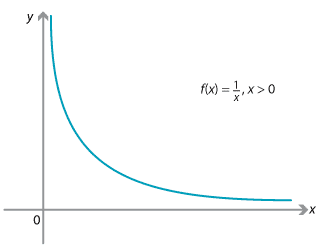
Mortality of this virus reported right now is sorta like a “limit” if anyone ever dabbled in calculus. As you test a larger and more representative portion of the population it will trend towards its true value (move to the right on the curve below).


Unfortunately, we’re not really sure where we are on the curve but definitely above the true value somewhere given the high risk and/or severely symptomatic population over representation in early testing. If the newly updated models from the U.K. prove to be accurate, we may be substantially below 1% true mortality. Of course, if the hospitals become saturated, all bets are off (see Italy).

There’s a lot of people out there posting stuff about mortality and “hospitalization rates” who “don’t know what they don’t know.”
 

engie

Sophomore
May 29, 2011
10,763
106
63
There are hints though. Number of tests given vs number of positives. Number of deaths per positive result. There are comparible denominators.

The total population and total actual infections are important relative to herd immunity and the logistics of trying to draw this out to a vaccine or...

I agree that really the only important number is not overwhelming the healthcare system. At the same time, what I see is that we're cranking up an industrial machine right now in a way that is both amazing and terrifying to the world depending on what extent you like us. We tested something like 100k people. Today. And will test far more than that tomorrow. New run of American tests are down to 15 minute positives or negatives. There is and will be these "shortage" supplies starting to roll in at a pace than the rest of the industrialized world can't quite comprehend now. The only thing we can't spit out in a hurry is more doctors and nurses. Borrowing from Dan Carlin here, it's much like Hilter early in WW2 being told our ramp-up production capability here and laughing at the number thinking it's an absolute fallacy -- and that number being around half of what it actually was.

Interesting days ahead. Perhaps also a bit terrifying. We shall see.
 
Maroon and White

Latest

  1. 01 Maroon and White Football Standout Stats: No. 22 LSU 31-0 No. 16 Mississippi State
  2. 02 Maroon and White Football Mississippi State PFF Grades from 31-0 loss at LSU
  3. 03 Maroon and White Football "Nothing changes": Mississippi State's LJ Prudhomme and Marcus Williams discuss expectations with bruised team
  4. 04 Maroon and White Football Shuffled Mississippi State offense puts up yards, but no points in first shutout since 2020
  5. 05 Maroon and White Everything Mississippi State HC Jeff Lebby said after LSU loss