We want bama
- Thread starter TulsaFanFromStigler_rivals692110
- Start date
You are using an out of date browser. It may not display this or other websites correctly.
You should upgrade or use an alternative browser.
You should upgrade or use an alternative browser.
Acc and American Best Conference easy
We did have a home and home scheduled with Alabama back in the early 90s. The series was quietly cancelled when the SEC went to an 8 game conference schedule in ‘92. I doubt we could ever get that deal again.


With all due respect, our defense would not be or “might” be the best in the SEC. We have a good D, better than any we have had in awhile and certainly better than most teams but not best or might be best in the SEC.Our defense might be the best in the SEC if we were in that conference. LSU and Bama aren't playing any right now.

We'd do a better job of stopping Ole Miss than both Bama and LSU did. Part of that is because TU runs the same basic package offensively that Ole Miss is running right now, we just don't do it as fast.With all due respect, our defense would not be or “might” be the best in the SEC. We have a good D, better than any we have had in awhile and certainly better than most teams but not best or might be best in the SEC.
I've kind of wondered if Monty slowed the pace down from his first few years because of how gassed it left our defense. I seriously can't fathom why we stopped going fast like we used to unless that's the case.We'd do a better job of stopping Ole Miss than both Bama and LSU did. Part of that is because TU runs the same basic package offensively that Ole Miss is running right now, we just don't do it as fast.
I seriously don't think he is prepared nor do I think he trusts the personnel. If anything Gillespie has built quality depth on the DL and at LB where this would be an issue. We run 2-3 lines of DL out there every game and we run 6-8 LBers out there every game with little drop off. UCF plays super fast (to borderline out of control) and our guys kept up just fine. After we get the initial first down, it should be pedal to the metalI've kind of wondered if Monty slowed the pace down from his first few years because of how gassed it left our defense. I seriously can't fathom why we stopped going fast like we used to unless that's the case.
I don't know what would have changed from him calling a hurry up offense in 2016 to calling one today. Unless it's just a lost confidence thing. I agree that Gillespie should be commended, but the fact that we've been playing slower on offense has certainly helped the defense get a breather at least. Back in Dane's day we would have scored before they got a chance to get a drink of water.I seriously don't think he is prepared nor do I think he trusts the personnel. If anything Gillespie has built quality depth on the DL and at LB where this would be an issue. We run 2-3 lines of DL out there every game and we run 6-8 LBers out there every game with little drop off. UCF plays super fast (to borderline out of control) and our guys kept up just fine. After we get the initial first down, it should be pedal to the metal
You run faster to gas the defensive line and force the secondary to disclose to you through stance, head positioning, eye direction and alignment pre-snap whether it’s going to be a run or a pass and to limit their ability to mask or rotate coverage if it’s a pass. You can look at a safety’s shoulders or his knee lock or eye glance and tell what is coming if he’s only given seconds to get ready. Secondarily, it limits substitutions.
Most of the defenses in our conference have the discipline to avoid giving away those clues. Many do not. In particular, UCF who relies on defensive basics and superior speed to make up for the mistakes that can’t be erased by scoring more points.
Montgomery knows this and he knows that some schools with experience with our offense know how to build a base defense that can protect the line to gain and not give away the clues that gives Montgomery a slight advantage with the hurry up. So he’s been dialing it back to allow he and the QB to do the initial read of the backfield numbers and linebacker cheat that we’ve discussed in recent threads.
This isn’t necessarily a bad thing. The move to HUNH was schools exploiting vulnerabilities in the rules to make up for speed and talent imbalances. The schools that enjoyed those advantages have changed the rules to eliminate many of those vulnerabilities such as holding the ball to allow defensive substitutions.
The core idea behind the veer and shoot isn’t speed to the snap like the Malzahn offense. It’s a pass first triple option offense designed to force the offense into a +1 situation somewhere on the field, if the QB correctly locates it and it’s not being given away by cues from other offensive players and there’s sufficient talent to move the ball into the space where the advantage exists. Its being run better at a slower pace when Montgomery isn’t in a down and distance that favors the defense, most of which in our conference usually know what is coming and have set up to deny anything that would concede a first down.
Most of the defenses in our conference have the discipline to avoid giving away those clues. Many do not. In particular, UCF who relies on defensive basics and superior speed to make up for the mistakes that can’t be erased by scoring more points.
Montgomery knows this and he knows that some schools with experience with our offense know how to build a base defense that can protect the line to gain and not give away the clues that gives Montgomery a slight advantage with the hurry up. So he’s been dialing it back to allow he and the QB to do the initial read of the backfield numbers and linebacker cheat that we’ve discussed in recent threads.
This isn’t necessarily a bad thing. The move to HUNH was schools exploiting vulnerabilities in the rules to make up for speed and talent imbalances. The schools that enjoyed those advantages have changed the rules to eliminate many of those vulnerabilities such as holding the ball to allow defensive substitutions.
The core idea behind the veer and shoot isn’t speed to the snap like the Malzahn offense. It’s a pass first triple option offense designed to force the offense into a +1 situation somewhere on the field, if the QB correctly locates it and it’s not being given away by cues from other offensive players and there’s sufficient talent to move the ball into the space where the advantage exists. Its being run better at a slower pace when Montgomery isn’t in a down and distance that favors the defense, most of which in our conference usually know what is coming and have set up to deny anything that would concede a first down.
Latest
-
01
 Inside Tulsa Sports Football
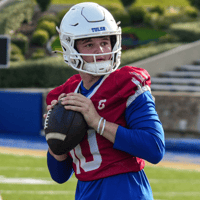
Tulsa quarterback Baylor Hayes 50-50 for North Texas game
Inside Tulsa Sports Football
Tulsa quarterback Baylor Hayes 50-50 for North Texas game
-
02
 Inside Tulsa Sports Football
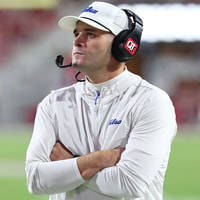
Tulsa leaves Arkansas with plenty to fix before North Texas
Inside Tulsa Sports Football
Tulsa leaves Arkansas with plenty to fix before North Texas
-
03
 College Football Playoff
College Football Bowl Projections Week 5: Full list of matchups, playoff predictions
College Football Playoff
College Football Bowl Projections Week 5: Full list of matchups, playoff predictions
-
04
 Inside Tulsa Sports Football
Tulsa offense sputters in loss at Arkansas
Inside Tulsa Sports Football
Tulsa offense sputters in loss at Arkansas
-
05
 On3 Football
College Football Injury Report: Latest Week 4 updates at Texas, Ole Miss, Florida & more
On3 Football
College Football Injury Report: Latest Week 4 updates at Texas, Ole Miss, Florida & more