Football Big Ten Conference discussing $2 billion private capital deal

fsng

Freshman
Oct 31, 2025
88
88
18
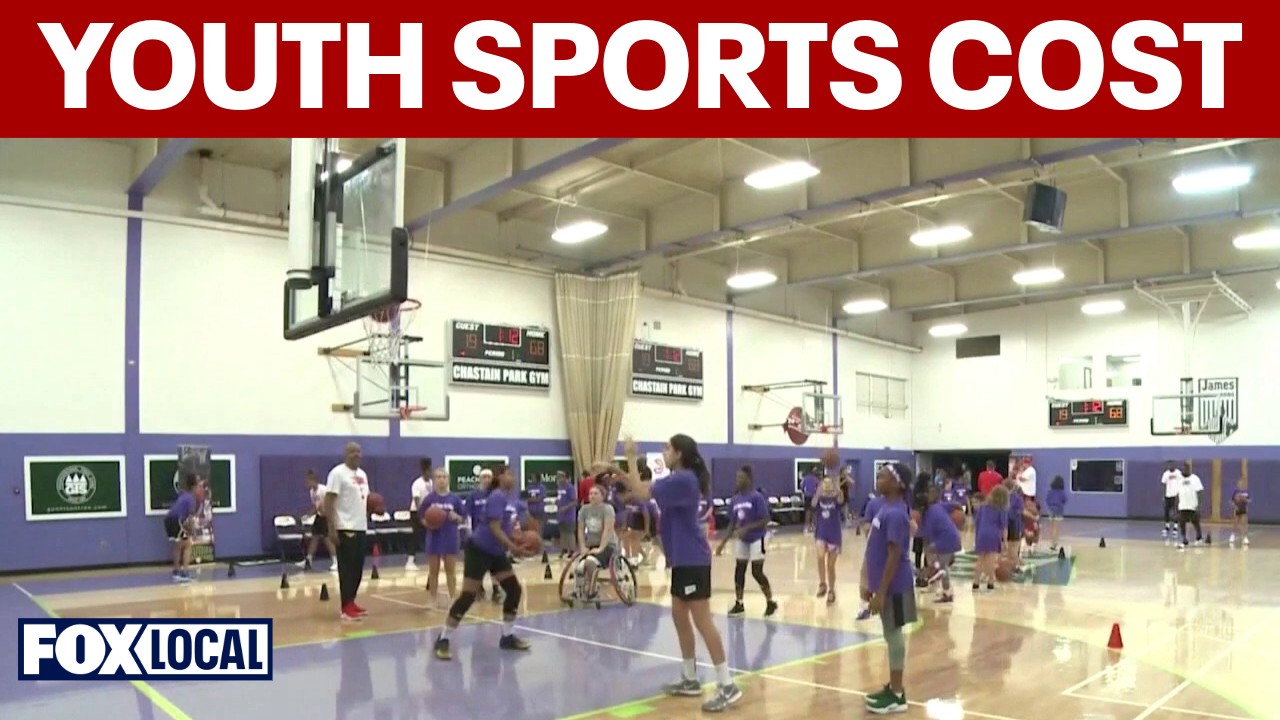
I think that largely depends on the kids. Some kids live for sports, and for them,ore sports works for them. Some kids are not so into sports and rec league is fine, and they have time for other activities they enjoy.

Definitely, always depends on individuals, but it seems like too often push is from parents or from the travel/comp team. My kids were about 7 or 8 when they started trying to push comp. They didn't even know the games well enough to play properly, let alone say, "this is my sport."

Definitely a money grab. Why give away for (near) free what you can charge thousands for šŸ˜„

Bit of a tangent for this thread, but not really. Everyone trying to get a hand in that big sports pot.
 

fsng

Freshman
Oct 31, 2025
88
88
18
I worked in the ice rink industry for about 10 years and the big problem I saw was that rec leagues were quickly disappearing because there is much more money to be made off of travel, and the result is that travel teams become the only option. Growing up in the 90s, everyone played rec league and the select few who were good enough would play travel. Eventually people realized that instead of charging most of the customers a few hundred bucks a season for the rec league, you can create travel teams at lower skill levels so that you can rope those same kids in for $4500+ a year, plus force them to buy the $500 uniforms, warmup suits, apparel, etc. If you have 10 kids get cut from the travel team, just add another team at a lower level. "If you don't make the team, we'll make a team for you."

It's bad for the sport because many families are unable or just unwilling to put up the massive financial and time commitment involved with being on a travel team, and for many kids that level of commitment is too much to be enjoyable, so you have fewer people playing than you would if rec leagues were still the norm. I grew up playing only rec league and most of my life has revolved around hockey. If the landscape of travel vs. rec league in the 90s was how it is currently, I probably wouldn't have played any sports because I just wasn't that competitive as a child even though I loved playing, and my parents felt such a large time commitment would take away from doing well in school.

Now of course there is a place for travel sports, I'm not saying travel is bad. It just shouldn't be the only option.

Just another big business.

Was ecstatic when my town just announced last week they're canceling girls comp soccer and focusing on rec.
 

Caliknight

Hall of Famer
Sep 21, 2001
196,832
148,946
113
B12 and Acc teams are more susceptible to PE coming in. Their media deals are not generating enough revenue to keep up.
 
  • Like
Reactions: Fat Koko

Fat Koko

All-Conference
Nov 28, 2022
3,951
3,322
73
Will be interesting to see which positions are being eliminated.

Utah's athletic department is lean compared to Rutgers. Football spending 32% less, MBB and WBB each 30% less, Olympic sports 34% less, overhead 24% less. Overall, Utah spent 30% less than Rutgers on athletics in 2025 and finished 60 in Directors' Cup versus Rutgers at 80.

Some chatter in past week that the private equity investor is betting the next round of conference realignment includes Utah joining the B1G. Using current B12 and B1G media rights payouts, that would be $40 million of additional revenue for Utah right there. At a 4.1x revenue multiple, that is $400 million of value creation before factoring in higher ticket sales revenue from better matchups and cutting the bureaucratic bloat that exists in college athletic departments.

That 4.1x revenue multiple is what Jason Belzer, holder of 3 Rutgers degrees, uses to value Utah's athletic department. Jason uses 3.7x to value Rutgers, which I would argue is way too high.
 
Last edited:

RUTGERS95

Heisman
Sep 28, 2005
32,982
48,129
113
Will be interesting to see which positions are being eliminated.

Utah's athletic department lean compared to Rutgers. Football spending 32% less, MBB and WBB each 30% less, Olympic sports 34% less, overhead 24% less. Overall, Utah spent 30% less than Rutgers on athletics in 2025 and finished 60 in Directors' Cup versus Rutgers at 80.

Some chatter in past week that the private equity investor is betting the next round of conference realignment includes Utah joining the B1G. Using current B12 and B1G media rights payouts, that would be $40 million of additional revenue for Utah right there. At a 4.1x revenue multiple, that is $400 million of value creation before factoring in higher ticket sales revenue from better matchups and cutting the bureaucratic bloat that exists in college athletic departments.

That 4.1x revenue multiple is what Jason Belzer, holder of 3 Rutgers degrees, uses to value Utah's athletic department. Jason uses 3.7x to value Rutgers, which I would argue is way too high.
4.1 is too high for Utah and 3.7 too low for Rutgers

I've explained how the valuations are done at the BIG level, not the outside moronic podcasts and wannabe financier persons
 

Fat Koko

All-Conference
Nov 28, 2022
3,951
3,322
73
4.1 is too high for Utah and 3.7 too low for Rutgers

I've explained how the valuations are done at the BIG level, not the outside moronic podcasts and wannabe financier persons
The revenue multiples are too high across the board.

1. Taking out subsidies, Utah's athletic department loses money - around $10 million per year on average. Rutgers loses far more than that.
2. Mature, money losing enterprises tend to trade at multiples of 2x or lower. Most college athletic departments are mature, money losing enterprises.
3. A college athletic department has never been bought and sold so comparable transactions don't exist. It is an unproven market, unlike the market for pro sports teams, art, and collectible cards.
4. The Utah deal is still being negotiated. The board empowered the president to negotiate with Otro, however, the president must go back to the board if the transaction would create financial obligations that could create an adverse risk to the university. Whether Utah will contribute subsidies - student fees and university transfers - into a new company partly owned by a private equity investor remains unclear. "U leaders and Otro executives are expected to finalize the partnership early in 2026. More details of the agreement will be released then," Utah wrote in a January 9, 2026 press release. These details have not been released. This deal could fall apart, just as the UC investment in the Big Ten did, as I predicted on TKR a week before the deal's collapse became public.

Could you point me to your explanation of the B1G valuations?
 

RUTGERS95

Heisman
Sep 28, 2005
32,982
48,129
113
The revenue multiples are too high across the board.

1. Taking out subsidies, Utah's athletic department loses money - around $10 million per year on average. Rutgers loses far more than that.
2. Mature, money losing enterprises tend to trade at multiples of 2x or lower. Most college athletic departments are mature, money losing enterprises.
3. A college athletic department has never been bought and sold so comparable transactions don't exist. It is an unproven market, unlike the market for pro sports teams, art, and collectible cards.
4. The Utah deal is still being negotiated. The board empowered the president to negotiate with Otro, however, the president must go back to the board if the transaction would create financial obligations that could create an adverse risk to the university. Whether Utah will contribute subsidies - student fees and university transfers - into a new company partly owned by a private equity investor remains unclear. "U leaders and Otro executives are expected to finalize the partnership early in 2026. More details of the agreement will be released then," Utah wrote in a January 9, 2026 press release. These details have not been released. This deal could fall apart, just as the UC investment in the Big Ten did, as I predicted on TKR a week before the deal's collapse became public.

Could you point me to your explanation of the B1G valuations?
yeah, 1.4 billion of them lol

You've left out quite a bit of the equation that has multiple variables to enhance value.

No doubt revenues vs what you bleed matters but Athletic dept value doesn't come from the money they lose, it comes from the money they can create. Why is Rutgers and MD in the BIG? I'ts not brand, it's not athletic success, it's not the number of jerseys sold and it's not because we get 4mm eyeballs a game. The value is the 17% of US population and 40% of everyone in the NYC-DC corridor that watches TV still has cable. It's because all streaming services have to pay the BIG more money for in mkt rates in 3 of the top 10 DMAs. It's because we sit within the #1, #5, and #8 tv markets. It's because networks can charge 11% more in NYC than Chicago, 5% more in DC than Chicago, more in Philadelphia than every other traditional BIG mkt that is not Chicago. Rutgers athletic dept is associated with 650mm alumni which is # 5 of all US schools. Rutgers still has the highest rated non bowl game in NYC. NJ is number 10 in population, #3 in overall wealth, etc etc etc....Within 1 full year of BIG admission, Rutgers and MD doubled the BIG revenues due network structure. None of this is changing any time soon. Network reach Trump's every other metric and it's why the content is so valuable and why we have East to West Coast.

Now ask yourself, do you think Utah can even come close to a 10th of this? lol at those valuations. I remember those valuations when they came out. They were laughed at by serious people. We can find lots of athletic departments that don't lose gobs of money but will never be able to create value for any conference brand.

RU drops more to the BIG bottom line than a majority of schools in the BIG but we act like we're some uninvited dinner guest. The internal numbers on school revenue value that the BIG has more than validates the importance of tv structure over brand awareness. OSU is mature, it's value isn't really going to change materially over a short run which is directly opposite what happened at IU or could at a school like Rutgers, MD, UCLA etc have value that is hard to discount as much as it is to put in a metric.
 

Fat Koko

All-Conference
Nov 28, 2022
3,951
3,322
73
yeah, 1.4 billion of them lol

You've left out quite a bit of the equation that has multiple variables to enhance value.

No doubt revenues vs what you bleed matters but Athletic dept value doesn't come from the money they lose, it comes from the money they can create. Why is Rutgers and MD in the BIG? I'ts not brand, it's not athletic success, it's not the number of jerseys sold and it's not because we get 4mm eyeballs a game. The value is the 17% of US population and 40% of everyone in the NYC-DC corridor that watches TV still has cable. It's because all streaming services have to pay the BIG more money for in mkt rates in 3 of the top 10 DMAs. It's because we sit within the #1, #5, and #8 tv markets. It's because networks can charge 11% more in NYC than Chicago, 5% more in DC than Chicago, more in Philadelphia than every other traditional BIG mkt that is not Chicago. Rutgers athletic dept is associated with 650mm alumni which is # 5 of all US schools. Rutgers still has the highest rated non bowl game in NYC. NJ is number 10 in population, #3 in overall wealth, etc etc etc....Within 1 full year of BIG admission, Rutgers and MD doubled the BIG revenues due network structure. None of this is changing any time soon. Network reach Trump's every other metric and it's why the content is so valuable and why we have East to West Coast.

Now ask yourself, do you think Utah can even come close to a 10th of this? lol at those valuations. I remember those valuations when they came out. They were laughed at by serious people. We can find lots of athletic departments that don't lose gobs of money but will never be able to create value for any conference brand.

RU drops more to the BIG bottom line than a majority of schools in the BIG but we act like we're some uninvited dinner guest. The internal numbers on school revenue value that the BIG has more than validates the importance of tv structure over brand awareness. OSU is mature, it's value isn't really going to change materially over a short run which is directly opposite what happened at IU or could at a school like Rutgers, MD, UCLA etc have value that is hard to discount as much as it is to put in a metric.
Yeah I get the demographics.

The reality for the Big Ten and its media partners is after adding Rutgers, Maryland, USC, UCLA, Washington, and Oregon to the conference, Big Ten Network subscribers continue to shrink. So much for network reach. The B1G added the New York, LA, and DC markets and the Big Ten Network is losing subscribers by the millions.

The SEC's media deal stepped up 5.7x versus the Big Ten at 2.6x and the SEC didn't need to add a major market school to do it. The SEC added big brands, Texas and Oklahoma.

At Utah, the school needs to return to form on football ticket sales revenue. Utah was #1 in the B12 on football tix at $15-16m in 2017, 2018, and 2019. Post-covid, Utah is doing $10-12m per year.

The upside at Utah is cutting expenses, getting football tix sales back to pre-covid level, raising student fees for athletics, and selling naming rights to the football stadium and basketball arena. The B12 media rights deal lasts through 2031 so no upside there for another five years.

How this Utah Otro partnership happens will be interesting to watch.

1780886515856.png
1780887082670.png
 

RUTGERS95

Heisman
Sep 28, 2005
32,982
48,129
113
Yeah I get the demographics.

The reality for the Big Ten and its media partners is after adding Rutgers, Maryland, USC, UCLA, Washington, and Oregon to the conference, Big Ten Network subscribers continue to shrink. So much for network reach. The B1G added the New York, LA, and DC markets and the Big Ten Network is losing subscribers by the millions.

The SEC's media deal stepped up 5.7x versus the Big Ten at 2.6x and the SEC didn't need to add a major market school to do it. The SEC added big brands, Texas and Oklahoma.

At Utah, the school needs to return to form on football ticket sales revenue. Utah was #1 in the B12 on football tix at $15-16m in 2017, 2018, and 2019. Post-covid, Utah is doing $10-12m per year.

The upside at Utah is cutting expenses, getting football tix sales back to pre-covid level, raising student fees for athletics, and selling naming rights to the football stadium and basketball arena. The B12 media rights deal lasts through 2031 so no upside there for another five years.

How this Utah Otro partnership happens will be interesting to watch.

View attachment 1317993
View attachment 1317998
L
O
L
Just stop....this isn't your end of the pond
 
  • Like
Reactions: Foads

Leonard23

Heisman
Feb 2, 2006
30,155
12,370
113
Yeah I get the demographics.

The reality for the Big Ten and its media partners is after adding Rutgers, Maryland, USC, UCLA, Washington, and Oregon to the conference, Big Ten Network subscribers continue to shrink. So much for network reach. The B1G added the New York, LA, and DC markets and the Big Ten Network is losing subscribers by the millions.

The SEC's media deal stepped up 5.7x versus the Big Ten at 2.6x and the SEC didn't need to add a major market school to do it. The SEC added big brands, Texas and Oklahoma.

At Utah, the school needs to return to form on football ticket sales revenue. Utah was #1 in the B12 on football tix at $15-16m in 2017, 2018, and 2019. Post-covid, Utah is doing $10-12m per year.

The upside at Utah is cutting expenses, getting football tix sales back to pre-covid level, raising student fees for athletics, and selling naming rights to the football stadium and basketball arena. The B12 media rights deal lasts through 2031 so no upside there for another five years.

How this Utah Otro partnership happens will be interesting to watch.

View attachment 1317993
View attachment 1317998
Very interesting and concerning to see 16M (27.6% decrease) fewer BTN subs since 2018. This shows it's even more critical for the B1G to sign a deal with CW.