2026 Transfer Portal Tracker
- Thread starter 3397char
- Start date
You are using an out of date browser. It may not display this or other websites correctly.
You should upgrade or use an alternative browser.
You should upgrade or use an alternative browser.

VT picks up a pretty good Tenn player right away:
6-2 Sr PF started 16 of 27 games 19.2 MPG, 4.7 PPG, 3.4 RPG, 1.0 SPG
Replaces Carys Baker in their starting Lineup. VT's portal entries so far:
Virginia Tech
Kayl Petersen*, 6-0, F, Soph. (2.2 ppg)
Sophie Swanson, 5-10, G, Jr. (2.3 ppg – plans to enter)
Mackenzie Nelson, 5-8, G, Soph. (8 ppg, 5.7 apg – plans to enter)
Carys Baker, 6-2, F, Jr. (14.3 ppg, 6.9 rpg – plans to enter)
6-2 Sr PF started 16 of 27 games 19.2 MPG, 4.7 PPG, 3.4 RPG, 1.0 SPG
Replaces Carys Baker in their starting Lineup. VT's portal entries so far:
Virginia Tech
Kayl Petersen*, 6-0, F, Soph. (2.2 ppg)
Sophie Swanson, 5-10, G, Jr. (2.3 ppg – plans to enter)
Mackenzie Nelson, 5-8, G, Soph. (8 ppg, 5.7 apg – plans to enter)
Carys Baker, 6-2, F, Jr. (14.3 ppg, 6.9 rpg – plans to enter)

I think this means Ahshlon Jackson of dook is going pro, not portal? Hard to tell.
She already played 4 years
Oh lol, whoops. I guess she not waiting for that executive order to play outShe already played 4 years

Aaliyah Crump has entered the portal…. Keep your eyes on her
Big news out of ND- Prosper is entering the draft and will NOT use her final year of eligibility
Aaliyah Crump has entered the portal…. Keep your eyes on her
stop playing with us. If this is indeed true woah....we all know she was the big reason that Bjorn chose texas,was it or was it not?

At this point, we need categories like transfer portal SEC, transfer portal Big 12, etc. lol
Maybe Kim Caldwell is on it more than we think ,maybe she's offering or has offered some of these big name lady hoopers a bag
but I thought we were Crumps finalist, so I hope she comes here. But I'm torn man too many good names out there to say I want her more than herMaybe Kim Caldwell is on it more than we think ,maybe she's offering or has offered some of these big name lady hoopers a bag
NCSU’s Quigley into the portal:
Mallory Collier, 6-3, C, Jr. (2.6 ppg)
Tilda Trygger, 6-6, F, Soph. (10.6 ppg, 7 rpg)
Zamareya Jones, 5-7, G, Soph. (14.9 ppg, 3.8 apg, 1.2 spg)
Devyn Quigley, 5-11, G, Soph. (4.3 ppg, 2.4 rpg, 0.7 apg)
They are down to 6 returning players and 2 incoming recruits.
Mallory Collier, 6-3, C, Jr. (2.6 ppg)
Tilda Trygger, 6-6, F, Soph. (10.6 ppg, 7 rpg)
Zamareya Jones, 5-7, G, Soph. (14.9 ppg, 3.8 apg, 1.2 spg)
Devyn Quigley, 5-11, G, Soph. (4.3 ppg, 2.4 rpg, 0.7 apg)
They are down to 6 returning players and 2 incoming recruits.
Last edited:
Nearly half of the Top 50 recruits from last year in the portal. Important to note that this is the new norm…..
Seems like an inefficiency we could be primed to exploit with good evaluation. Payers that have the pedigree to make an impact in year two but who don’t have the production to drive the price up. Ex/ Elina

Some will disagree with me on this, but they need to pass something which states that you can only transfer one time, and the second time you will have to sit out a year. The system can not, and will not survive the way it's going now. Imagine what the coaches have to go through to maintain a roster year and year out.
Agree. 1x unless coaching change or grad. Anything else is sitting out a year. I don’t know what sane person would disagree with that. The 4 schools in 4 years is insane.Some will disagree with me on this, but they need to pass something which states that you can only transfer one time, and the second time you will have to sit out a year. The system can not, and will not survive the way it's going now. Imagine what the coaches have to go through to maintain a roster year and year out.
Agree as well. Limits on transfers is essential if we want to stop this team-jumping. If you think about it, it's bad for the game in the sense that most of these kids were heavily recruited, made a choice, and a year or two later are gone. Why should a coach recruit anybody out of HS just to watch them walk out the door a year later. Better to take a proven player like Nyla Harris out of the portal.
Second, there needs to be some sort of "salary cap" here. If we accept WBB as a professional sport now, then that should be a part of the deal.
Today it's all about the name on the back of the jersey, not on the front. Some of these young women will learn someday that in the real world of business, employers prize loyalty.
Second, there needs to be some sort of "salary cap" here. If we accept WBB as a professional sport now, then that should be a part of the deal.
Today it's all about the name on the back of the jersey, not on the front. Some of these young women will learn someday that in the real world of business, employers prize loyalty.
AJ Dybansta was stringing teams along. He was signed sealed and delivered to BYU once he signed that Red Bull contract over the summer of ‘24 after his final EYBL year… it just didn’t become public til later.Well, K. Johnson is a WNBA type of talent. She is on a different level that LG. As I stated on another thread, I would not give LG more money because there are weaknesses in her game that was pointed out in an article by RL. I would give K. Johnson more money if it is there. We do not know how much money CB has to throw an a player. Case in point. I just recently found out that UNC on men's side gave K. Evans 2 million dollars in NIL money last year. BYU gave AJ. D five million in NIL money. Behind close doors we offered AJ. D five million so did Kansas. By point is, our men's team did match what BYU offered, this information was kept hush hush; therefore, we do not know how much money CB can offer a player with NIL money because they are not going to put that information out there. If I had to guess, TCU could land her with a ton of NIL money, she could go there or she could go to a program where she thinks she will have a chance to make a deep run in the ACCT next year. My question is: when CB and staff recruited K. Johnson, did we make her final cut list?

Everyone agrees that this makes sense. The problem is the NCAA loses every court case thet tries to limit athletes freedom in the market.Agree. 1x unless coaching change or grad. Anything else is sitting out a year. I don’t know what sane person would disagree with that. The 4 schools in 4 years is insane.
The President just signed an executive order that does pretty much exactly what you say. (and other things I disagree with.) It does not matter because it will lose in court because the executive branch does not have the authority to make new laws.
Congress will need to make a law that addresses the employment status and rights of athletes. It seems like it would be pretty easy, popular and sensible to create some guardrails. But so far, nothing.
The House v NCAA court settlement did create a salary cap: that is the "revenue share" that each team can elect to opt in (or out) of participating. Our university decided to tie each program's portion of revenue share to a rough approximation of revenue they produce. So the UNC WBB program has a salary cap of $205K.Second, there needs to be some sort of "salary cap" here. If we accept WBB as a professional sport now, then that should be a part of the deal.
Today it's all about the name on the back of the jersey, not on the front. Some of these young women will learn someday that in the real world of business, employers prize loyalty.
The problem in practice is that athletes also have a court mandated right to profit off of their Name Image and Likeness. It is logical and right that a player has a market value beyond just the school that they attend. They can create deals with brands that have nothing to do with their school, Deja Kelly as an example did a tom of these. JC Penny and Crocs did not care where she went to school. I think their right to this money is sensible and just. The courts certainly agree.
So the problem then becomes, how do you determine if an NIL deal is legit or is it just a "pay for play" booster deal disguised as a legit business deal? That is the current wild west of player pay. And it is a tough problem to adjudicate.
The House v. NCAA settlement created an NCAA Clearinghouse called the "College Sports Commission" that is supposed to review every NIL deal for both legitimacy and reasonable market value. All of this is done pretty privately so we do not know specifics. But as of Jan 1st they had already rejected 524 deals worth $14.94 million, while clearing 17,321 worth $127.21 million. So that is about a 90% clearance rate. Given that we know at least half of this in reality is pay-for-play, but roughly 90% gets cleared, it is pretty clear they are erring on the side of approving all buyt the most egregious fake deals.
Commission rejected 500-plus NIL deals worth nearly $15 million
The College Sports Commission has rejected nearly $15 million in name, image and likeness agreements since it started evaluating them over the summer, representing more than 10% of the value of all the deals it has analyzed and closed.
 www.espn.com
And after the football transfer portal, the system was strained and ineffective:

College Sports Commission's NIL clearinghouse strained by surge in school-linked deals
Deals tied to collectives and institutional partners are overwhelming the CSC and triggering growing legal and conference scrutiny
 www.cbssports.com
Between January and February, 3,704 NIL deals worth $39.29 million were cleared, while 187 deals worth $14.36 million were rejected. The clearinghouse at least tried to crack down on deals from Booster collectives,
So NIL is allowed, and players will get paid what the market will bear, and only outliers are flagged.
To me at least that seems pretty logical. It is hard to imagine a world where most all pay-for-play is effectively weeded out. This is not an easily solvable problem. (assuming you consider it a problem.)
To your last comment, I will just say that loyalty goes both ways. The minute that coaches start acting consistently loyal to programs, and programs start acting consistently loyal to players, then we can start holding athletes to that standard.
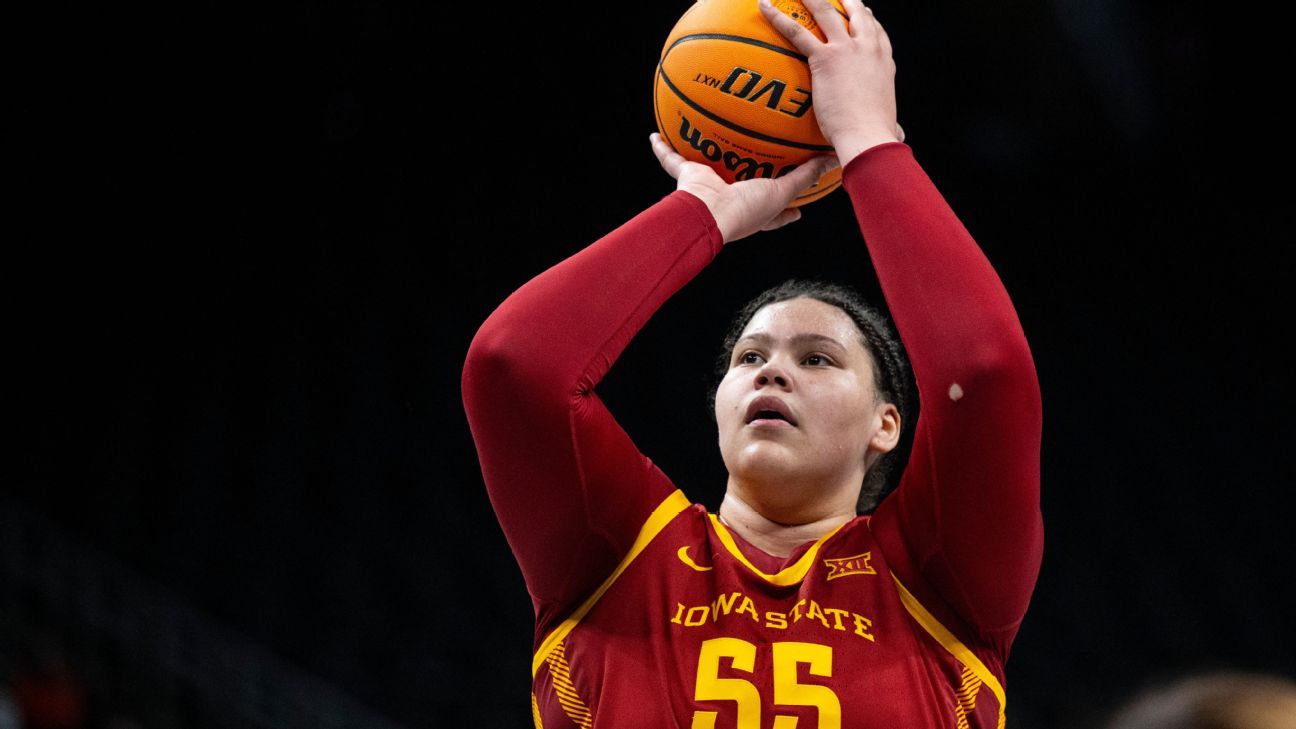
Charlie Creme posted his top players in the portal as of today:
 www.espn.com
1. Audi Crooks, 6-3, C, Jr., Iowa State
2. Kymora Johnson, 5-7, G, Jr., Virginia
3. Liv McGill, 5-9, G, So., Florida
4. Talaysia Cooper, 6-0, G, Jr., Tennessee
5. Dani Carnegie, 5-9, G, So., Georgia
6. Zamareya Jones, 5-7, G, So., NC State
7. Addy Brown, 6-2, F, Jr., Iowa State
8. Taryn Barbot, 5-10, G, Jr., Charleston
9. Jada Williams, 5-8, PG, Jr., Iowa State
10. Nunu Agara, 6-2, F, Jr., Stanford
11. Aaliyah Crump, 6-1, F, Fr., Texas
12. Tilda Trygger, 6-6, F, So., NC State
13. Mia Pauldo, 5-6, G, Fr., Tennessee
14. Madison St. Rose, 5-10, G, Sr., Princeton
16. Mia Woolfolk, 6-3, F, So., Georgia
17. Lara Somfai, 6-3, F, Fr., Stanford
18. Justice Carlton, 6-1, F, So., Texas
19. Kaylene Smikle, 6-0, G, Sr., Maryland
20. Jaida Civil, 6-0, G, Fr., Tennessee
Also considered:
Achol Akot, Oklahoma State;
Carys Baker, Virginia Tech;
Essence Cody, Alabama;
Skylar Forbes, Marquette;
Lanie Grant, North Carolina;
Gracie Merkle, Penn State;
Zahirah Walton, George Mason;
Jadyn Wooten, Oklahoma State
He certainly has the two NCSU players higher than I would have. Maybe I need to reconsider? But I cannot see Zam Jones higher than Aliyah Crump and Nunu Agara for example. Does that make any sense?
Women's NCAA basketball transfer rankings for 2026-27 season
Audi Crooks and Kymora Johnson lead the way. Multiple players from Tennessee, Texas, Georgia and Iowa State make the list.
www.espn.com
1. Audi Crooks, 6-3, C, Jr., Iowa State
2. Kymora Johnson, 5-7, G, Jr., Virginia
3. Liv McGill, 5-9, G, So., Florida
4. Talaysia Cooper, 6-0, G, Jr., Tennessee
5. Dani Carnegie, 5-9, G, So., Georgia
6. Zamareya Jones, 5-7, G, So., NC State
7. Addy Brown, 6-2, F, Jr., Iowa State
8. Taryn Barbot, 5-10, G, Jr., Charleston
9. Jada Williams, 5-8, PG, Jr., Iowa State
10. Nunu Agara, 6-2, F, Jr., Stanford
11. Aaliyah Crump, 6-1, F, Fr., Texas
12. Tilda Trygger, 6-6, F, So., NC State
13. Mia Pauldo, 5-6, G, Fr., Tennessee
14. Madison St. Rose, 5-10, G, Sr., Princeton
16. Mia Woolfolk, 6-3, F, So., Georgia
17. Lara Somfai, 6-3, F, Fr., Stanford
18. Justice Carlton, 6-1, F, So., Texas
19. Kaylene Smikle, 6-0, G, Sr., Maryland
20. Jaida Civil, 6-0, G, Fr., Tennessee
Also considered:
Achol Akot, Oklahoma State;
Carys Baker, Virginia Tech;
Essence Cody, Alabama;
Skylar Forbes, Marquette;
Lanie Grant, North Carolina;
Gracie Merkle, Penn State;
Zahirah Walton, George Mason;
Jadyn Wooten, Oklahoma State
He certainly has the two NCSU players higher than I would have. Maybe I need to reconsider? But I cannot see Zam Jones higher than Aliyah Crump and Nunu Agara for example. Does that make any sense?