And all those haphazard attempts at dealing with this problem haven’t worked, so let’s see if Trump’s tactics eventually fare better.Where in my response did you get the impression I was trying to say, "Iran is being honest?" Seriously, Riveting. Your respones are quoting me, but feel like they're meant for someone else.
I don't think anyone serious believes Iran has been fully transparent. That's kind of my point, man. We've known about their deceitful nuclear ambitions for decades which is why operations like Stuxnet, sanctions, inspections, etc. have existed for years.
Soooo, my argument isn't "Iran is trustworthy"...it's that this isn't some brand-new revelation requiring us to suddenly act like military escalation is the only remaining option. In your timeframe, we've spent 20+ years trying to contain, delay, disrupt, monitor, deter (fill in your favorte verb) their program precisely because the concern has existed for 20+ years.
How Do You Like Republican Gas Prices?
- Thread starter What Would Jesus Do?
- Start date
You are using an out of date browser. It may not display this or other websites correctly.
You should upgrade or use an alternative browser.
You should upgrade or use an alternative browser.
I thought all the Dems had electric vehicles?You should be thanking Trump- your vehicle that used to hold $40 in gas now holds $65- soon to double.....
Your sarcasm meter is running on low.Not sure why I would thank him?
Even a “decade away” is too soon for a rogue country like Iran to have a nuke. We want them to NEVER have a nuke.Why would the Vice President of the United States argue against military action behind the scenes (as has been reported many times) if they really were weeks away from a nuke? If Iran got a nuke on his watch he would be primaried In 2028.
Why would the neocon/neoliberal hawks in the intelligence community say Iran was a decade away from being a threat to the USA? That goes against every incentive they have.
And how were they weeks away from a nuke? We blew up the equipment and facilities they would need to refine the uranium and as far as I understand killed many of the people associated with the program. Even if the uranium dust wasn’t buried under tons of dirt it isn’t like they have the facilities to refine it. One doesn’t just buy a new centrifuge at Home Depot.
Face it: Trump had to have been trapped/hoodwinked by Bibi.

And your response doesn't address my post any better than Riveting's.And all those haphazard attempts at dealing with this problem haven’t worked, so let’s see if Trump’s tactics eventually fare better.
I never said the previous efforts worked perfectly. The point is they did delay and constrain Iran's program for years. Hence why Iran still doesn't openly possess a nuclear weapon after decades of trying. Sanctions most certainly damaged their economy, inspections exposed facilities and sabotage YUGELY disrupted enrichment.
So don't act like anything short of total elimination equals failure...that's not how containment strategies work, my new friend. Heck, by that logic deterrence against North Korea or terrorism "failed" too because thoose threats still exist.
EDIT: Oh, you also skipped over the actual issue...whether escalation now produces a better outcome than continued containment. just saying the old strategy wasn't working or perfect or whatever isnt automatically proof that riskier tactics are somehow smarter.
We can all agree to the end goal, just not on how to achieve it.We want them to NEVER have a nuke.
You make some valid points, but in the case of Iran (who is the largest sponser of terrorism around the world) I think an escalation of previous appeasement tactics is warranted. Reasonable minds can disagree on this topic.And your response doesn't address my post any better than Riveting's.
I never said the previous efforts worked perfectly. The point is they did delay and constrain Iran's program for years. Hence why Iran still doesn't openly possess a nuclear weapon after decades of trying. Sanctions most certainly damaged their economy, inspections exposed facilities and sabotage YUGELY disrupted enrichment.
So don't act like anything short of total elimination equals failure...that's not how containment strategies work, my new friend. Heck, by that logic deterrence against North Korea or terrorism "failed" too because thoose threats still exist.
EDIT: Oh, you also skipped over the actual issue...whether escalation now produces a better outcome than continued containment. just saying the old strategy wasn't working or perfect or whatever isnt automatically proof that riskier tactics are somehow smarter.


Fair enough. That's at least a more reasonable position than pretending anyone questioning escalation is somehow naive about Iran.You make some valid points, but in the case of Iran (who is the largest sponser of terrorism around the world) I think an escalation of previous appeasement tactics is warranted. Reasonable minds can disagree on this topic.
I also think "appeasement" is doing a lot of heavy lifting there. Sanctions, covert ops, cyberattacks, etc aren't exactly Neville Chamberlain handing over Czechoslovakia.

The real debate isn't "Iran bad?" Of course they are. The debate is whether escalation really improves the situation or just increases the odds of a broader regional conflict (while only temporarily delaying the program anyway).
So, ya, reasonable minds can disagree...but I get skeptical when people (not necessarily you) frame every alternative to escalation as weakness or appeasement...this crap isn't binary.
not sure if you're just trying to be confrontational, but if you re read my first sentence, look for the words "according to AI".Oh for effs sake. You just believe whatever you're told by Trump and crew. I get it. Maga cult.
I'm not a nuclear scientist, and likely, neither are you. I simply turned to data that is more knowledgeable than I - supposedly

$5.00 for unleaded and $4.49 for 10% ethanol blend. Never seen it this high.
$5.00 for unleaded and $4.49 for 10% ethanol blend. Never seen it this high.
from Google search...US gas prices reached a record national average of just over \(\$5\) per gallon in June 2022. This historic high was driven by surging oil prices following Russia's invasion of Ukraine and high demand, with many locations seeing prices exceed \(\$5\) for weeks during the summer of 2022.
Have never seen it locally like this.from Google search...US gas prices reached a record national average of just over \(\$5\) per gallon in June 2022. This historic high was driven by surging oil prices following Russia's invasion of Ukraine and high demand, with many locations seeing prices exceed \(\$5\) for weeks during the summer of 2022.

How about never have seen it this high due solely to the actions of the POTUS?from Google search...US gas prices reached a record national average of just over \(\$5\) per gallon in June 2022. This historic high was driven by surging oil prices following Russia's invasion of Ukraine and high demand, with many locations seeing prices exceed \(\$5\) for weeks during the summer of 2022.
OK, but eliminate soley - the Iranians are playing in this game too.How about never have seen it this high due solely to the actions of the POTUS?
But I get your point and I agree with you

I don't trust AI one freaking bit. Here's a blog post from an actual former nuclear researcher at Los Alamos:not sure if you're just trying to be confrontational, but if you re read my first sentence, look for the words "according to AI".
I'm not a nuclear scientist, and likely, neither are you. I simply turned to data that is more knowledgeable than I - supposedly
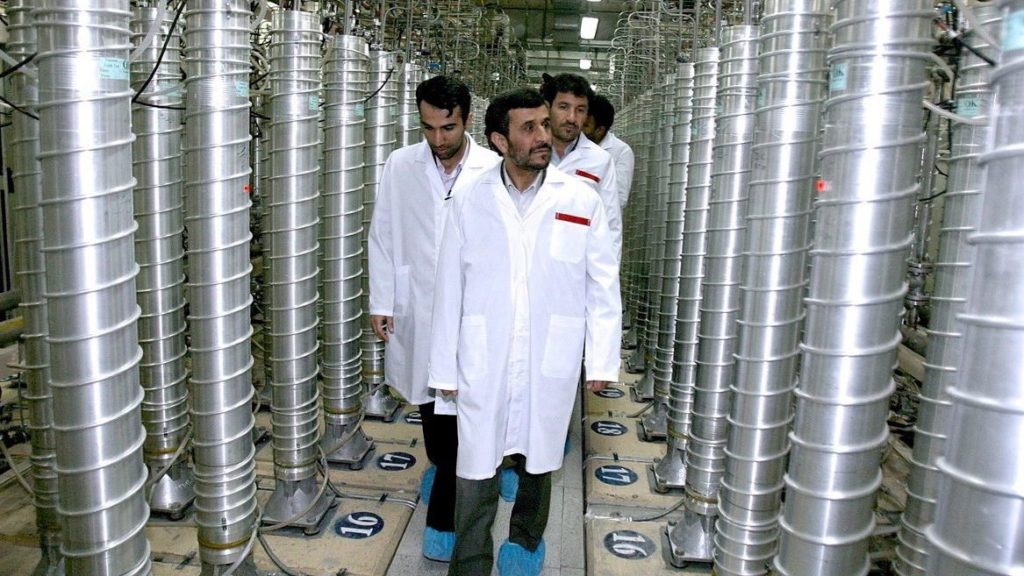
Iran Does Not Have Nuclear Weapons - Lawyers, Guns & Money
It’s time to say it again: It’s highly doubtful that the Iranians were pursuing a nuclear weapon. And they certainly don’t have any. Donald Trump says that (one of the purposes/ the purpose) of his attack on Iran is to make sure they never get a nuclear weapon. He has also tried to look...
www.lawyersgunsmoneyblog.com

Fair enough. That's at least a more reasonable position than pretending anyone questioning escalation is somehow naive about Iran.
I also think "appeasement" is doing a lot of heavy lifting there. Sanctions, covert ops, cyberattacks, etc aren't exactly Neville Chamberlain handing over Czechoslovakia.
The real debate isn't "Iran bad?" Of course they are. The debate is whether escalation really improves the situation or just increases the odds of a broader regional conflict (while only temporarily delaying the program anyway).
So, ya, reasonable minds can disagree...but I get skeptical when people (not necessarily you) frame every alternative to escalation as weakness or appeasement...this crap isn't binary.
And why exactly is why is Iran "bad"?

Only if it's a video from Jason Aldean and Kid Rock..So what's the cracking point for Republicans? $5? $6? Trump molesting a 13 yo in the back of a F150?

We can accept a nuclear North Korea. Why? They already have a nuke. How does Iran stop the US from attacking? Build a nuke.Yes, I'm suggesting that we may be forcing Iran to develop nukes. In the same way that beating a dog may provoke it to attack.
You left out the deal Trump made with Putin, the Saudis, and OPEC in 2020 that resulted in OPEC cutting production by a record 9.7 million bbls/day. This was done to increase the price of oil and prop up US oil companies - and Trump contributors - who were losing billions of dollars daily during covid. Those production cuts extended into, you guessed it, 2022 causing energy prices to surge as demand spiked while production was artificially low... thanks to Trump... And Trump TOLD YOU that he did it...from Google search...US gas prices reached a record national average of just over \(\$5\) per gallon in June 2022. This historic high was driven by surging oil prices following Russia's invasion of Ukraine and high demand, with many locations seeing prices exceed \(\$5\) for weeks during the summer of 2022.
“In fact, I got the oil down so low I had to save the oil companies. How about that one? Remember that little period when you were getting almost free gasoline? We had to save them. We had a call OPEC and we had to call Russia, frankly, and Saudi Arabia. We said, ‘We have to get the price up.’ But we saved all those companies.” … “What caused inflation? The oil price. The oil. Energy. Energy became so ridiculously expensive, it drove everything up. Now everything is inflated.”
You have Donald Trump claiming credit for cratering oil prices during a global lockdown and then admitting that his deal to increase oil prices "saved all those companies" and made energy "so ridiculously expensive, it drove everything up." He literally admits HE caused the inflation under Biden.
And the idiot, mouth-breathing maggots laugh and cheer this stupidity.
lets be clear, my post had nothing to do with Biden, trump or any one else. I gave no "reasons" for or against...You left out the deal Trump made with Putin, the Saudis, and OPEC in 2020 that resulted in OPEC cutting production by a record 9.7 million bbls/day. This was done to increase the price of oil and prop up US oil companies - and Trump contributors - who were losing billions of dollars daily during covid. Those production cuts extended into, you guessed it, 2022 causing energy prices to surge as demand spiked while production was artificially low... thanks to Trump... And Trump TOLD YOU that he did it...
“In fact, I got the oil down so low I had to save the oil companies. How about that one? Remember that little period when you were getting almost free gasoline? We had to save them. We had a call OPEC and we had to call Russia, frankly, and Saudi Arabia. We said, ‘We have to get the price up.’ But we saved all those companies.” … “What caused inflation? The oil price. The oil. Energy. Energy became so ridiculously expensive, it drove everything up. Now everything is inflated.”
You have Donald Trump claiming credit for cratering oil prices during a global lockdown and then admitting that his deal to increase oil prices "saved all those companies" and made energy "so ridiculously expensive, it drove everything up." He literally admits HE caused the inflation under Biden.
And the idiot, mouth-breathing maggots laugh and cheer this stupidity.
I simply pointed out a fact..OP said prices had never been this high. I didn't question his data his bias or anything else. I only pointed out one simple fact, that the prices had been higher. I would think that if I made an error, someone would point that out.
This historic high was driven by surging oil prices following Russia's invasion of Ukraine and high demand, with many locations seeing prices exceed \(\$5\) for weeks during the summer of 2022.lets be clear, my post had nothing to do with Biden, trump or any one else. I gave no "reasons" for or against...
I simply pointed out a fact..OP said prices had never been this high. I didn't question his data his bias or anything else. I only pointed out one simple fact, that the prices had been higher. I would think that if I made an error, someone would point that out.
I was responding directly to this assertion. This was you…no?
I don't need to, I'm very familiar with it. So, you're stance is the last 70+ years is the West's fault? Even if true, I don't automatically think the current Iranian regime gets a moral blank check for everything since then...terrorism sponsorship, proxy militias, hostage-taking, repression, death-to-America rhetoric, etc.Look up Operation Ajax
...personaly, I think two things can both be true...Ajax may been a strategic/moral mistake and the Iranian regime still bears responsibility for its own actions today/since.
Oh, and and just to clarify my simplistic "Iran bad" comment...that was directed to Scrudders (need I say more?). I'm not saying all Iranians are bad or all Muslims are bad. That would be absurd. I'm talking about the Iranian regime/government and its actions not blanket condemning an entire people.

When were prices this high? You might be right but I don't recall that.lets be clear, my post had nothing to do with Biden, trump or any one else. I gave no "reasons" for or against...
I simply pointed out a fact..OP said prices had never been this high. I didn't question his data his bias or anything else. I only pointed out one simple fact, that the prices had been higher. I would think that if I made an error, someone would point that out.
If they were higher previously, what drove them then?
TBH I don't remember if it was me or not...but my point had nothing to do with causes..only to show that in response to statement that gas prices had never been higher...and that was not an accurate statement.This historic high was driven by surging oil prices following Russia's invasion of Ukraine and high demand, with many locations seeing prices exceed \(\$5\) for weeks during the summer of 2022.
I was responding directly to this assertion. This was you…no?
Now if you want to make a distinction about why gas prices were higher, that's an entirely different issue. And if you want me to say that today's higher prices are because of the Iran war, I've said that in other posts before..
Oh, and that was not my assertion, that was a copy and paste from ai
2022, they reached $5 and higher...see two posts above, and you'll see why, principally Ukraine invasion, high demand...When were prices this high? You might be right but I don't recall that.
If they were higher previously, what drove them then?
Thanks. So they weren't caused by us and our President.2022, they reached $5 and higher...see two posts above, and you'll see why, principally Ukraine invasion, high demand...
I think that's an important distinction to be clear about.

It's petty, but I kind of like the idea of rising gas prices leading to more bicycles on roads and how that makes the grumpy trumpers feel.

Plus the boost it gives to EVs and solar.It's petty, but I kind of like the idea of rising gas prices leading to more bicycles on roads and how that makes the grumpy trumpers feel.
If Rs were really the anti-regulation, pro-free-market advocates they pretend to be, Trump would get rid of the restrictions barring nearly all EVs made in China. I'd probably buy one at a third or half the price of what we have to pay for our limited selection now.
Some of these cheap, unavailable Chinese EVs get great reviews. I'm talking about reviews in the UK, Australia and Canada, where their freer populations are allowed to buy them.
it is, and I agree 100% that this one is trump induced. But no matter, this isn't (yet) the highest gas price ever.Thanks. So they weren't caused by us and our President.
I think that's an important distinction to be clear about.
LOL... what's the other side of "demand" in economics? High demand would have been at least partially ameliorated had Trump not entered into a deal with OPEC to drastically cut supply. You can't claim high demand and ignore low supply. I don't care whether you ignored it or your AI ignored it, but it is an inescapable fact that Trump had OPEC artificially reducing supply even as demand surged. All you have to do is acknowledge - as Trump himself did - that it was his own deal that was instrumental in producing record gasoline prices.2022, they reached $5 and higher...see two posts above, and you'll see why, principally Ukraine invasion, high demand...
I don't know why you're on me today. I only responded to a post on gas prices...there was no discussion for whys hows or anything else...that was the basis price of gas. . As I posted to WWJD, if you want to discuss the whys that a totally different topic. I didn't bring it up, and I only responded with an AI blurb. If you want to post something about why there was high demand or low supply, I'd be happy to do some research and reply. if you want to blame everything on trump, I'm sure you have your reasons, and, who knows, I might agree with you.LOL... what's the other side of "demand" in economics? High demand would have been at least partially ameliorated had Trump not entered into a deal with OPEC to drastically cut supply. You can't claim high demand and ignore low supply. I don't care whether you ignored it or your AI ignored it, but it is an inescapable fact that Trump had OPEC artificially reducing supply even as demand surged. All you have to do is acknowledge - as Trump himself did - that it was his own deal that was instrumental in producing record gasoline prices.
Except there was. The war in Ukraine and pent-up demand. All I said was that you missed the deal that Trump made with OPEC to cut production. And all you had to do was acknowledge that it was certainly a major factor in the spike in gas prices under Biden. Can you not do that?there was no discussion for whys hows or anything else...
boy, you and I have a communication problem...all you had to do was acknowledge that gas prices in 2022 were higher than they are today...which is what I posted. Like I said in my last one if you want to have a discussion on the why's I'd be happy to do so..Now, as I said I'd have to do some research, but if the supply is reduced and demand isn't correspondingly decreased than the price will go up. here's the AI explanation:Except there was. The war in Ukraine and pent-up demand. All I said was that you missed the deal that Trump made with OPEC to cut production. And all you had to do was acknowledge that it was certainly a major factor in the spike in gas prices under Biden. Can you not do that?
Gas prices soared to record highs in 2022 due to a combination of surging global demand as COVID-19 pandemic restrictions eased and severe supply constraints. The primary catalyst was Russia's invasion of Ukraine, which triggered international sanctions and massive disruptions in global oil supplies.
Key drivers of the 2022 price surge included:
- Global Oil Supply Shocks: Russia is one of the world's largest oil producers. The threat and implementation of sanctions on Russian energy exports created extreme uncertainty, driving crude oil prices to their highest levels since 2008.
- Rapid Post-Pandemic Demand: As economies reopened globally, travel resumed and manufacturing ramped up, causing a massive, rapid surge in the demand for oil and refined petroleum products.
- Refinery Capacity Constraints: Even when crude oil was available, the ability to turn it into usable gasoline was limited. Several refineries had reduced or permanently closed capacity during the pandemic, making it difficult to keep up with the rebounding demand.
- Interconnected Global Market: Because oil is a globally traded commodity, events anywhere in the world impact local prices at the pump. A shortage in one region drives up the price of oil everywherThe U.S. Energy Information Administration's Gasoline and Diesel Fuel Update provides historical tracking of how prices eventually crested at over \(\$5.00\) per gallon nationally in mid-2022 before gradually cooling off later in the year. For a deeper breakdown of market factors, you can also explore the economic analysis from the International Energy Agency
Donald Trump negotiated a deal with OPEC and allied oil-producing nations (OPEC+) to cut oil production in April 2020
e deal was finalized around April 12, 2020, following an emergency meeting of OPEC+ ministers and lobbying by the Trump administration to stabilize oil prices, which had crashed due to the COVID-19 pandemic and a price war between Saudi Arabia and Russia
Key details of the deal:
- The Cut: OPEC+ agreed to cut production by 9.7 million barrels per day (bpd), representing the largest production cut ever negotiated at the time, beginning in May 2020.
- Trump's Involvement: Trump acted as an intermediary, particularly in persuading Mexico to sign onto the deal, and suggested the U.S. would make further production cuts on behalf of its neighbor.
- Result: The deal aimed to boost collapsing oil prices, which had fallen drastically in early 2020. It was described by officials as an effort to stabilize global oil markets and protect the U.S. energy industry, specifically shale producer
Now to complete the puzzle, when did OPEC reverse the reduction...glad you asked, from AI again
OPEC+ began increasing oil production in early 2021, reversing the record 9.7 million bpd cuts from April 2020 to meet recovering demand. Major, sustained increases occurred throughout 2021, with significant, accelerated hikes in mid-2022 and another major market-share-driven push starting in April 2025, according to MacroMicro and QCIntel. [1, 2, 3, 4, 5]
So there you have it . Make your own decision whether or not the cut from April 2020 to early 2021 was a "major factor" in the price spike in 2022. You obviously have made that decision. It likely was a factor, but if it was a "major factor" sorry, I don't know.
No, I won't. You're wrong.boy, you and I have a communication problem...all you had to do was acknowledge that gas prices in 2022 were higher than they are today...which is what I posted.
In May of 2022, gas prices were, on average, $4.41/gallon. The average for May 2026 currently sits at $4.35. We're not done with May 2026, yet. The current national average is $4.53... and rising. Care to wager on how high the May avg will go?
So let's look at weekly averages. The week of May 12, 2022... $4.39/g. The week of May 7, 2026... $4.52. That would be higher than the same week in May 2022.
You don't get to compare June 2022 prices to May 2026 prices. You can't even compare the May averages when we're only halfway through May.
And here's what should really set you on edge. Prices did spike in June 2022 to an avg of $4.71/g. The increase in Saudi production in 2022 and smoothing out disruptions in the supply chain caused prices to drop significantly the very next month to $4.18/g and prices continued to fall through the rest of 2022 ending up at $2.99/g in December 2022. Do you think we'll see $3/g gas by the end of this year?
During Joe Biden’s full term (2021–2025), the U.S. average gas price was approximately $3.60 per gallon.
During Donald Trump's second term (beginning January 2025), the national average has hovered around $4.02 to $4.50 per gallon,